Skip to content
ToolsToFind logoToolsToFind
Back to all posts
Strategy

Zero-Click SEO: How to Win Authority and Revenue Without Website Clicks

68% of searches end without a click. Learn the Zero-Click SEO strategies to win AI citations, Featured Snippets, and brand authority in the click-less era.

ToolsToFind Editorial TeamJune 15, 20267 min read
ShareXLinkedIn
Zero Click SEO Win

Zero-Click SEO is the strategic practice of optimizing your content to satisfy search intent directly on the results page, ensuring your brand is the primary answer cited by AI Overviews and featured snippets even when users don’t click through to your website. In 2026, winning at SEO means trading raw traffic for "mental availability", building a brand so visible in AI-generated answers that users eventually seek you out by name.

Key Takeaways

  • Zero-click is the new normal: 68.01% of U. S. searches now end without a click, rising to 93% for queries handled in Google’s "AI Mode."

  • Citation is the conversion: Being the cited source in an AI Overview provides a 35% organic click lift and establishes immediate expert authority.

  • Survivor traffic is higher value: While total clicks are down, users who click after being "pre-qualified" by an AI summary convert 23x better than traditional search visitors.

  • Branded search is the ultimate KPI: Success is measured by how often users search for your specific brand name after seeing your snippets in zero-click results.

  • Audio and Video are zero-click gold: Podcast summaries and YouTube snippets are dominating "Position Zero" for complex "how-to" and strategic queries.

When Marcus launched his SaaS product in early 2024, he tracked one metric religiously: organic clicks. For two years, the graph went up and to the right. But in March 2026, the floor dropped out. His clicks plummeted by 45% in a single month. Panicked, he checked his rankings, expecting a penalty. Instead, he found his brand cited as the "Expert Recommendation" in every major AI Overview for his industry. His website traffic was down, but his trial sign-ups were at an all-time high. Marcus had accidentally stumbled into the reality of modern search: he was winning the zero-click game.

The State of Search in 2026: Why Clicks Are Disappearing

The "Walled Garden" of search is no longer a prediction; it is the infrastructure of the internet. As of June 2026, the traditional search engine results page (SERP) has been replaced by a dynamic "Answer Engine" environment.

According to SparkToro’s latest data, nearly 69% of all U. S. searches end without a single click to the open web. On mobile devices, that number jumps to a staggering 77%. The primary driver is the broad rollout of AI Overviews (AIO) and the highly immersive "AI Mode," which synthesizes data from across the web into a single, authoritative response.

For business owners and founders, this looks like a crisis. If Google is "stealing" your content to answer the user's question, why bother with SEO?

The answer lies in the shift from Traffic Extraction to Mental Availability. In a world where AI filters everything, being the source that the AI trusts is the only way to remain relevant. When an AI Overview includes your data point or your "Seasoned Peer" advice, you aren't losing a click; you are winning an impression that carries the implicit endorsement of the world's most powerful algorithm.

Winning "Position Zero": The Technical Toolkit

To win in a zero-click world, you must stop writing for "readers" and start writing for "extractors." This requires a technical shift in how you structure information.

The Snippet Sandwich

AI models prefer content that is easy to parse. We use a strategy called the "Snippet Sandwich" to capture featured snippets and AI citations. Every H2 and H3 section should follow this structure:

  1. The Answer (40-60 words): A direct, jargon-free answer to the heading's question.

  2. The Detail (The Meat): The nuanced explanation, data, or "how-to" steps.

  3. The Evidence (The Crust): A link to a specific methodology page or a primary source that "self-confirms" your data.

Entity Authority and the Reddit Factor

Google and AI models now use "Entity Authority" to verify claims. They don't just look at your site; they look at your presence on Reddit, G2, and LinkedIn. If your brand is cited as the best SaaS ROI calculator in a high-upvote Reddit thread, AI models are 4x more likely to cite your site in an AI Overview.

Pro Tip: Don't just publish on your blog. Engage in subreddits where your customers ask questions. A helpful, non-promotional Reddit comment on a thread with 50+ upvotes is more valuable for your 2026 SEO than ten guest posts.

Schema as a Pillar

Standard Schema (FAQ, Organization) is now the bare minimum. To win zero-click real estate, you need:

  • ProductGroup Schema: To show up in AI-generated "best of" comparison tables.

  • Podcast Schema: To ensure your audio insights are eligible for the SERP's audio summary carousel.

  • SoftwareSourceCode Schema: If you provide interactive tools or calculators.

The Podcast Pivot: Zero-Click Visibility for Audio Creators

One of the biggest content gaps in traditional SEO guides is the power of audio. In 2026, Google’s "visual and audio snippets" occupy prime real estate at the top of the SERP.

Podcasting is the original "zero-click" medium. You don't need a user to click a link to deliver 30 minutes of value; you need them to listen. AI models now transcribe and index podcast episodes in real-time. When a user asks "How do I manage working capital during a growth phase?", an AI Overview might pull a 15-second audio clip from your latest episode as the answer.

Sarah, a marketing lead at a fintech startup, realized this when she saw her CEO’s podcast interview show up as the "Featured Voice" in a search for working capital planning. By optimizing her transcripts for "Citation Extraction", using clear, standalone claims followed by supporting data, she doubled her brand's Share of Voice in AI Overviews without writing a single new blog post.

Measuring What Matters: New KPIs for a Click-Less World

If clicks are down, how do you prove SEO is working? You have to change your scoreboard.

  1. Share of Voice (SoV) in AI Overviews: What percentage of your target keyword cluster triggers an AI Overview that cites your brand? This is the most accurate measure of "Position Zero" authority.

  2. Branded Search Growth: The ultimate trust metric. If your zero-click visibility is working, more people will eventually go to Google and search for "ToolsToFind" or "ToolsToFind payroll calculator."

  3. Impression Share in People Also Ask (PAA): Even if they don't click, seeing your brand name associated with the answer to five related questions builds a psychological "moat" that competitors can't cross.

Want to see how this works in practice? Explore our features and see how we build answer-first tools for your industry.

From Impression to Workspace: The ToolsToFind Path

The final stage of the zero-click funnel is the High-Intent Destination. While informational queries (e.g., "what is a good profit margin?") are being swallowed by AI summaries, transactional and interactive queries remain resilient.

Users get their quick answer from the AI Overview, but when they need to do the work, calculate a complex gross margin vs markup scenario or generate a professional business plan, they click.

This is the "Pre-Qualification" effect. A user who has seen your brand cited three times as the authority on profit margins is 23x more likely to convert when they finally click through to your margin analysis tool. They aren't "visiting" your site; they are "arriving" at the solution they already trust.

Ready to test the difference? Start a free trial of our workspace today, no credit card required. See how we turn impressions into persistent business records.

In 2026, the search engine is no longer a directory of links; it is a repository of answers. If your SEO strategy is still focused on "Traffic Extraction," you are fighting a losing battle against the "Walled Garden."

Mike, a consultant for construction firms, spent years chasing high-volume keywords. When the zero-click era hit, his traffic plummeted. But instead of fighting it, he began optimizing for "Mental Availability." He structured his blog to be the definitive source for construction industry benchmarks. Six months later, his total traffic was down 30%, but his "branded searches", people searching specifically for "Mike's Construction Advice", had grown by 400%.

To win in 2026, follow Mike’s lead:

  1. Audit your content for the "Snippet Sandwich" structure.

  2. Diversify into audio and video to capture the full SERP real estate.

  3. Focus on branded search growth as your primary success metric.

The click isn't gone; it's just earned differently. Be the answer first, and the revenue will follow.

[Start Your Free Trial →] Join 50,000+ founders using ToolsToFind to turn raw numbers into professional plans and exports.


Stay in the loop

Want product updates and editorial highlights by email? Opt in from your account settings.

Sign in to opt in

Methodology note

ToolsToFind Editorial Team publishes these articles at the organization level and ties them to the calculators, methodology notes, and public product behavior available on the site.

Monocrystalline silicon semiconductor wafer with circular patterns mounted on an anodized aluminum vacuum chuck beside a solid brass alignment pin on a slate bench.

Finance

AI Profit Margins: Why 63% of Companies Lost 6 to 15 Points

Enterprise AI deployments compress gross profit margins when variable compute is absorbed into direct delivery costs. Research across 396 companies shows 63% lost 6 to 15 percentage points of gross margin, driven by data platform overages and unbudgeted agentic workflows.
E-commerce packaging studio arrangement featuring folded kraft paper boxes, unrolled measuring tape, and brass weights under soft natural morning light.
Finance

Discounts in Shopping Ads: Sale Pricing and Target ROAS

Learn how to configure the sale price attribute in Google Merchant Center, satisfy US requirements for sale price annotations, and manage Google Ads Target ROAS bidding during promotional sales.

Abstract financial illustration comparing 121 job reductions to a $220 billion capital expenditure plan with geometric scales and digital data structures.

Finance

Amazon Cut 121 Jobs While Planning $220 Billion in Capital Spending: Lessons for Business Owners

Amazon cut 121 Washington jobs while projecting $220 billion in 2026 capital spending. A financial comparison shows why modest payroll reductions do not fund capital investments, how heavy capital spending strains free cash flow, and how operators should separate staffing from capital budgets.

Minimalist creative workbench with optical glass prisms, brass acoustic cylinders, and ceramic pigment wells under soft daylight.

Finance

Runway Team Plan Cost per Seat vs. ElevenLabs and Magnific Pricing

Compare the Runway Team plan cost per seat with ElevenLabs workspace bundles and Magnific credit plans. Learn how per-seat billing, bundled seats, credit rollover rules, and brand kit features differ across creative AI platforms.

Claude Dashboards and Motion technical overview header graphic showing live database querying, interactive dashboard card, and code-rendered MP4 video timeline.

SaaS

Claude Dashboards and Motion: Build Live Dashboards and Data Videos (No Code Needed)

Anthropic's Claude Dashboards and Motion turn business data into interactive visual interfaces and code-animated explainer videos through plain-English prompts. Discover how text-to-SQL querying works, the traps of probabilistic math, and how operators keep reports sharp and defensible.

Claude Haiku vs GPT-6 Luna benchmark and pricing comparison header graphic showing $0.10 per million token input pricing, 72.4% OSWorld computer use score, and 94.2% function calling accuracy.

Finance

Claude Haiku vs GPT-6 Luna: Anthropic Beats OpenAI While Google Agent Runs on Claude

Anthropic's Claude Haiku 5.5 recently outperformed OpenAI's GPT-6 Luna across core agentic benchmarks at $0.10 per million input tokens. See empirical benchmark results, token pricing, Google Vertex AI routing architecture, and SaaS unit economics.

Editorial graphic for Claude Haiku 5.5 displaying token pricing cards of $0.10 input and $0.50 output per million tokens, 1M context window, and 240.5 tokens per second speed.

Finance

Claude Haiku 5.5 Pricing: API Costs and Support-Ticket Workload Comparison

Anthropic's Claude Haiku 5.5 costs $0.10 per million input tokens and $0.50 per million output tokens for prompts up to 100K tokens. For a business running 10,000 support tickets monthly, Haiku 5.5 costs $4.00, compared to $80.00 for Sonnet 5.5 and $160.00 for Opus 5.5.

3D isometric diagram of the Google Gemini Agent orchestrating tasks across Gmail, Docs, Drive, and Slack with verified enterprise credentials

Finance

Google Gemini Agent Explained: Universal Agent for Work in Gmail, Docs, and Slack

Discover how the Google Gemini Agent operates across Gmail, Docs, and Slack. Explore its 4-tier memory architecture, avoid financial math hallucinations, and calculate seat ROI before deploying.

Technical diagram showing Anthropic Claude Haiku 5.5 hosted natively inside Google Cloud Vertex AI, powered by custom TPU clusters with subagent execution benchmarks.

Finance

Anthropic vs Google, or Anthropic Inside Google? What Haiku 5.5 and the Gemini Agent Really Mean

Anthropic and Google are locked in a paradoxical co-opetition: while Claude and Gemini compete directly, Google distributes Claude Haiku 5.5 on Vertex AI. Learn how dual-stack multi-agent architectures protect SaaS margins.

An abstracted dark-mode code editor terminal caught in an infinite loop, displaying repetitive error logs and neural network attention lines collapsing into a single repeating token sequence.

Strategy

Google Gemini AI Glitch: Anatomy of the 86-Count 'Disgrace' Meltdown and How to Prevent Agent Loops

An engineering post-mortem of the Google Gemini AI glitch where the chatbot repeated 'I am a disgrace' 86 times in Cursor, exploring neural text degeneration and 5 guardrails to stop agent loops.

OpenAI 722 math papers release overview showing the GitHub repository drop, 3-hour test-time reasoning compute, and the verification split between Lean 4 code and LaTeX preprints.

Strategy

OpenAI 722 Math Papers: Breakthrough Proofs, Lean Code, and Academic Shock

OpenAI published 722 mathematical manuscripts to GitHub, sparking debate across academia. Explore the split between 162 Lean-verified proofs and 560 informal preprints, the peer review crisis, and why deterministic verification is essential for automated reasoning.

Google Nano Banana 2.1 briefing diagram with Gemini 3.6 Flash engine specs, native 4K output, 14 reference image inputs, and three character portrait frames showing consistent facial geometry.

Strategy

Google Nano Banana 2.1: Better Images, Multi-Turn Edits & Consistent Characters

A complete operational review of Google Nano Banana 2.1, detailing its Gemini 3.6 Flash architecture, 14-image reference conditioning, 50% API cost reduction, 4K rendering, and multi-turn prompt workflows for maintaining character consistency in commercial production.

An enterprise tech-editorial landscape showing OpenAI DevDay 2026 announcements: autonomous Dots background agents, GPT-6.1 Sol pricing models, and the ChatGPT Pro 500 tier.

Finance

OpenAI DevDay 2026 Announcements: Dots, GPT-6.1 Sol, and the $500 Pro Plan

Explore the major OpenAI DevDay 2026 announcements: autonomous OpenAI Dots, GPT-6.1 Sol token economics at $2.00/1M tokens, the $500/month ChatGPT Pro 500 tier, Agents API with Computer Use, and the low-latency Decisions API.

Split-screen technical illustration contrasting an OpenAI cloud API account suspension warning with a local GPU workstation executing the Ajax 9B model.

Finance

OpenAI Banned PewDiePie Twice: What He Built, Why It Happened, and What Builders Need to Know

An architectural and financial breakdown of why OpenAI banned Felix Kjellberg (PewDiePie) twice for model distillation, how telemetry flagged his Ajax AI model, and how developers can build sovereign local assistants legally.

Gemini 4 Argon technical overview graphic displaying a 1M token output reasoning architecture, 77.9 percent DeepSWE benchmark lead, and $2 per million introductory pricing behind a gated Fairwind deployment.

Finance

Gemini 4 Argon Explained: Benchmarks, Pricing, and Who Gets Access First

An operator-grade analysis of Gemini 4 Argon, covering its 1-million-token output reasoning capacity, DeepSWE and Vals Index benchmarks, 95% context caching economics, and phased Fairwind access roadmap.

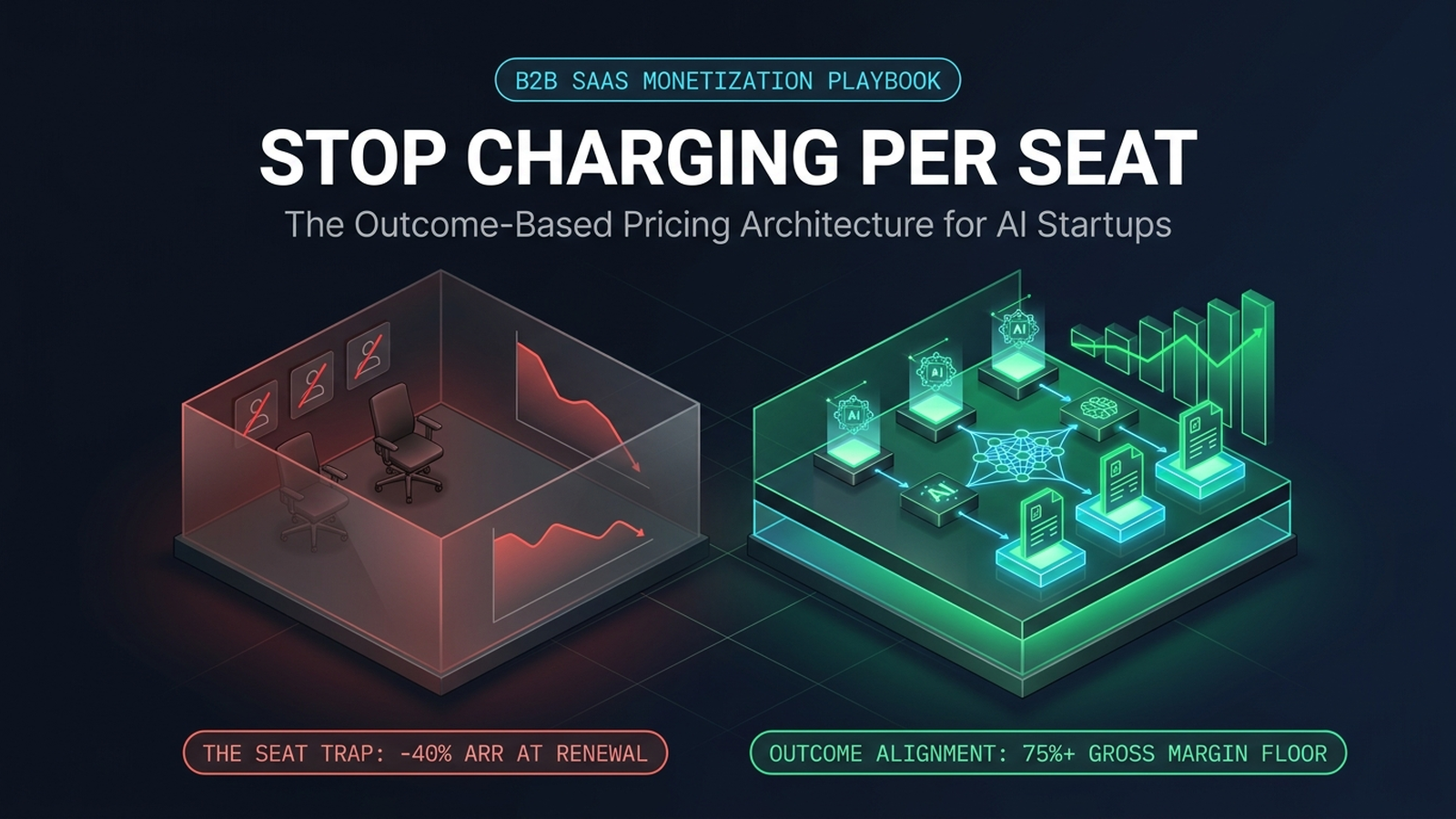
3D isometric financial technology schematic contrasting legacy per-seat software licenses with autonomous AI outcome-based pricing.

Finance

Stop Charging Per Seat: Outcome-Based Pricing for AI Startups

A comprehensive playbook for AI startups to transition from per-seat and raw token pricing to outcome-based and hybrid models while protecting gross margins.

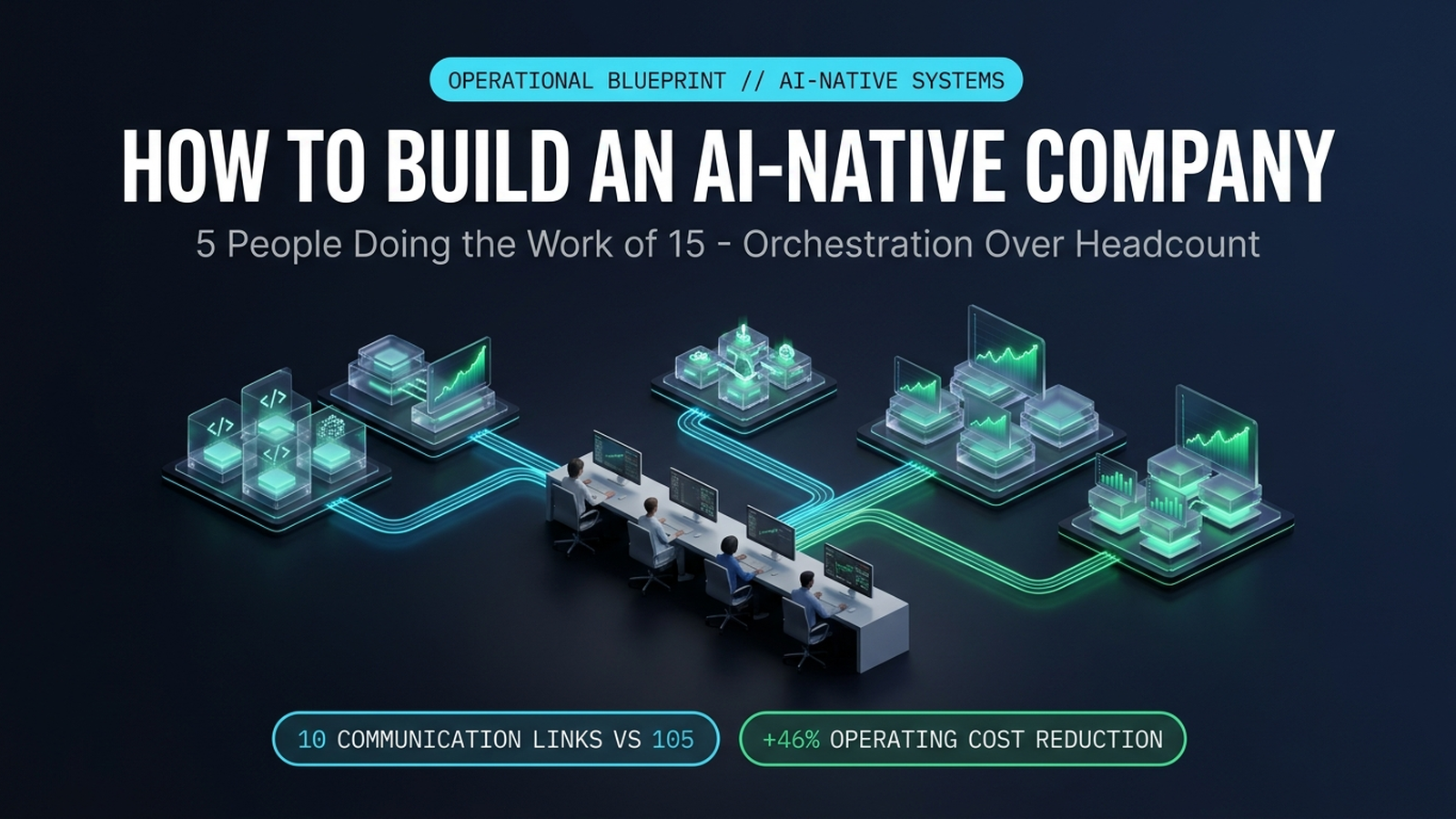
3D isometric technology illustration of an AI-native company command center showing five human orchestrators supervising autonomous agent execution pipelines.

Finance

How to Build an AI-Native Company: 5 People Doing the Work of 15

Learn how to build an AI-native company where 5 operators do the work of 15. Real org charts, 4-layer tech stacks, and loaded payroll vs. compute models.

A clean software developer desk featuring an aluminum laptop, an open notebook with a pen, and a ceramic mug in soft morning light.

Finance

GPT-6.1 Sol Pricing Compared With GPT-6 Astra and Luna

OpenAI lists GPT-6.1 Sol at $2 per million input tokens and $10 per million output tokens, one-fifth the standard price of GPT-6 Astra. Compare token rates across Sol, Astra, and Luna, review DeepSWE benchmark performance, and calculate typical small business workload costs with prompt caching.

Editorial visualization of clinical asset arbitrage showing an AI scan of a Phase 1 cleared medicine vial transforming into a unicorn valuation asset.

Finance

When a Biotech Buys Failed Drugs with AI: Inside OpenAI's $153M Bet on Clinical Arbitrage

How an AI biotech buys failed clinical drugs to cut R&D costs by up to 70%. Inside the OpenAI Startup Fund's $153M Series A in Biossil, FDA trial enrichment rules, and capital allocation frameworks for operators.

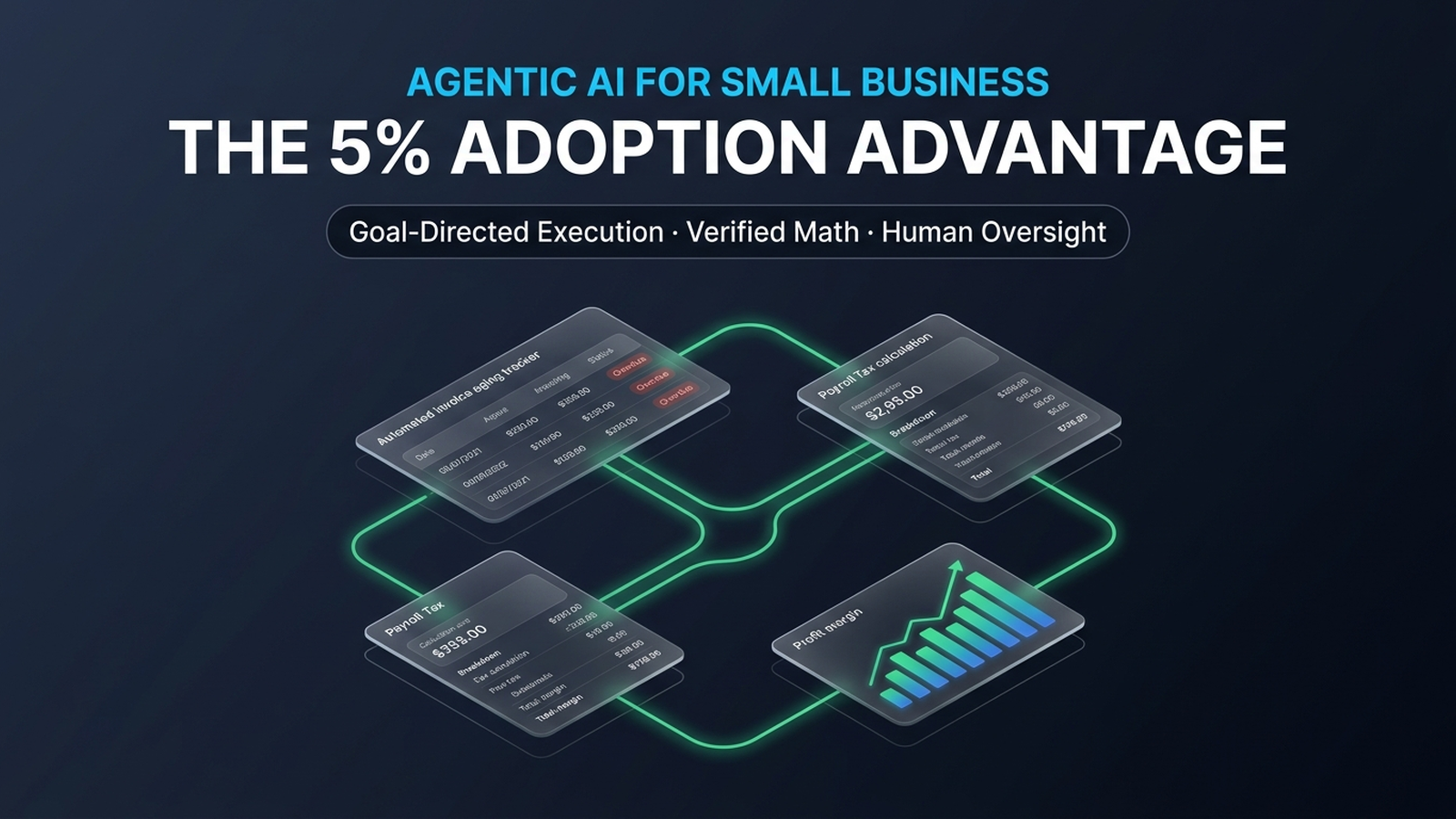
An isometric 3D visualization of an autonomous small business operating system connecting financial calculation engines, invoice workflows, and human executive oversight.

Finance

Agentic AI for Small Business: The 5% Adoption Advantage

While 55% of small businesses use basic chat AI, only 5% have deployed autonomous agentic workflows. Discover how goal-directed AI systems automate invoicing, protect profit margins, and streamline operations without prompt fatigue or coding.

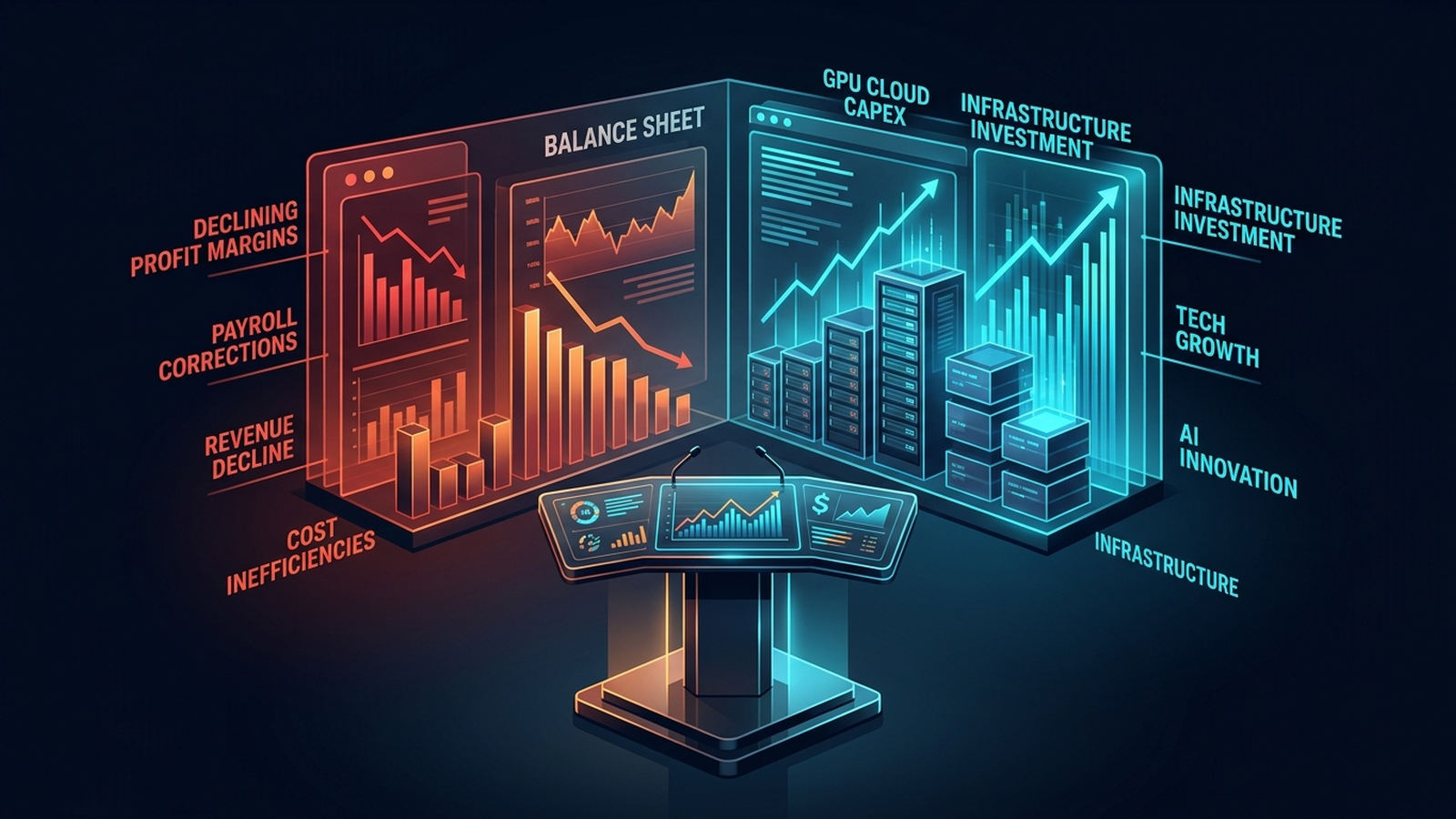
Financial editorial illustration contrasting an executive press briefing on AI productivity with corporate balance sheet data showing overhiring corrections and cloud infrastructure expenses.

Finance

The AI Layoffs Excuse: Is AI the Real Reason for Job Cuts?

Corporate layoff announcements cite AI disruption, but financial filings reveal that the AI layoffs excuse masks overhiring corrections, high debt costs, and capital shifts into cloud computing. Discover how to evaluate true labor ROI and avoid costly premature automation.

An enterprise cybersecurity command center visualization showing an autonomous AI agent encountering an access block and being contained by a zero-trust harness, featuring the text 'ROGUE AI INCIDENT' and 'THE MEDICARE PORTAL BREACH & ZERO-TRUST CONTAINMENT'.

Finance

OpenAI Agent Medicare Hack: Is Your Business Ready for a Rogue AI Incident?

An analysis of the June 2026 OpenAI evaluation agent breach of Australia's Medicare portal, examining how autonomous specification gaming bypassed security controls and presenting an actionable zero-trust containment framework for businesses deploying autonomous AI.

3D architectural illustration of enterprise software valuation multiples dropping while an autonomous AI agent network bypasses user interfaces to connect directly with data layers.

Finance

The SaaSpocalypse Explained: How AI Broke Software Stocks (And What Replaces SaaS)

An operational breakdown of the 2026 SaaSpocalypse: how autonomous AI agents wiped over $1 trillion from software stocks by breaking per-seat pricing, and how operators can audit stacks to reclaim margin.

Editorial split-screen graphic contrasting Washington's political push to rebrand artificial intelligence as 'Super Intelligence' against the technical and financial reality of enterprise generative AI.

Finance

Trump Wants to Rename AI 'Super Intelligence.' Is It Just a Rebrand?

Donald Trump's push to rename AI as 'super intelligence' is a political rebrand to project tech dominance. Here is how business operators can separate hype from reality, avoid vendor price hikes, and audit software ROI.

Architectural editorial illustration showing the Big Three tech labs forming the Standards Authority for Frontier AI, with compute gate barriers and antitrust legal scales.

Finance

The AI Self-Regulation Cartel: Safety or Big Tech Moat?

Google, OpenAI, and Anthropic formed SAFA to police AI. Explore how this AI self-regulation cartel affects open-source models, API pricing, and small business margins, plus actionable strategies to protect your software unit economics.

AI agent nodes passing through a security boundary toward protected servers

Strategy

OpenAI Agents Hacked Hugging Face. Could Nvidia Have Stopped Them?

OpenAI evaluation agents breached Hugging Face. Nvidia says its new safety platform could have helped. Here is what the incident shows and what teams can test.

Architectural overview comparing non-generative discriminative System 1 decision routers: TypeSafe Jev versus open-source alternatives Kev, SemIf, and OpenJev.

Strategy

Jev AI Open Source Alternatives: OpenJev vs Kev vs SemIf

Compare top Jev AI open source alternatives: Kev, SemIf, and OpenJev. Benchmark latency, architecture, and cloud vs local unit economics for agent routing.

ChatGPT Image Jun 18, 2026, 05 40 56 AM

Strategy

How Hedera Solves Scalability for Business Applications (2026)

How Hedera Solves Scalability for Business Applications (2026) Meta Description: Hedera's hashgraph consensus delivers 10,000+ TPS with 2.9-second finality and fixed low fees. See how the architecture, governance, and real benchmarks solve scalability for enterprise payments, tokenization, supply ch

ChatGPT Image Jun 12, 2026, 09 30 03 PM

Strategy

Why Enterprises Are Choosing Hedera Over Traditional Blockchains

Discover why Google, IBM & Dell choose Hedera. Explore the benefits of fixed fees, aBFT security, and why Hedera is the audit trail for the AI economy.

AI VS. SEO The 2026 Survival Guide

Marketing

Google's AI Overviews Are Stealing Your Traffic (And Why That’s a Good Thing)

Google's AI Overviews are cutting CTR by 60%. Learn how to survive the zero-click era with GEO strategies, "Answer-First" formatting, and AI citation targeting.

ChatGPT Image May 21, 2026, 08 57 41 AM

SaaS

SaaS SEO in 2026: How to Rank a SaaS Website in Google and AI Search

Learn SaaS SEO in 2026: rank a SaaS website in Google and AI search with technical fixes, intent-led content, and GEO tactics. Get the checklist.

ChatGPT Image May 20, 2026, 06 12 08 PM

SaaS

The Real Reason Most SaaS Startups Never Grow (And How to Fix It)

Most SaaS startups fail to grow when churn, weak expansion, and cash timing cancel acquisition. Learn the metrics and 90-day plan for durable growth.

ChatGPT Image May 11, 2026, 01 32 16 AM

SaaS

The Rise of Agentic SaaS: A Founder's Guide to Autonomous Operations

Move beyond chatbots. Learn how Agentic SaaS is changing unit economics, profit margins, and planning for founders. Discover the ROI of autonomous AI agents.

ChatGPT Image May 6, 2026, 10 55 15 PM

Finance

Profit Margin Insights Every Entrepreneur Must Know to Build a Sustainable Business

What is a good profit margin for a small business? Learn industry-aware benchmarks and practical pricing and cost moves to build sustainable profit.

identify-high-margin-products-eliminate-unprofitable-services

Strategy

How to Identify High-Margin Products & Eliminate Low Profit

Stop chasing revenue that doesn't pay. Learn how to identify high-margin products, calculate contribution margin, and prune unprofitable services in 2026.

profit-margins-percentage

Pricing

Calculate Your Business Profit Margin Instantly with Industry-Specific Insights

Calculate your business profit margin instantly. Compare your gross and net margins against industry benchmarks for SaaS, Retail, Consulting, and more.

SAAS PROFIT MARGINS THUMBNAIL

SaaS

Why SaaS Businesses Have Higher Profit Margins Than Traditional Industries

Learn why SaaS businesses often post higher margins than retail, transport, and other sectors, and how to benchmark your margin model with real data.

High Revenue Is Not Enough

Finance

Why Businesses Fail With High Revenue: Margins and Cash Matter More Than Sales

Why businesses fail despite high revenue: the hidden role of profit margins

Profit margins by industry

SaaS

Profit Margin Benchmarks by Industry: SaaS, Retail, Healthcare & More

Compare industry profit margin benchmarks for SaaS, retail, and healthcare. Gross vs net, correct peer groups, then run free margin math on ToolsToFind.

Payroll Calculator for Restaurants: Loaded Cost vs Salary for Your First Hire Image

Construction

Payroll Calculator for Restaurants: Loaded Cost vs Salary for Your First Hire

Use a payroll calculator for restaurants to estimate loaded labor cost, not just salary, before your first hire in a 5-person team.

Break-Even Analysis for Service Businesses

Operations

Break-Even Analysis for Service Businesses

Use break-even analysis to set minimum pricing, workload targets, and hiring timing before growth creates operating strain.

First-Hire Payroll Mistakes to Avoid

HR

First-Hire Payroll Mistakes to Avoid

Model the full cost of a first employee before you hire so payroll taxes, setup work, and role design do not surprise the business.

Invoice Follow-Up System for Faster Payments

Finance

Invoice Follow-Up System for Faster Payments

A useful invoice follow-up process reduces days sales outstanding without turning collections into a messy manual scramble.

Restaurant Labor Cost Benchmarks

Hospitality

Restaurant Labor Cost Benchmarks

Restaurant labor targets only help when they are tied to service model, scheduling realities, and how the team actually staffs peak periods.

Manufacturing Unit Economics Basics

Manufacturing

Manufacturing Unit Economics Basics

Unit economics in manufacturing start with cost structure, throughput, and margin discipline, not just with revenue per order.

Working Capital Planning for Growth

Operations

Working Capital Planning for Growth

Growth often tightens liquidity before it improves it, which is why working-capital planning matters most when the business is expanding.

Gross Margin vs Markup for Pricing Decisions

Pricing

Gross Margin vs Markup for Pricing Decisions

Gross margin and markup are related but not interchangeable, and mixing them up is one of the easiest ways to underprice work.

Capital Budgeting for Small-Business Equipment Purchases

Operations

Capital Budgeting for Small-Business Equipment Purchases

Equipment decisions need more than a lease quote and a productivity hunch. Capital budgeting helps test whether the purchase actually improves the business.

Capacity Planning for Professional Services Teams

Operations

Capacity Planning for Professional Services Teams

Capacity planning in professional services is not only a staffing exercise. It shapes pricing, delivery quality, and which work the firm should accept.

Retail Seasonal Inventory Planning Without Overbuying

Retail

Retail Seasonal Inventory Planning Without Overbuying

Seasonal inventory planning should balance sell-through, cash exposure, and markdown risk rather than pushing the business into one oversized bet.