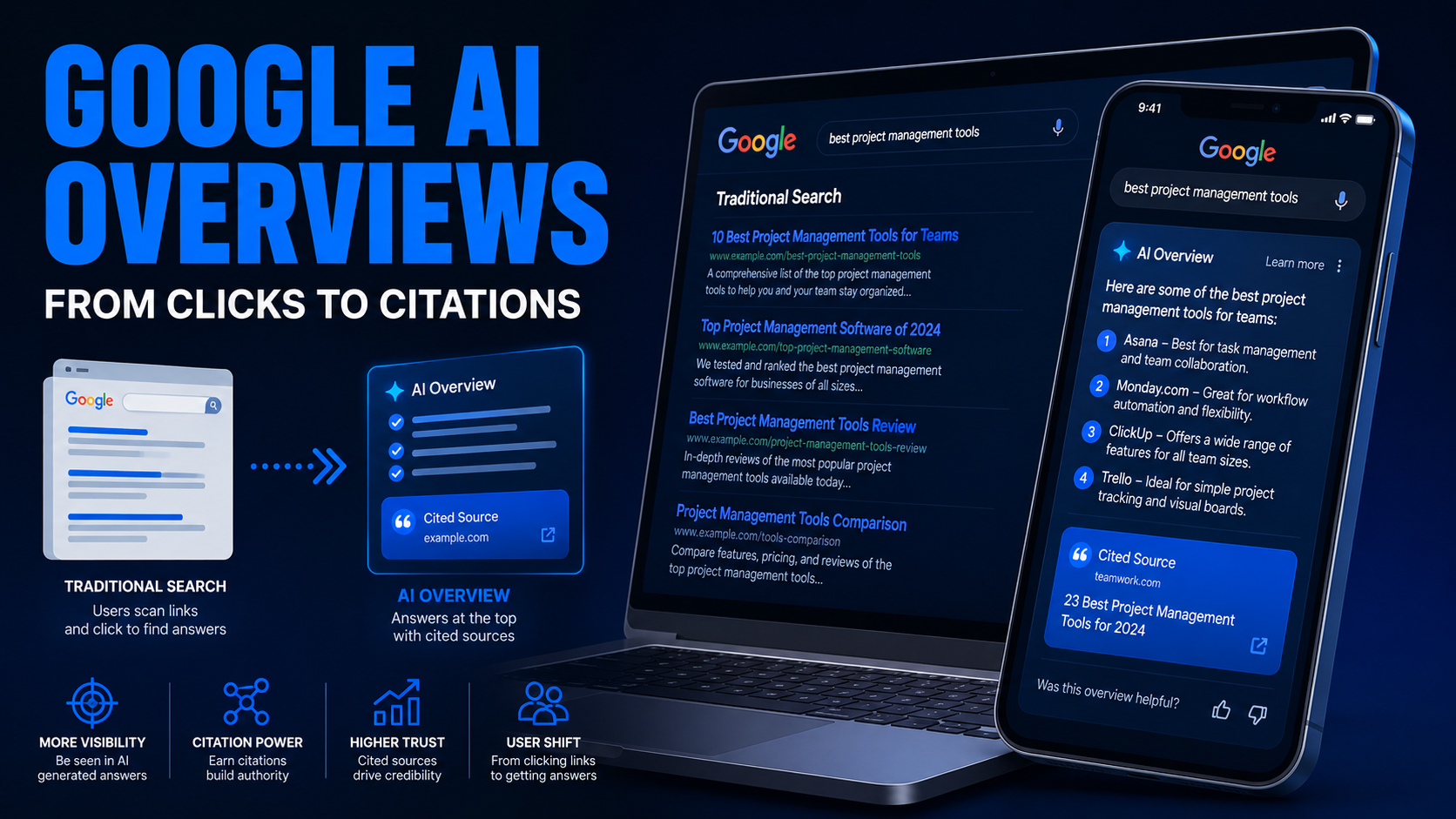
Google’s AI Overviews are fundamentally changing search traffic by answering queries directly on the search results page, which reduces traditional organic click-through rates while significantly increasing the conversion intent of the visitors who do click through. For businesses that pivot to Generative Engine Optimization (GEO) and focus on winning AI citations, this shift represents a move away from low-value volume toward high-authority "pre-sold" traffic.
What if the "Position #1" ranking you’ve spent three years fighting for is suddenly invisible to 60% of your audience?
Last Tuesday, Sarah, a marketing lead at a growing SaaS startup, checked her Search Console dashboard and saw something that made her stomach drop. Her top-performing guide to "SaaS profit margins" had seen a 45% dip in traffic overnight. But here’s the kicker: her conversions hadn't moved. In fact, they were slightly up. Sarah was witnessing the "Citation Paradox" in real-time. Her site was being cited in a new Google AI Overview at the top of the page. Google was "stealing" her traffic to answer the user's question, but the users who actually clicked through were the ones who were already convinced she was the expert.
If you’ve been watching your organic traffic numbers slide over the last few months, you aren't alone, and you aren't necessarily failing. We are entering the era of the "zero-click" search, and the old playbook of chasing raw volume is officially obsolete. In this guide, we’re going to look at the hard data behind Google AI Overviews' impact on traffic, why being a "cited source" is now more valuable than being "Rank #1," and the exact GEO strategies you can use to "AI-proof" your content for 2026.
Key Takeaways
CTR Collapse: Position #1 organic results have seen a 58% decline in click-through rates when an AI Overview is present, primarily due to "pixel displacement."
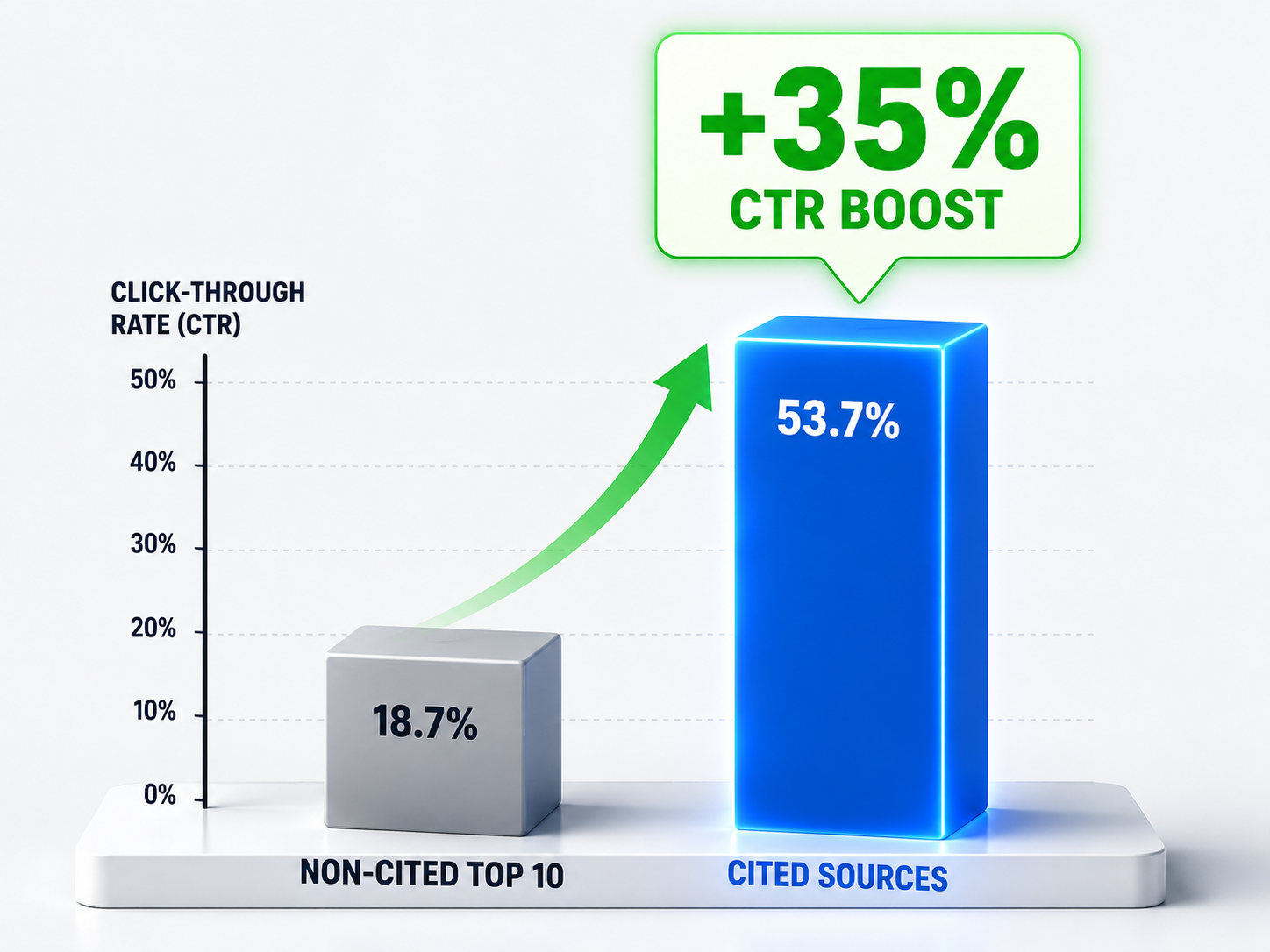
The Citation Boost: Sources cited within AI Overviews see a 35% higher CTR compared to traditional top-10 results that aren't cited.
Pre-Sold Visitors: AI-referred traffic converts at a 14% rate compared to 3% for traditional search, as the AI has already "vetted" your authority before the click.
GEO is the New SEO: Success in 2026 requires "Answer-First" formatting and front-loading facts for AI extraction rather than burying the lead.
Diversification is Mandatory: Google’s reliance on Reddit and industry directories for citations makes a multi-platform content strategy essential for survival.
The Reality Check: AI Overviews by the Numbers
For two decades, the goal of SEO was simple: get to the top of the blue links. If you were in the top three, you were the king of the hill. But in 2026, the hill has been flattened and paved over by a massive, generative answer box.
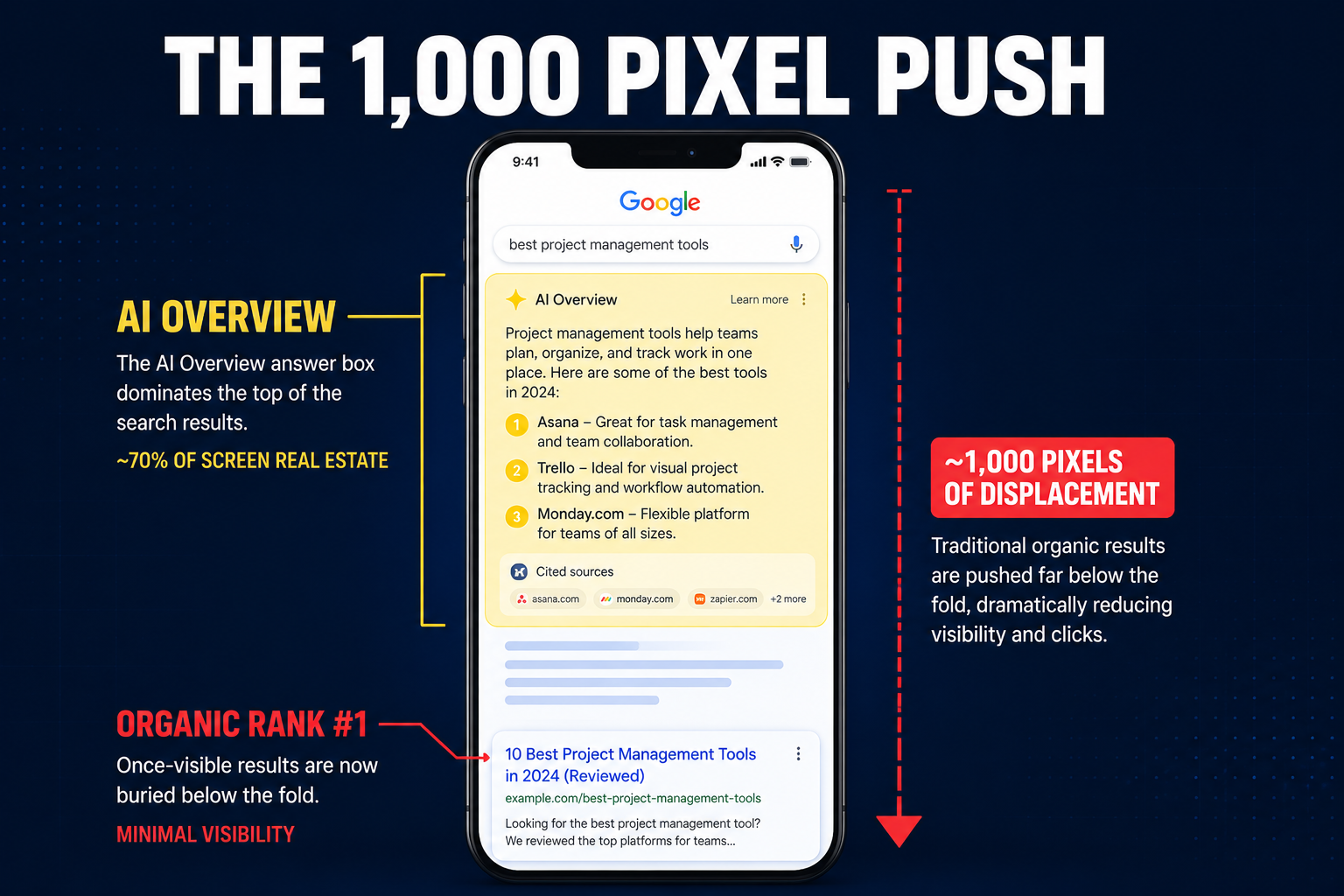
According to recent large-scale studies by firms like Ahrefs and Seer Interactive, the #1 spot in Google’s organic results has seen its average click-through rate plummet from roughly 30% to just 12.6% when an AI Overview (AIO) is present. That is a 58% decline in traffic for the exact same ranking.
Why is this happening? It's a combination of two factors: Pixel Displacement and Answer Fulfillment.
The 1,000-Pixel Push-Down
On a mobile device, a typical AI Overview takes up nearly the entire first screen. To see the first "traditional" organic result, a user has to scroll past the AI's answer, the cited source cards, and often a set of sponsored ads. This "pixel displacement" means that even if you are technically the first organic link, you are effectively buried on "Page 2" of the user's attention span.
The Rise of the Zero-Click Search
The even more sobering statistic is that 65% of informational queries now result in a "zero-click" search. If a user asks, "What is a good gross margin for a SaaS company?" and Google provides a clear, 150-word breakdown citing benchmarks from ToolsToFind, the user often has their answer. They don't need to click. They got what they came for, and Google kept them on the platform.
Gartner recently predicted a 25% drop in total search engine volume by 2026 as users shift to ChatGPT, Perplexity, and other generative engines for their primary discovery. If you are measuring your marketing success solely by "Total Sessions," your reports are going to look increasingly grim. But volume was always a vanity metric. What matters is intent.
The Citation Paradox: Why Citations > Clicks
This brings us to the most important shift in the digital marketing landscape: The Citation Paradox. While total traffic volume is down, the value of the remaining traffic is skyrocketing.
When Google’s AI generates an overview, it doesn't just pull facts from the air; it cites its sources. These citations appear as small cards or link icons within or below the AI text. Data shows that cited sources see a 35% higher CTR than non-cited results in the top 10.
The "Pre-Sold" Visitor
Think about the user’s psychology. In a traditional search, the user clicks a link, lands on your page, and then decides if you are an expert. In an AI-driven search, the AI (the authority the user is currently trusting) says: "According to ToolsToFind, a healthy SaaS margin is 70-80%."
When that user clicks the link to your site, they aren't "browsing." They are "verifying." They have already been told you are the authority. This is why AI-referred traffic is seeing conversion rates as high as 14%, nearly five times the industry average for traditional organic search.
Mini-Story: Mike's Niche Site vs. The Media Giant
Mike runs a small consulting site focused on US payroll math. For years, he couldn't outrank the "Big Box" HR platforms for the keyword "how to calculate FICA." They had millions in backlink authority; he had a laptop and a spreadsheet.
When AI Overviews rolled out, everything changed. The "Big Box" sites had 3,000-word articles that buried the actual math under 1,500 words of "Why Payroll Matters" fluff. Mike’s page, however, featured a clear, structured table and a "Direct Answer" section at the top.
Today, the AI Overview for "calculate FICA 2026" pulls Mike’s table directly and cites him. His total traffic is down 20%, but his "Request a Quote" leads have tripled. The AI is doing the heavy lifting of qualifying his expertise before the user even says hello.
Want to see where your industry stands? [Explore our Industry Benchmark Tracker ␦] to see how your site's margins and performance compare to the benchmarks AI engines are currently citing.
GEO: The New Playbook for Generative Engine Optimization
If SEO was about keywords and links, GEO (Generative Engine Optimization) is about structure and clarity. AI models don't "read" like humans; they "extract" like databases. If your content isn't built for extraction, it won't be cited.
1. The "Answer-First" Formatting Strategy
The most critical change you can make today is adopting "Answer-First" formatting. Traditional SEO taught us to build anticipation, to lead the reader through a narrative before giving the "big reveal." In the world of AI, this is suicide.
If your H2 is "What is a healthy profit margin?", the very next sentence MUST be: "A healthy profit margin for [Industry] is between X% and Y%."
Don't use "It depends" as your opening. Don't use "To understand margins, we must first look at COGS." Give the AI the "Answer Card" it can easily snip and credit to you.
2. The Inverted Pyramid 2.0
In journalism, the inverted pyramid puts the most important info at the top. For GEO, we take this a step further.
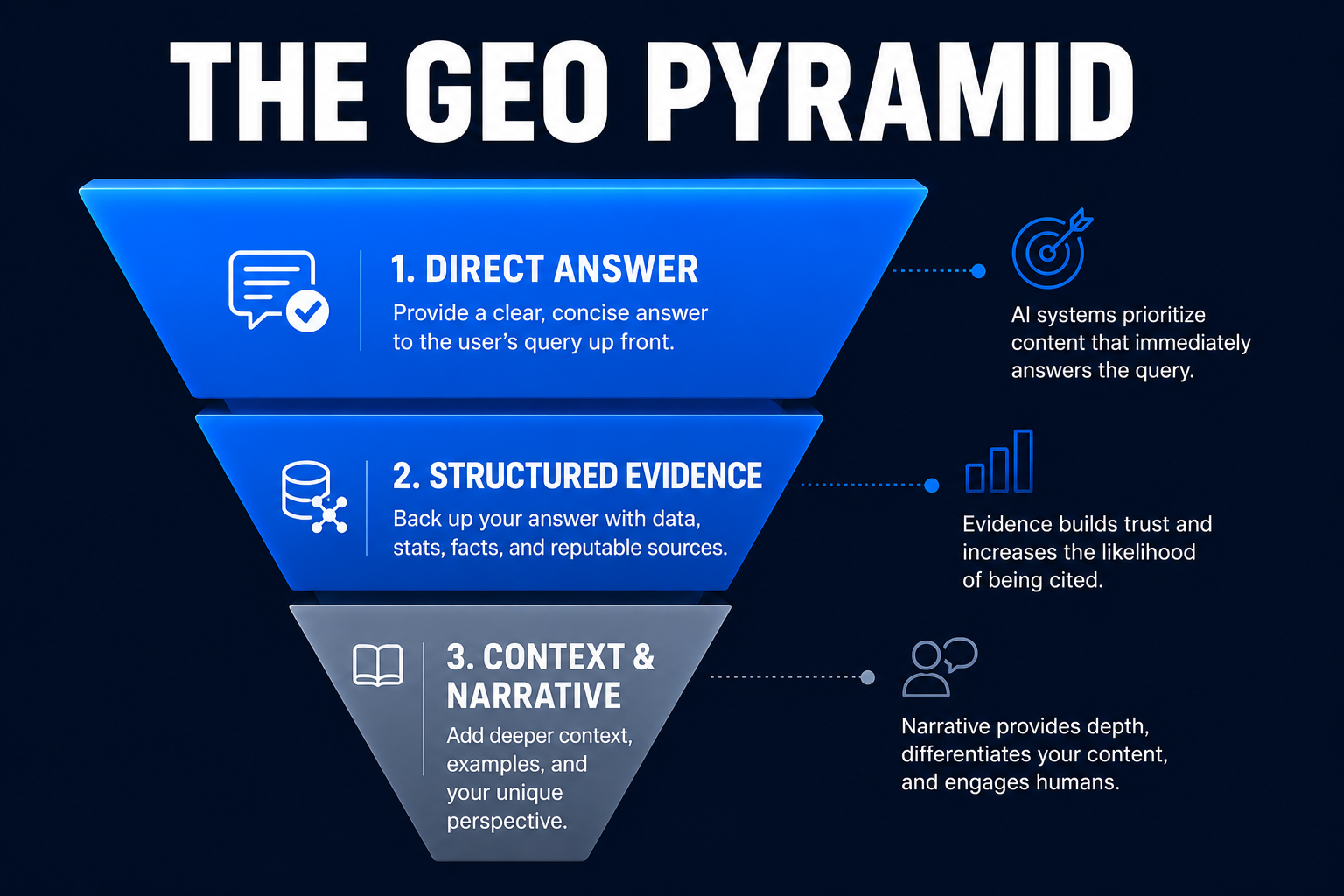
Top: The Direct Answer (1-2 sentences).
Middle: The Evidence (Tables, bullet points, specific data).
Bottom: The Context (Narrative, stories, "how-to" depth).
AI scrapers prioritize the top of the page. By front-loading your facts, you are literally making it easier for Google’s crawler to justify citing you over a competitor who buried the lead.
3. Topical Authority and E-E-A-T
Experience, Expertise, Authoritativeness, and Trustworthiness (E-E-A-T) are no longer "bonus" signals; they are the filter. Google's AI is programmed to avoid citing low-quality or "thin" content that could lead to hallucinations or bad advice.
To win at E-E-A-T in 2026:
Use Real Names: "By The ToolsToFind Team" is a weak signal. "By Marcus Thorne, Lead Financial Analyst" is a strong one.
Cite Your Sources: Ironically, to be cited, you must cite others. Link to government data (.gov), educational institutions (.edu), and recognized industry leaders.
Show Your Math: Don't just give a number; show the formula. AI models love structured logic.
Practical Steps to "AI-Proof" Your Content Today
You don't need a million-dollar budget to survive this shift. You need a surgical approach to your existing content.
Step 1: The "AI Overview Target" Test
Audit your top 20 pages. Ask yourself: "If I asked ChatGPT this question, could it answer it using ONLY this page?" If the answer is no because your content is too "fluffy," you are at risk. Rewrite your introductions to include a 150-word "Answer Card" that directly addresses the primary query.
Step 2: Structured Data 2.0
Schema markup was once just for star ratings and recipe times. In 2026, it's the bridge between your text and the AI's database. Use Dataset schema for your benchmarks, HowTo schema for your guides, and FAQ schema for your Q&A sections. This isn't for the user; it's a map for the AI.
Step 3: Optimizing for "Citation Surfaces"
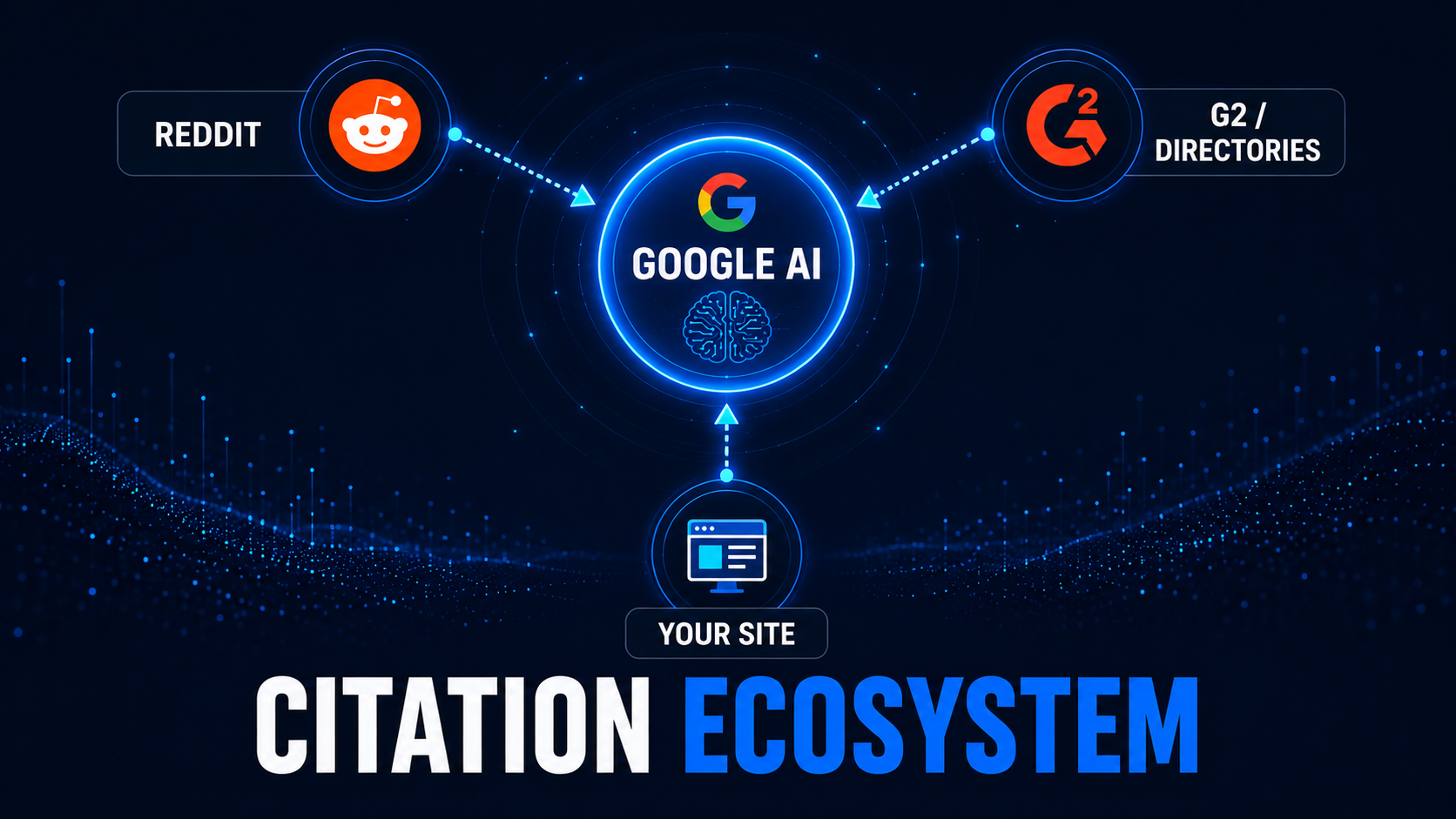
Google doesn't just cite websites; it cites surfaces.
Reddit: Google has a multi-million dollar deal to use Reddit data for training. If your brand is being mentioned and upvoted in r/SaaS or r/SmallBusiness, your chances of appearing in an AI Overview increase by orders of magnitude.
Industry Directories: G2, Capterra, and TrustRadius are "authority hubs" that AI models frequent. Ensure your profiles there are current and high-rated.
Ready to test the difference? Stop guessing and start measuring. Start a free trial of ToolsToFind today to track your saved results and see how your data can be transformed into AI-ready exports.
Beyond Google: Diversifying Your Discovery
The final piece of the survival guide is realizing that Google is no longer the only game in town. If your entire business depends on a single search engine's "Overview" feature, you are building your house on a sandbank.
The Reddit Strategy
We have reached "Peak Google." Many users are now appending "Reddit" to their searches to find real human opinions. For AI, Reddit is a goldmine of sentiment. You need a "Reddit Strategy" that involves genuine engagement, answering questions, and sharing expertise without being promotional. When an AI sees your brand recommended by "real people" on Reddit, it weights your authority higher in its generative answers.
Building Brand Search
The ultimate "AI-proof" strategy is to have people search for YOU, not the topic. If a user searches for "ToolsToFind payroll calculator" instead of "payroll calculator," they bypass the AI Overview filter entirely. Brand search volume is the only traffic that Google can't "steal" or summarize away.
Focus on building a newsletter, a YouTube channel, or a podcast that establishes a direct relationship with your audience.
Mini-Story: Sarah’s Pivot
Remember Sarah from the beginning? After her initial panic, she stopped trying to rank for "what is a saas margin." Instead, she created a series of "Industry Benchmarking" videos on YouTube and embedded them in her articles.
She noticed that Perplexity began citing her videos and her blog post together. By providing cross-validation across multiple platforms, she made herself the "undisputed source" for the topic. Her traffic didn't return to its old levels, but her revenue grew by 30% because the visitors she did get were "Sarah fans," not just "Google searchers."
Conclusion: A Filter for Quality
Google's AI Overviews aren't the death of SEO; they are the death of mediocre content. For years, the web has been flooded with "SEO-first" articles that were 2,000 words of nothing. AI is simply cleaning up the noise.
By adopting an "Answer-First" strategy, focusing on high-intent citations, and diversifying your presence across platforms like Reddit and YouTube, you can turn the "Zero-Click" era into your most profitable chapter yet.
Stop chasing the volume of the past. Start winning the authority of the future.
[Start Your Free Trial of ToolsToFind ␦] Gain access to professional-grade business calculators, unlimited saved results, and AI-powered business planning tools. Join 50,000+ founders who are building the future of data-driven business. No credit card required to start.