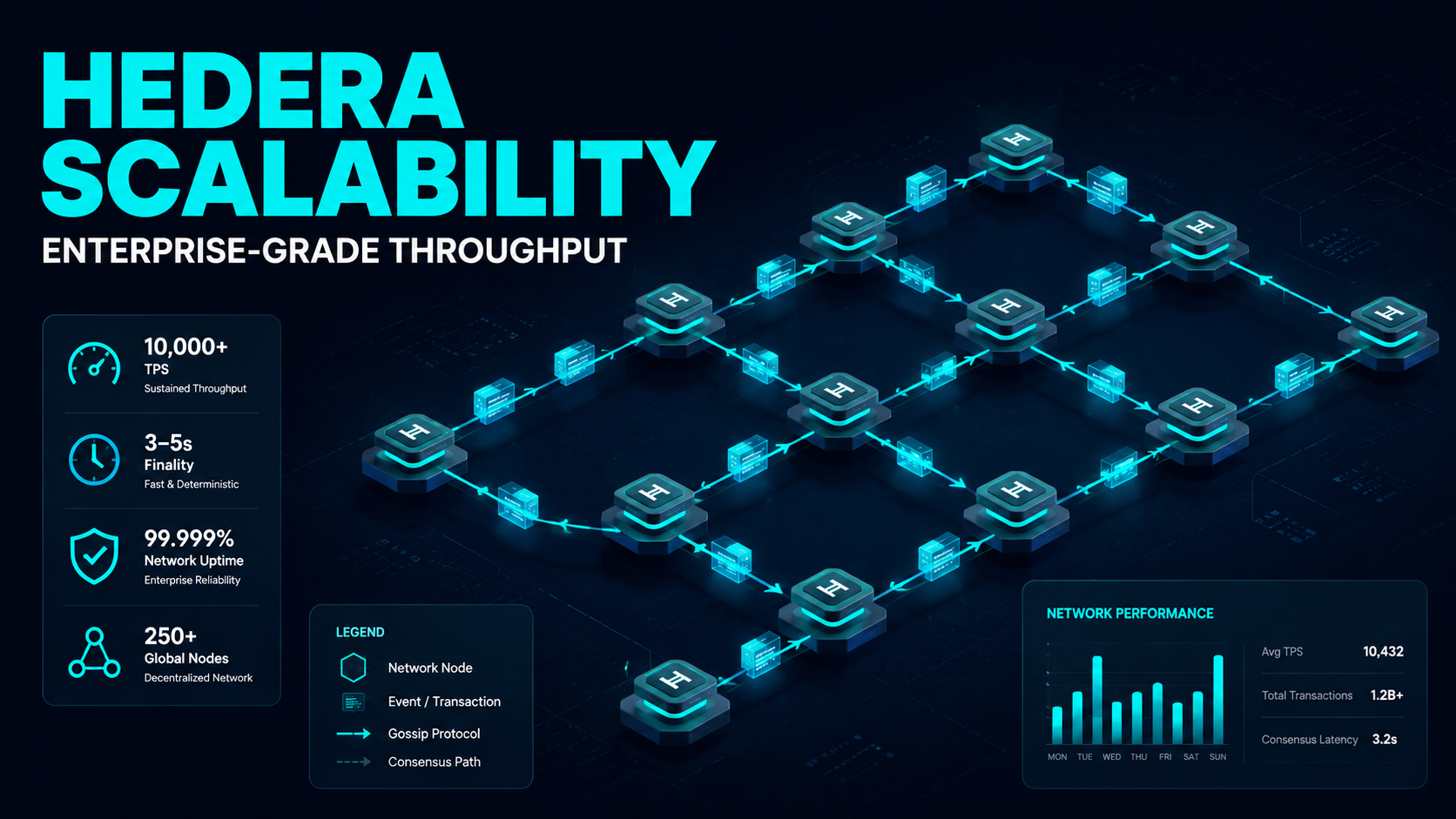
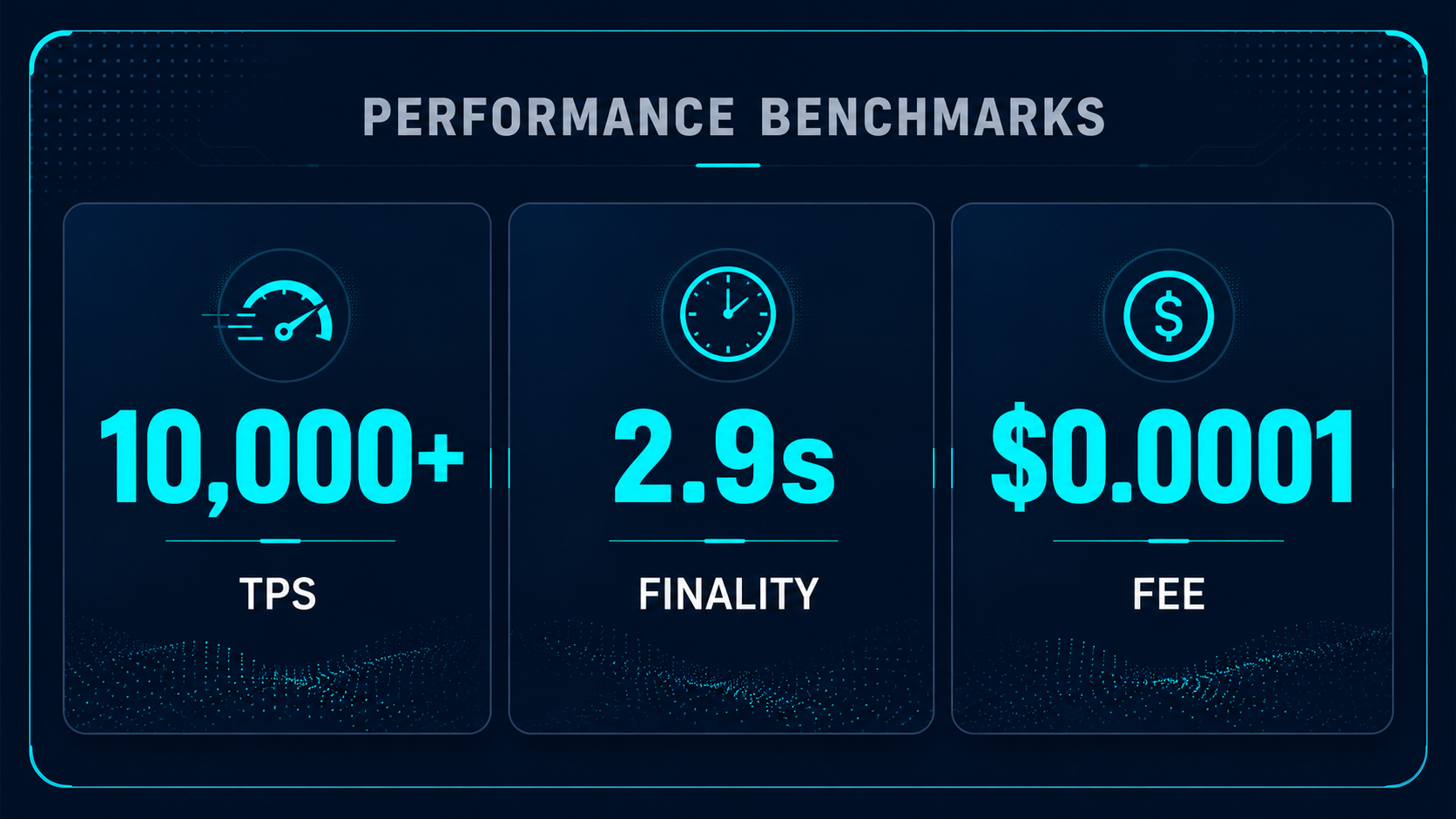
Hedera achieves enterprise-grade scalability through hashgraph consensus rather than linear blockchain blocks. This design enables over 10,000 transactions per second with absolute finality in roughly 2.9 seconds and fixed, predictable fees around $0.0001 for most operations.
Most public blockchains were built for early cryptocurrency use cases, not the sustained volumes, cost certainty, and settlement guarantees that real businesses require. Real-time payments, tokenized asset movements, supply chain event streams, and AI agent interactions generate far more activity than simple token transfers. When networks rely on sequential blocks, leader election, or probabilistic finality, costs spike during peaks, settlement takes too long for collateral or FX workflows, and high-frequency operational data becomes impractical to record on a public ledger.
This guide explains the mechanisms behind Hedera’s throughput, benchmarks them against common alternatives with current observed data, shows where the numbers translate into specific business advantages, and gives decision-makers a practical way to assess fit for their workloads.
Key Takeaways
Hedera's hashgraph consensus delivers 10,000+ TPS (throttled) and ~2.9-second absolute finality on a public network while maintaining the highest security standard (aBFT).
Fixed, predictable fees (~$0.0001 per transaction for most operations) and low energy use remove two major barriers that make traditional blockchains impractical for high-volume business workloads.
Leaderless parallel processing via gossip-about-gossip and virtual voting allows throughput limited primarily by bandwidth rather than block production or leader bottlenecks.
Enterprise governance by a rotating council of global organizations (31 members as of mid-2026, including recent additions FedEx and Arrow) provides the compliance and stability required for regulated sectors such as finance, logistics, and supply chain.
Real-world performance shows recorded peaks above 3,300 TPS with live metrics publicly trackable on third-party dashboards; the network is intentionally capacity-managed today with clear scaling paths via HIP improvements and future sharding.
The Scalability Challenge Blocking Business DLT Adoption
The blockchain trilemma, decentralization, security, and scalability, shows up in daily operations as concrete constraints. Linear block production forces transactions into a single ordered sequence. Proof-of-work or many proof-of-stake systems add latency for probabilistic finality. Leader or validator concentration creates bottlenecks and variable fees when demand rises.
For a business, these translate into problems that spreadsheets and private databases were never meant to solve at internet scale. A logistics platform recording millions of shipment events per day cannot tolerate unpredictable fees or hours-long settlement windows. A payments processor handling retail or micropayments needs costs that remain stable even during promotional spikes. Tokenized real-world assets require settlement certainty fast enough to support intraday collateral movements or streaming cash flows without reorg risk.
Traditional blockchains often treat high throughput as a future upgrade or layer-2 workaround. For many enterprise teams, “good enough for crypto trading” falls short when the application must integrate with ERP systems, meet audit requirements, or support regulated counterparties who expect predictable costs and irreversible records.
Hedera Hashgraph: Architecture Built for Throughput
Hedera does not use a linear chain of blocks. It uses a directed acyclic graph (DAG) of events combined with hashgraph consensus. This structural difference enables parallel processing and removes several sequential chokepoints common in blockchain designs.
Directed Acyclic Graph (DAG) Instead of a Chain
Transactions and their metadata spread as events across the network. Multiple events can be created and gossiped simultaneously rather than waiting for a single block producer to bundle them. The graph structure allows the network to advance many transactions in parallel while still producing a total order for consensus.
Gossip About Gossip for Efficient Information Propagation
Nodes do not flood the entire network with every transaction. Instead, they periodically share recent transaction information plus a summary of what they have already heard (“gossip about gossip”). This keeps bandwidth use low and information propagation fast even as the number of participants grows. The approach is efficient enough that overall throughput becomes limited more by available network capacity than by consensus overhead.
Virtual Voting Eliminates Vote Overhead
Once events have propagated, each node independently runs the same virtual voting algorithm using the gossip history it holds. No separate round of explicit votes travels across the wire. Every node reaches the same conclusion about order and timestamp without additional messages. This removes the communication cost and timing variability of traditional voting or leader-based finality mechanisms.
Asynchronous Byzantine Fault Tolerance (aBFT), The Security Baseline
Hashgraph consensus delivers asynchronous Byzantine fault tolerance. The network reaches agreement even if some messages arrive late or out of order and even if a portion of nodes behave maliciously (up to one-third in the standard model). Finality is absolute: once a transaction reaches consensus, it cannot be reversed or reordered. There are no long confirmation waits or fork risks that require waiting for additional blocks.
Business translation: fair ordering that reduces certain forms of manipulation, mathematically guaranteed finality in seconds rather than minutes or probabilistic assurances, and parallel event handling that scales with bandwidth instead of being capped by block size or leader speed.
Compare this with proof-of-work chains that serialize work into blocks and require multiple confirmations, or many proof-of-stake chains that still rely on sequential block production and often longer or probabilistic finality windows. Hedera’s model keeps the public, permissionless participation properties while removing the sequential and leader-dependent constraints that limit most blockchains.
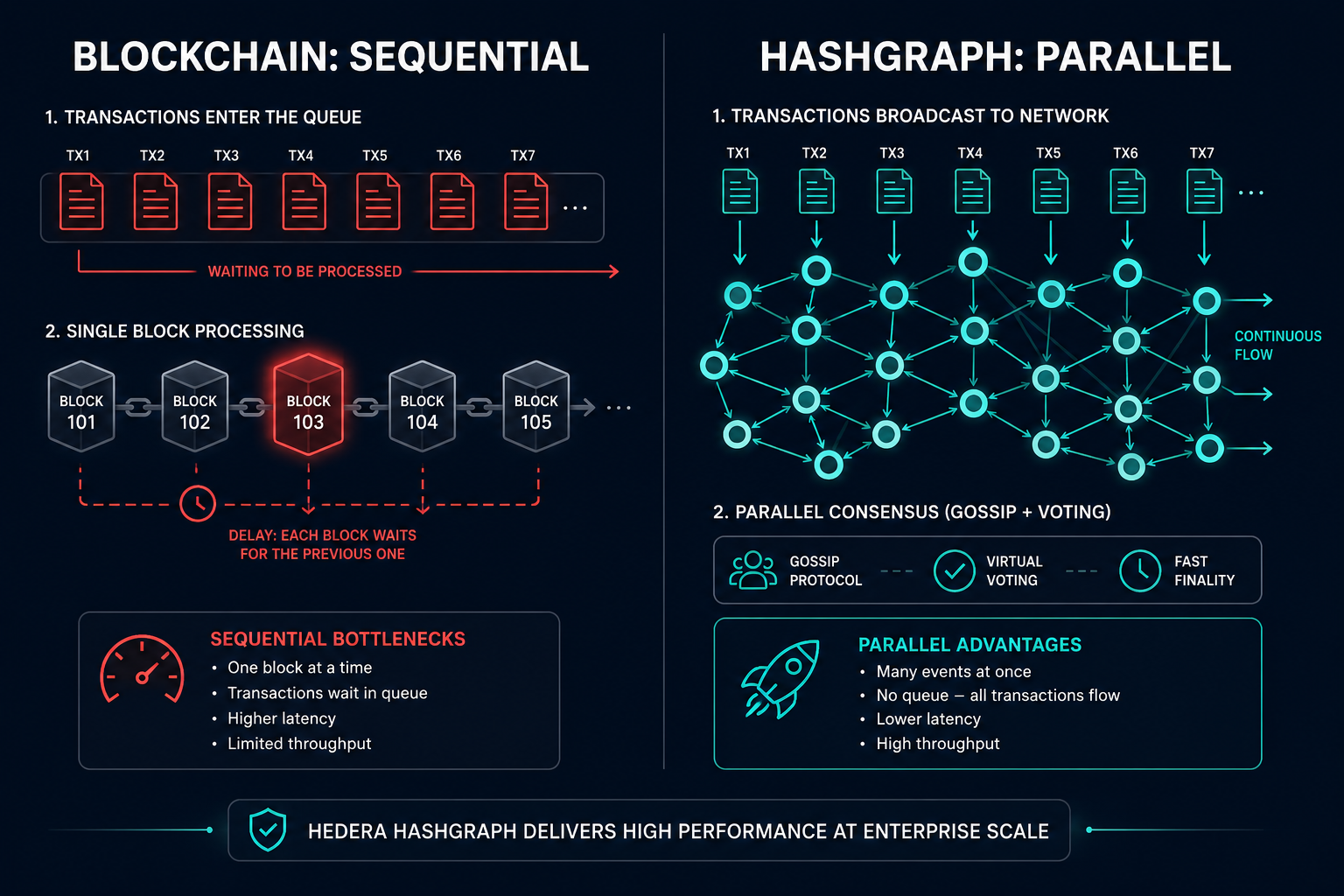
See the official explanation of the mechanism on Hedera’s how Hedera works page for diagrams of event flow and virtual voting.
Performance Numbers That Actually Matter for Business
Official targets and observed production metrics both matter for planning. The table below combines Hedera’s stated capacity with recent third-party measurements.
Metric | Hedera Claim / Target | Recent Observed (Chainspect and similar signals) | Bitcoin | Ethereum (base layer) | Solana (typical observed) |
|---|---|---|---|---|---|
TPS (throttled/theoretical) | 10,000+ TPS (native services, throttled) | Real-time often single digits to low tens; max recorded peaks ~3,300 TPS | ~7 TPS | 15–30+ TPS | Thousands (high theoretical claims) |
Time to finality | 2.90 seconds absolute | ~2.9–5 seconds absolute | 10–60+ min | 12–15+ min (or longer for economic finality) | ~12–15 seconds deterministic |
Fee per typical tx | ~$0.0001 fixed USD | Consistent (see fee note below) | Variable | High and variable | Very low |
Energy per tx | Among the lowest; carbon-negative positioning | , | Very high | Lower post-PoS | Low |
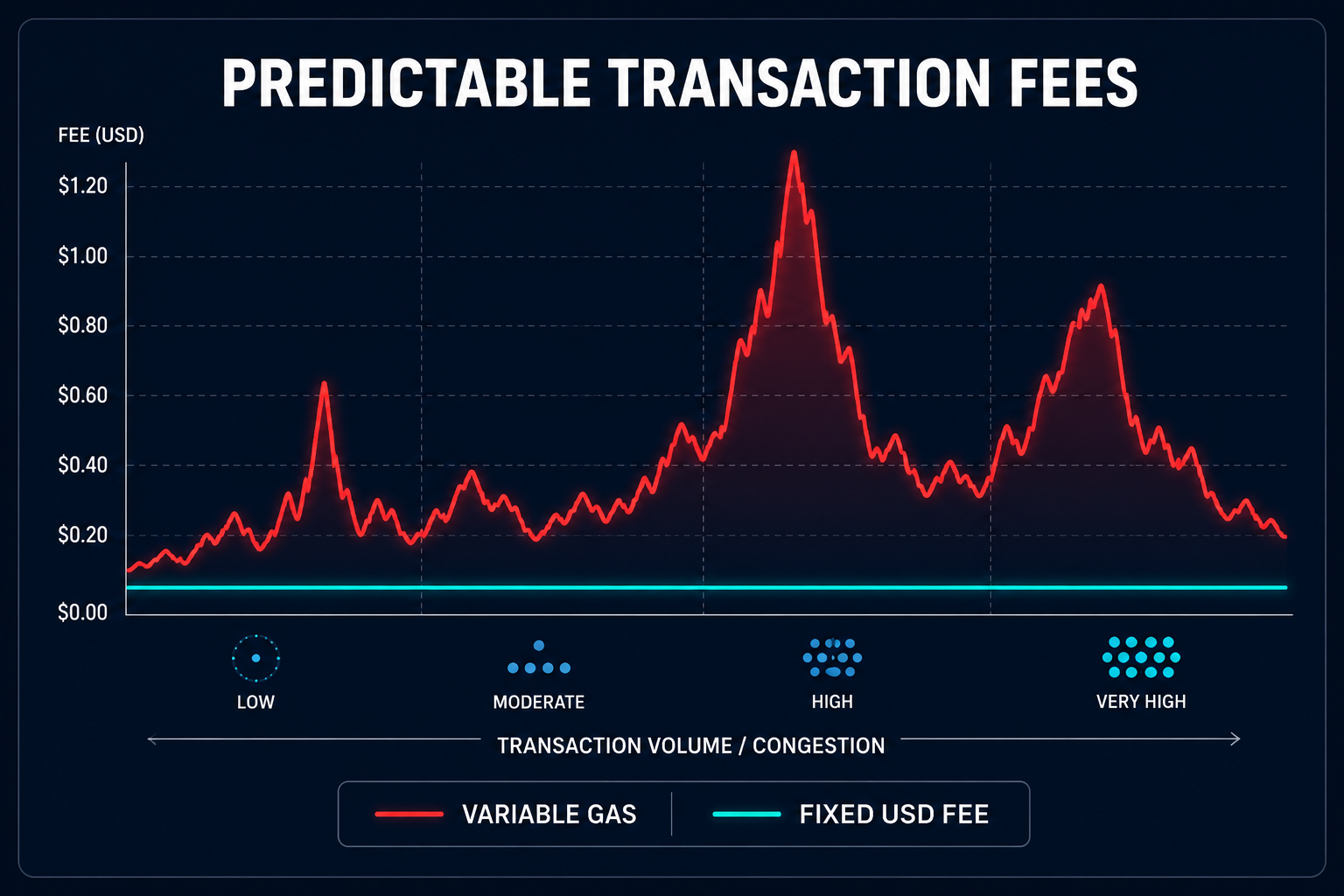
Sources and context: Hedera homepage and services pages state 10,000+ TPS capacity and 2.90-second finality. Chainspect.app/chain/hedera reports real-time TPS, historical max recorded TPS around 3,300, and theoretical maximum of 10,000. Total lifetime transactions exceed 71 billion as of mid-2026, with hundreds of thousands of transactions in recent 24-hour periods.
The network is intentionally throttled today. The goal is stability, fair access, and controlled rollout as usage grows. This differs from pure marketing claims. Teams evaluating Hedera should run their own workload on testnet and mainnet rather than assuming headline numbers will appear immediately in production.
Fees are fixed in USD terms and paid in HBAR at the live exchange rate. This removes gas auction volatility. Note that in January 2026 the ConsensusSubmitMessage fee (used for Hedera Consensus Service ordering and timestamping) increased from $0.0001 to $0.0008 USD while most other base fees remained at the prior low fixed level. Even at the adjusted rate, the cost stays among the most predictable in the industry for high-volume logging and notarization use cases.
Why These Capabilities Unlock Specific Business Applications
The combination of high managed throughput, absolute finality in seconds, fixed low fees, and native services (Consensus Service for ordered logs, Token Service for native issuance and transfers) removes friction that forces many high-volume applications off public ledgers.
High-volume micropayments and stablecoin flows benefit directly from fixed sub-cent costs. A platform processing retail rewards, machine-to-machine payments, or frequent small settlements can model exact monthly spend instead of budgeting for fee spikes.
Asset tokenization and RWAs gain from fast, final settlement. In June 2026, Archax announced real-time streaming cash flows for tokenized securities on Hedera, enabling near second-by-second USDC interest distributions. Earlier, Archax, Lloyds Banking Group, and Aberdeen Investments completed the UK’s first foreign exchange trades collateralized by tokenized real-world assets on the network. Seconds-level finality and low cost make collateral movement and streaming payments practical at institutional volumes.
Supply chain and logistics visibility generates enormous numbers of events. FedEx joined the Hedera Council in February 2026 specifically to advance trusted digital infrastructure for global shipments. Arrow Electronics also participates with a focus on supply chain solutions. Recording provenance, custody transfers, and condition data at event scale on a public ledger with strong ordering and low cost gives participants an auditable, shared source of truth without building or trusting a single central database.
Sustainability tracking, carbon markets, and ESG reporting require frequent, verifiable records. High-frequency issuance or retirement of credits and certificates becomes economically viable when each event costs a fraction of a cent and finalizes quickly.
AI agents and autonomous systems need rapid, ordered, low-cost interactions for coordination, micropayments, and audit trails. The same properties that support high-volume consumer or machine events also support agent economies that would overwhelm slower or more expensive chains.
Decentralized identity and credential verification at population scale similarly benefits from throughput headroom and predictable economics.
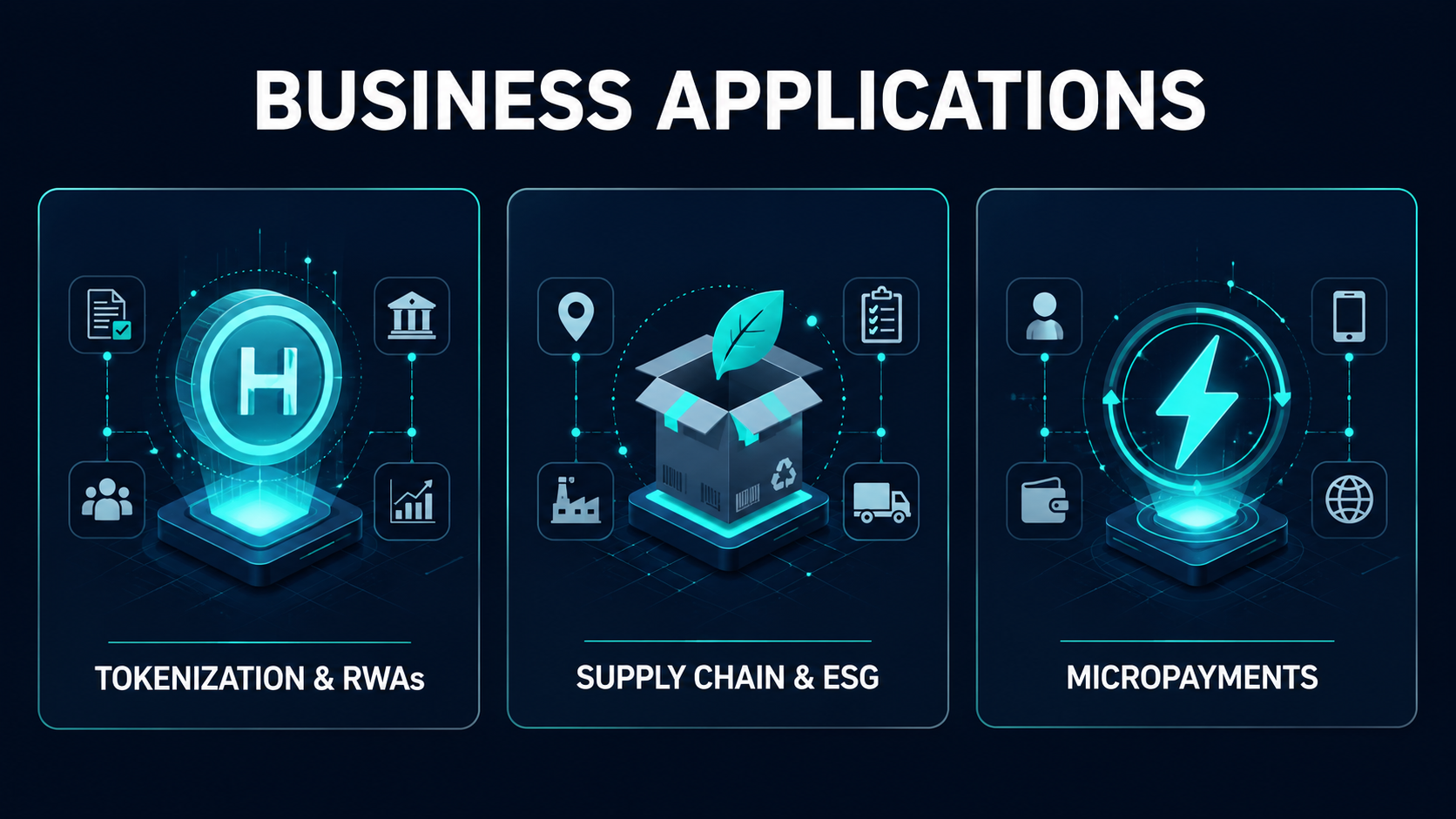
In each case the decisive factors are volume tolerance, cost predictability, finality speed, and the existence of native services that avoid custom smart contract overhead for common operations.
Governance and Compliance as Scaling Enablers
Hedera’s governance model is unusual among public networks. The Hedera Council consists of up to 31 term-limited global organizations that operate nodes and hold equal voting rights on software upgrades, treasury policy, and service pricing. Recent members include FedEx (joined February 2026 for supply chain focus) and Arrow Electronics. Longer-standing members include Google, IBM, Boeing, Dell Technologies, LG Electronics, Deutsche Telekom, Ubisoft, Standard Bank, and others. The council currently represents 16 Fortune 500 companies across 11 industries.
For regulated industries this structure provides several practical advantages. Node operators are known, accountable enterprises rather than anonymous validators. Policy decisions require coordinated agreement among major organizations rather than pure token-holder votes that can be volatile. The public ledger properties remain, anyone can read and verify, while the governance layer supplies the stability and compliance signals that banks, logistics firms, and asset managers need before putting real volume on a network.
This is different from fully permissionless validator-driven systems where governance opacity or rapid token-weighted changes can create uncertainty for counterparties and auditors.
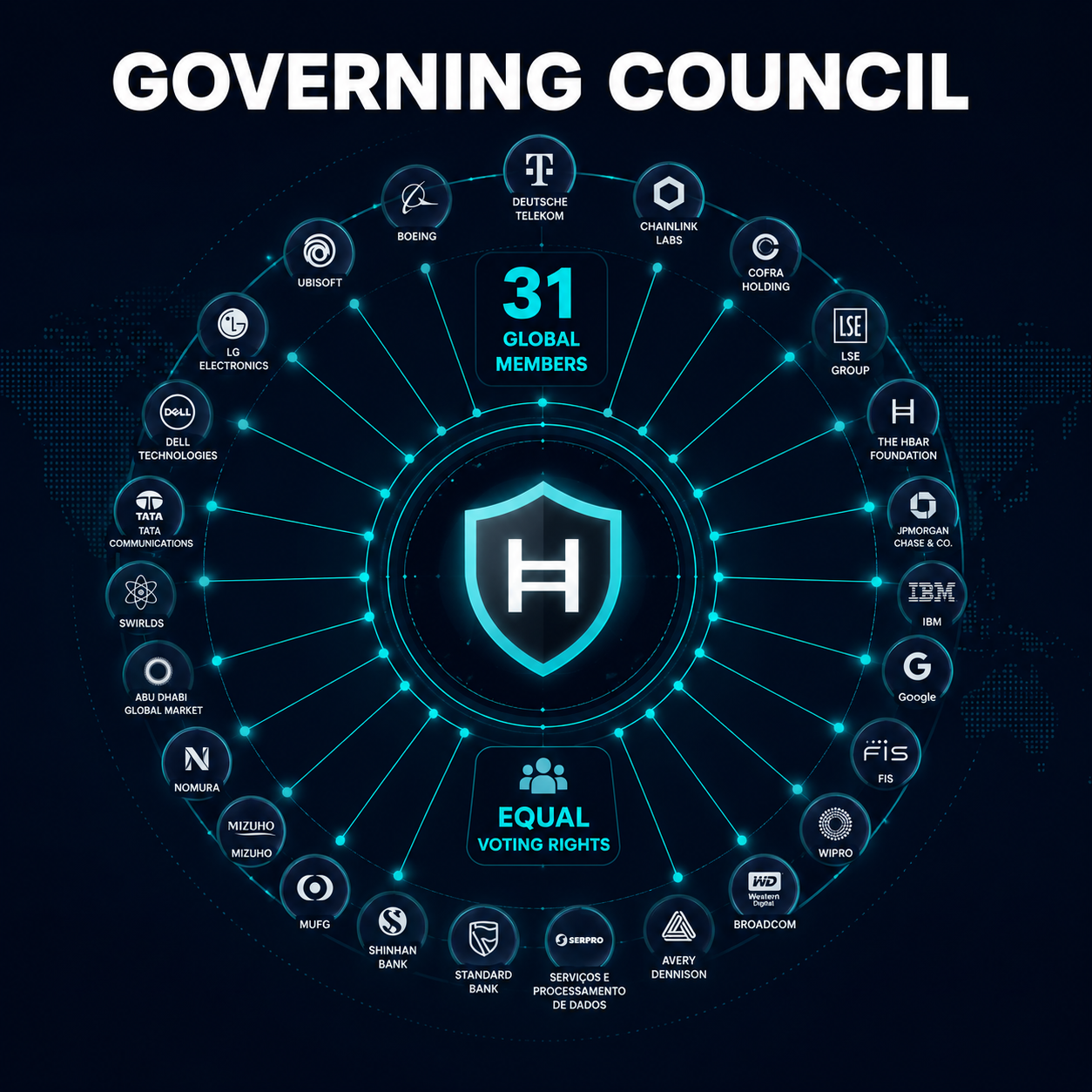
See current membership and announcements at hederacouncil.org.
Realistic Assessment: Current Limits and the Path Forward
Hedera currently runs as a single shard. The architecture supports future sharding while preserving aBFT guarantees; older roadmaps and technical papers reference this direction for effectively unlimited scale. In practice, the network manages capacity through throttling and periodic HIP-driven improvements to effective throughput and smart contract performance.
Recent and ongoing 2026 engineering work includes Threshold Signature Schemes (TSS), Block Streams, and Block Nodes, along with HIPs that create higher-volume lanes for certain operations and refine per-operation throttling. These changes aim to raise the sustainable production rate closer to the 10,000+ target without compromising stability or fairness.
Observed metrics on public dashboards such as Chainspect show that real-time throughput varies with actual demand and is often lower than peak recorded values during quieter periods. Businesses should treat the 10,000+ figure as managed capacity with headroom rather than an always-on guarantee today. The honest path is to pilot with representative transaction patterns and measure end-to-end cost, latency, and integration effort.
The design itself is not fundamentally limited by the same sequential block and leader constraints that cap many linear chains. Demand-driven increases and the referenced future enhancements are the practical next steps.
How to Evaluate Hedera for Your Workload
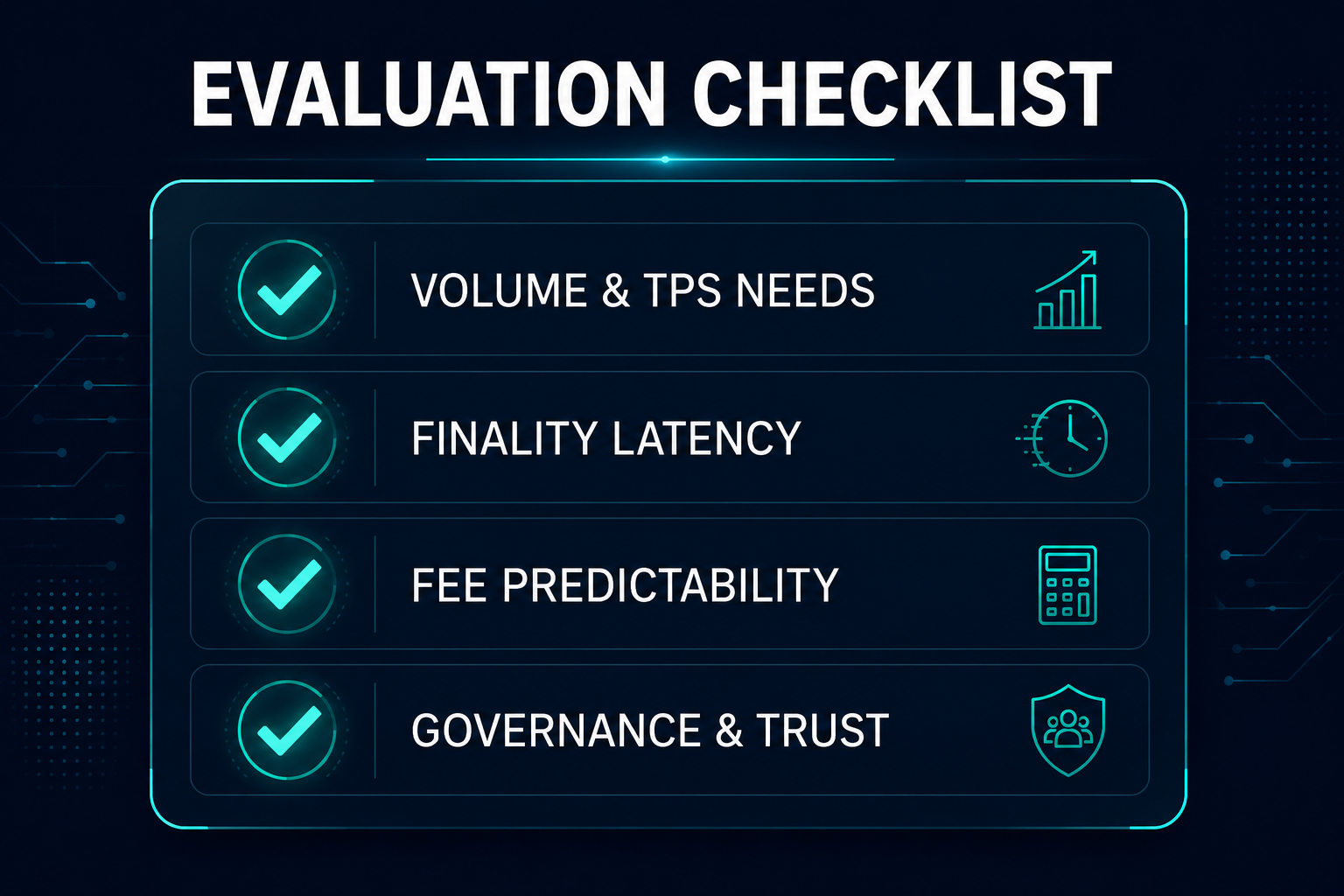
Use this quick checklist when comparing options:
Volume profile: Do you expect sustained thousands of transactions per second, or spiky high-frequency events (supply chain scans, ad impressions, agent interactions, streaming settlements)?
Finality and certainty needs: Does your use case require absolute finality in seconds for settlement, collateral, or audit records, or is probabilistic or longer finality acceptable?
Fee predictability: Can you tolerate variable gas markets, or does your budgeting and customer pricing require fixed, USD-denominated costs?
Regulatory and counterparty requirements: Do you need known node operators, coordinated enterprise governance, and public verifiability together?
Tooling comfort: Are you comfortable with native services (HTS, HCS) plus an optimized EVM, or do you require maximum EVM equivalence on day one?
Resources for validation:
Official use cases and services documentation on hedera.com
Hedera Consensus Service and Token Service pages for native high-throughput patterns
Chainspect Hedera metrics and other public dashboards for live and historical data
Hedera Council site for governance details
Testnet for workload pilots before committing production volume
Developer quickstarts and fee estimator on the official docs site
Hedera is a strong fit when an application simultaneously demands high throughput, settlement certainty, cost control, and enterprise-grade trust signals. It is less compelling if raw theoretical peak speed on a fully permissionless validator set is the only requirement and governance stability matters less.
Conclusion
Hedera addresses the core scalability limitations of traditional blockchains through a fundamentally different consensus design. Hashgraph’s parallel, leaderless, bandwidth-bound approach combined with absolute finality, fixed low fees, and enterprise council governance creates a public network that can support the transaction volumes and operational requirements of payments, tokenization, supply chain, and emerging agentic systems.
The gap between theoretical capacity and sustained production reality continues to narrow as HIP improvements and engineering upgrades land. The responsible approach for any team is to measure against real transaction patterns rather than headline numbers alone.
Run a proof-of-concept with your actual event types and volumes. Track end-to-end cost and latency. Compare finality guarantees and governance fit against the counterparties and regulators you must satisfy. The architecture removes several historical blockers; the remaining work is validating that the current throttled-yet-scalable reality matches your roadmap.
FAQ
What TPS does Hedera actually achieve in production? Hedera targets and throttles native services at 10,000+ TPS capacity. Independent dashboards such as Chainspect show real-time throughput often in the single digits to low tens during typical periods, with recorded peak bursts reaching approximately 3,300 TPS. Total lifetime transactions have surpassed 71 billion, demonstrating sustained operation at meaningful scale. Production teams should validate against their specific workload rather than assuming constant headline rates.
How is Hedera different from Solana or Ethereum L2s for enterprise scalability? Hedera uses hashgraph consensus on a DAG for parallel event processing and absolute finality in ~2.9 seconds with fixed USD fees and no gas auctions. Solana offers high throughput with different finality characteristics and a validator-driven model. Ethereum base layer plus L2s add complexity around data availability, bridging, and variable costs. Hedera’s council governance and native token/consensus services provide a different set of trade-offs focused on predictability and enterprise accountability.
Is Hedera suitable for regulated or compliance-heavy industries? Yes. The council of 31 term-limited global organizations (including FedEx, Arrow Electronics, and longstanding members such as Google and IBM) operates nodes and sets policy. This structure supplies known counterparties and coordinated decision-making while preserving public ledger verifiability. Use cases in tokenized securities (Archax), FX collateral (Archax with Lloyds and Aberdeen), and supply chain already demonstrate activity in regulated contexts.
Why are transaction fees on Hedera so low and predictable? Fees are fixed in USD terms (most common operations around $0.0001, with specific adjustments such as the 2026 increase for ConsensusSubmitMessage to $0.0008) and paid in HBAR at the live exchange rate. There is no auction or priority gas market, so costs do not spike with network congestion. This predictability is one of the main reasons high-volume operational and micropayment applications consider the network.
What is the difference between hashgraph consensus and blockchain? Traditional blockchains serialize transactions into ordered blocks produced by miners or validators, often with leader election and probabilistic or multi-block finality. Hashgraph uses a directed acyclic graph of events, gossip-about-gossip propagation, and virtual voting so that every node independently reaches the same consensus on order and timestamp without explicit vote traffic or a single block producer. The result is parallel processing, lower communication overhead, and asynchronous Byzantine fault tolerance with fast absolute finality.
Does Hedera plan to shard or increase capacity further? The network currently operates as a single shard with managed throttling for stability. The underlying architecture and historical technical materials support sharding as a path to higher sustained capacity while retaining aBFT properties. In 2026 the team is shipping incremental improvements (including HIPs for higher-volume lanes and upgrades such as Block Streams and Threshold Signature Schemes) that raise effective throughput before any future sharding rollout. Demand and pilot results will drive the pace.
Further reading and validation resources
Hedera learning center and scalability overview: hedera.com/learning
Live and historical metrics: chainspect.app/chain/hedera
Council details and membership: hederacouncil.org
Services documentation and fee estimator: docs.hedera.com and the official fee calculator
Run representative tests. The combination of parallel consensus, absolute finality, fixed costs, and enterprise governance is what makes the scalability claims relevant for business applications rather than purely theoretical.