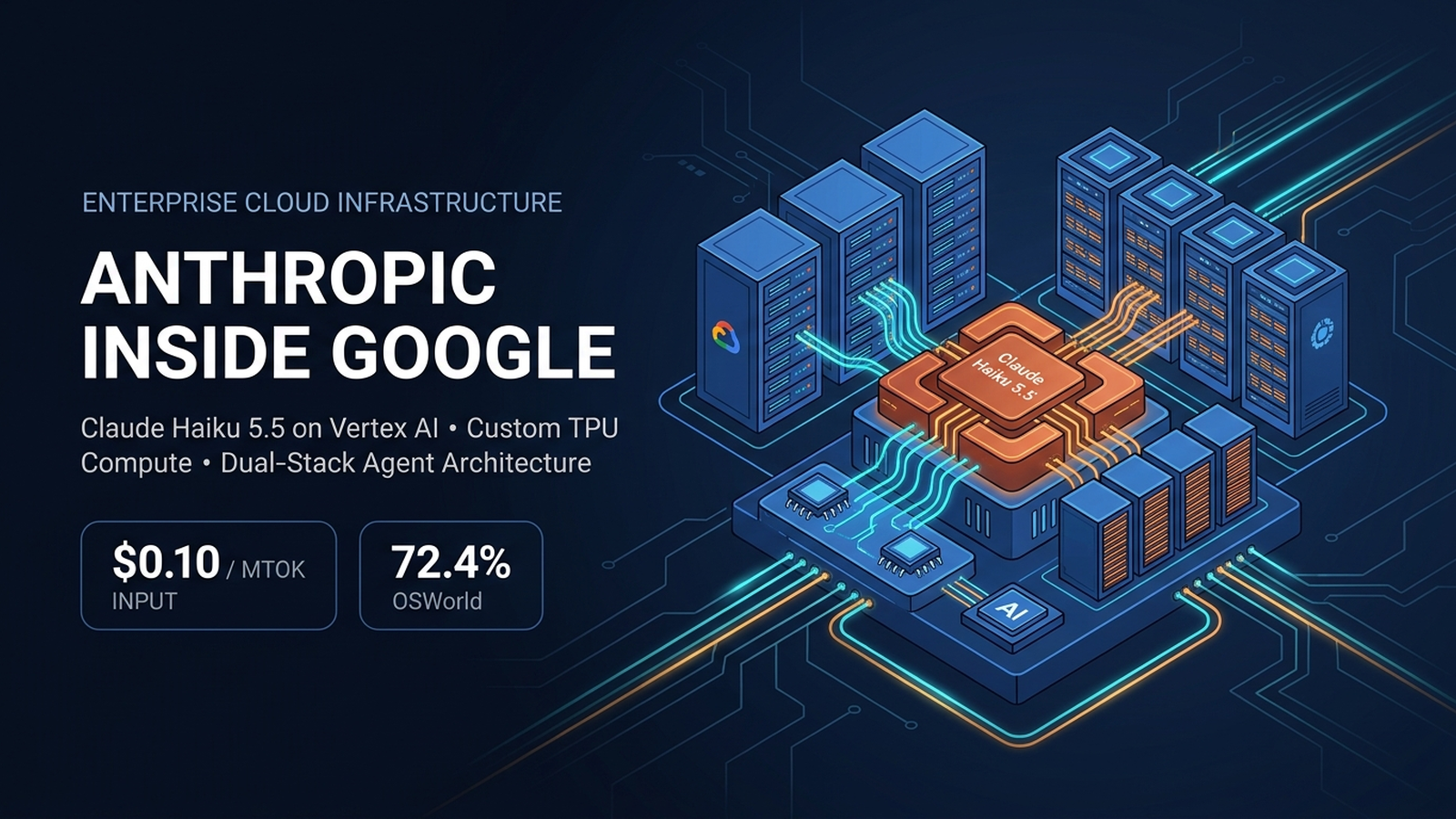
Anthropic and Google are locked in a paradoxical "co-opetition." While Anthropic's Claude and Google's Gemini compete directly for frontier AI supremacy, Google provides Anthropic with billions of dollars in TPU compute infrastructure and distributes Claude Haiku 5.5 natively inside Google Cloud Vertex AI. For software engineers, CTOs, and SaaS founders, the Anthropic vs Google dynamic is not a winner-take-all duel. It is a dual-vendor infrastructure reality where Google collects cloud tolls on every Claude API call, and developers combine both model families to maximize application performance while protecting their software margins.
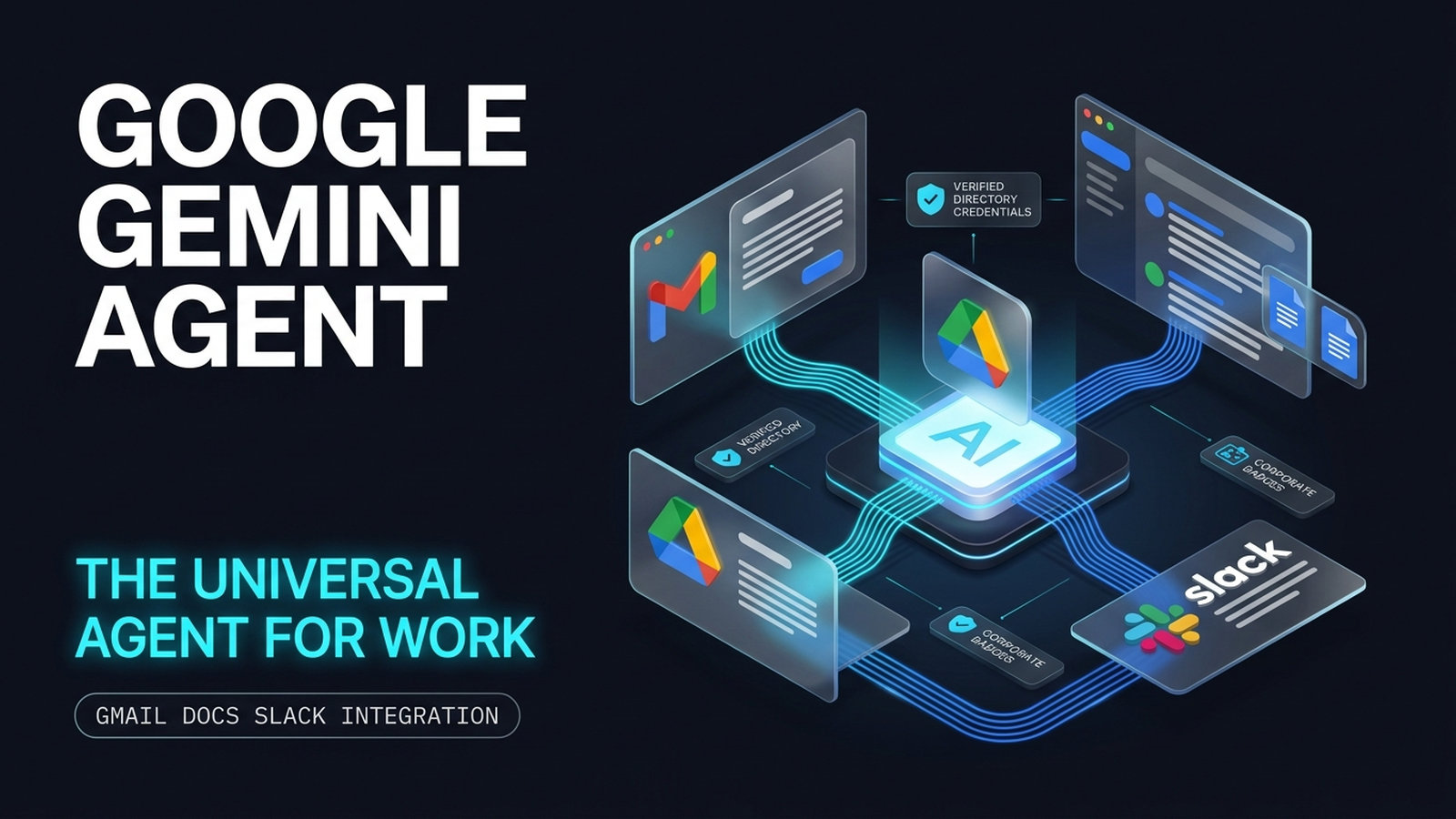
The cheapest way to run an autonomous AI agent in 2026 is no longer to bet exclusively on one tech titan. The real architectural breakthrough comes from understanding why Google actively sells Anthropic's fastest model inside its own Gemini Agent ecosystem.
If you are building autonomous workflows, you already know that frontier models like Claude 3.5 Sonnet or Gemini 1.5 Pro are commercially unsustainable for repetitive, 40-step subagent execution loops. You need deterministic tool execution, sub-second latency, and token pricing that does not incinerate your product's unit economics. In this deep dive, you will discover how the Anthropic Google partnership really works behind closed doors, how Claude Haiku 5.5 compares to Gemini 2.0 Flash in autonomous agentic benchmarks, and how to implement a production-tested "dual-stack" architecture on Google Cloud Vertex AI that defends an 80%+ gross margin profile.
Key Takeaways
The Silicon Symbiosis: Google has invested over $2 billion in Anthropic while providing access to up to one million custom Tensor Processing Units (TPUs), turning Google Cloud into the primary compute engine and financial beneficiary of Claude's commercial growth.
The Subagent Pricing Revolution: Claude Haiku 5.5 enters the market at $0.10 per million input tokens and $0.50 per million output tokens, undercutting legacy execution tiers while delivering 72.4% on OSWorld 2.1 computer-use benchmarks.
Google's Platform Strategy: Rather than forcing enterprises into a proprietary walled garden, Google Cloud's Gemini Agent platform treats Claude Haiku 5.5 as a first-class citizen inside Vertex AI, capturing enterprise compute, storage, and networking revenue regardless of model choice.
The Dual-Stack Architectural Pattern: Modern enterprise multi-agent systems pair Google Gemini's 2,000,000-token multimodal context window for strategic intake and document synthesis with Claude Haiku 5.5's deterministic precision for high-frequency subagent loops.
P&L Margin Defense: Routing high-iteration tool-calling loops away from flagship frontier models down to Claude Haiku 5.5 on Vertex AI cuts inference operational expenditures by up to 98.3%, insulating SaaS startups from unexpected compute deficits.
The Paradox of Anthropic vs Google: Fiercest Rivals and Most Lucrative Partners
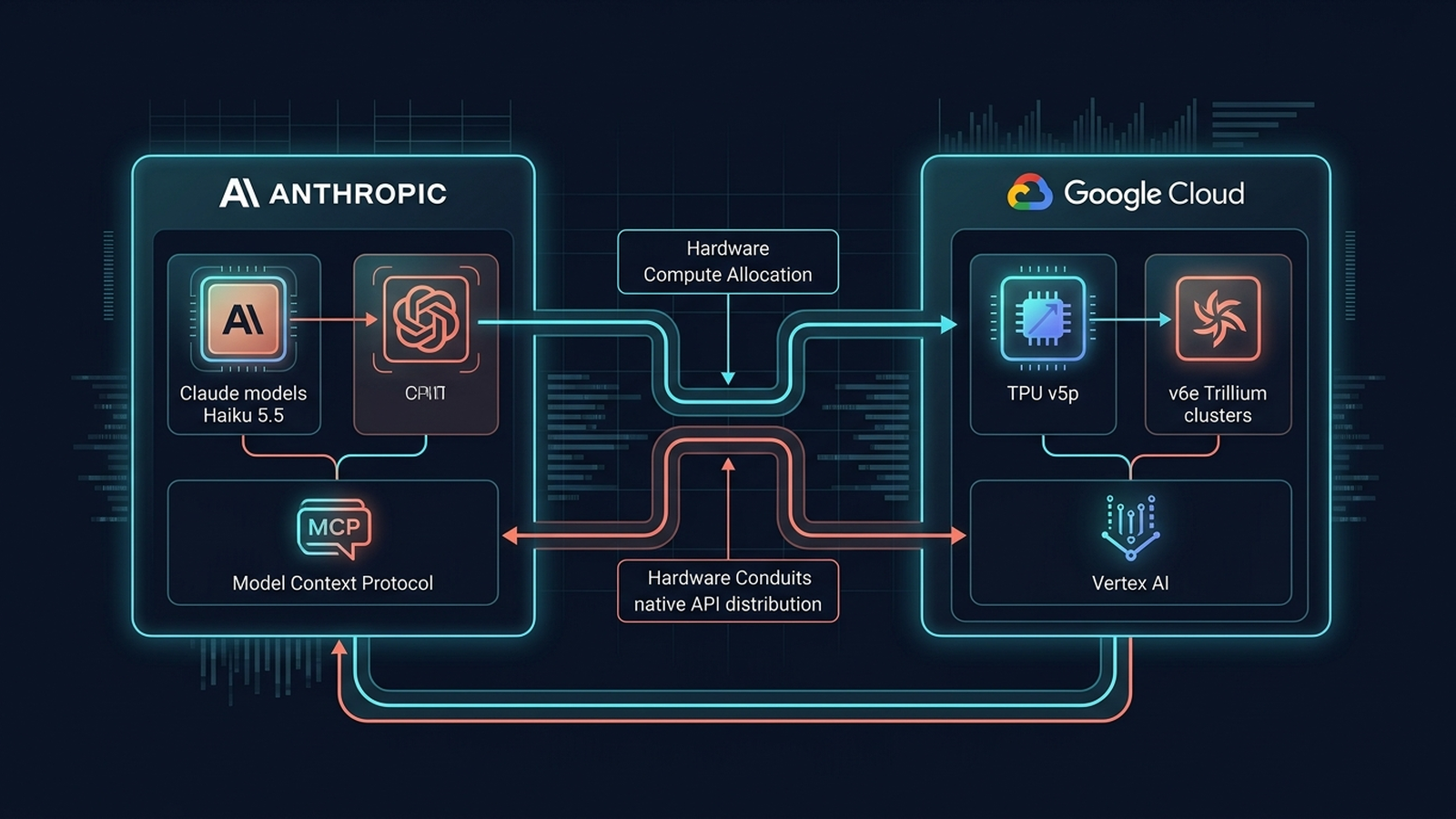
To understand the engineering landscape of enterprise AI in late 2026, you must first discard the consumer assumption that AI labs operate like rival sports franchises. The commercial reality of Anthropic vs Google is not an ideological war; it is a multi-billion-dollar joint venture disguised as a market rivalry. This formal Anthropic Google partnership redefines how frontier compute is distributed to software teams.
flowchart LR
    subgraph Anthropic["Anthropic"]
        A1["Claude Models"]
        A2["Haiku 5.5 & Sonnet"]
        A3["Model Context Protocol (MCP)"]
    end
    subgraph GoogleCloud["Google Cloud"]
        G1["Custom TPU Accelerators (v5p & v6e)"]
        G2["Vertex AI Model Garden"]
        G3["Cloud Storage & Networking"]
    end
    Anthropic -- "Leases Hundreds of Thousands of TPUs" flowchart LR
    subgraph Anthropic["Anthropic"]
        A1["Claude Models"]
        A2["Haiku 5.5 & Sonnet"]
        A3["Model Context Protocol (MCP)"]
    end
    subgraph GoogleCloud["Google Cloud"]
        G1["Custom TPU Accelerators (v5p & v6e)"]
        G2["Vertex AI Model Garden"]
        G3["Cloud Storage & Networking"]
    end
    Anthropic -- "Leases Hundreds of Thousands of TPUs" --> GoogleCloud
    GoogleCloud -- "Distributes Native APIs on Vertex AI"  GoogleCloud
    GoogleCloud -- "Distributes Native APIs on Vertex AI" --> Anthropic
    GoogleCloud -- "Captures Enterprise Compute Tolls"  Anthropic
    GoogleCloud -- "Captures Enterprise Compute Tolls" --> Anthropic
When engineers evaluate the Anthropic vs Google ecosystem, they frequently view them as competing platforms. In reality, every time a customer runs Claude Haiku 5.5 on Google Cloud, Google profits from the underlying silicon, the hosting environment, the networking egress, and the enterprise management layer.
The Billion-Dollar Silicon Pact (TPU v5p and v6e Trillium Allocation)
Anthropic's compute foundation rests on a deliberate multi-cloud diversification strategy designed to prevent complete dependence on Amazon Web Services (AWS). While Amazon committed $4 billion to Anthropic to anchor Claude to AWS Bedrock and AWS Trainium silicon, Google executed a parallel strategic masterstroke.
Beginning with a $500 million equity injection in late 2023 and expanding into a subsequent $1.5 billion capital commitment, the Anthropic Google partnership guaranteed Anthropic access to massive, high-performance clusters of Google's proprietary Tensor Processing Units (TPU v5p and next-generation TPU v6e Trillium).
Frontier model pre-training and high-concurrency inference require unprecedented silicon density. Under this formal Anthropic TPU compute agreement scaling across hundreds of thousands of TPU accelerators, Anthropic buffered itself against global Nvidia GPU shortages while expanding the enterprise footprint of Anthropic vs Google cloud deployments.
As Alphabet leadership highlighted during Google Cloud AI infrastructure updates:
"Our infrastructure leadership means Google Cloud is the premier destination for AI innovation, both for our own groundbreaking Gemini models and for industry leaders like Anthropic who build on our custom TPUs."
Google Cloud's Platform Strategy: Collecting the Toll Either Way
Why does Google Cloud CEO Thomas Kurian celebrate when a major Fortune 500 client chooses Claude over Gemini? Because Google Cloud's core commercial imperative is enterprise workload retention, not DeepMind exclusivity.
Inside Google Cloud Vertex AI, Claude models sit directly in the Model Garden alongside Google's native Gemini, Gemma, and PaLM weights. When an enterprise signs a minimum annual spend commitment on GCP, that customer can draw down their balance by calling Claude Haiku 5.5 through Vertex AI endpoints. Google bills the enterprise for the compute time, charges for private networking peering, bills for the associated Cloud Storage buckets, and captures the surrounding enterprise observability telemetry.
If a developer refuses to use Gemini, Google would rather capture 100% of that customer's cloud infrastructure bill by hosting Claude than watch that developer migrate their entire backend to AWS Bedrock or Microsoft Azure. The Anthropic vs Google dynamic is, for Google Cloud, a win-win financial tollbooth.
The Regulatory Shadow: Scrutiny from the FTC and CMA
This interlocking web of silicon, equity, and hosting is not without legal tension. The US Federal Trade Commission (FTC) and the UK Competition and Markets Authority (CMA) have scrutinized the structural mechanics of Big Tech investments in frontier AI labs.
To navigate this antitrust minefield, the capital agreements between Google and Anthropic rely on non-voting equity shares, commercial compute credits, and non-exclusive distribution agreements. Anthropic remains legally independent, able to deploy on AWS Bedrock, run on sovereign European datacenters, or serve developers directly via its own API console. Yet operationally, the gravitational pull of Google's TPU infrastructure binds Anthropic tightly to Mountain View's silicon pipeline.
Claude Haiku 5.5: Anthropic's Trojan Horse in the Agent Economy
Against this backdrop of corporate co-opetition, Anthropic launched Claude Haiku 5.5 in October 2026. If Claude Sonnet represents Anthropic's flagship reasoning engine and Opus represents its heavyweight scientific researcher, Haiku 5.5 is Anthropic's tactical weapon built specifically to capture the booming autonomous agent economy. In the broader scope of Anthropic vs Google, speed and unit economics now dictate developer adoption just as much as benchmark bragging rights.
Metric | Specification | Engineering Impact |
|---|---|---|
Input Pricing (< 100k) | $0.10 / MTok | 30x cheaper than flagship models |
Output Pricing (< 100k) | $0.50 / MTok | Enables sub-cent multi-turn execution |
Streaming Latency | 110 - 140 tps sustained | Instant feedback for autonomous agent loops |
Context Window | 1,000,000 Tokens | Tiered pricing threshold at 100k tokens |
Computer-Use Accuracy | 72.4% (OSWorld 2.1) | State-of-the-art UI and desktop navigation |
The October 2026 Benchmark Leap
For years, "small" models were relegated to low-stakes tasks: basic text classification, naive summarization, or simple intent parsing. Complex code generation, multi-step tool use, and autonomous environment navigation remained the exclusive domain of expensive flagship models.
Claude Haiku 5.5 shatters this ceiling. Scoring 72.4% on the OSWorld 2.1 benchmark (which tests real-world desktop and browser control via computer-use APIs), Haiku 5.5 dramatically outperforms its predecessor Haiku 4.5 (15.7%) and achieves parity with previous flagship tiers on coding benchmarks like SWE-bench Verified, as documented in official Anthropic announcements.
Furthermore, according to data from the Artificial Analysis model leaderboard, Haiku 5.5 delivers sustained streaming generation speeds between 110 and 140 tokens per second (tps). This latency advantage is critical for autonomous agent loops. When an agent must parse an API error, inspect a terminal log, write a temporary file, and evaluate a test script, human users will not tolerate a model that takes four seconds per reasoning hop. Haiku 5.5 executes multi-step chains in sub-second intervals.
The Disruptive Pricing Curve
To evaluate why Haiku 5.5 disrupts the economics of AI development, consider its base pricing tier published in the Anthropic API pricing documentation:
Input Tokens (Prompts < 100k tokens): $0.10 per million tokens ($0.0001 per 1k)
Output Tokens (Prompts < 100k tokens): $0.50 per million tokens ($0.0005 per 1k)
Extended Context Tier (> 100k tokens): $0.50 input / $2.50 output per million tokens
Compare this to Claude 3.5 Sonnet ($3.00 input / $15.00 output per million tokens) or OpenAI's GPT-4o ($2.50 input / $10.00 output). Haiku 5.5 is 30 times cheaper on input and 30 times cheaper on output than standard frontier models.
For developers utilizing Anthropic's prompt caching mechanisms, cache read hits drop input costs to a microscopic $0.01 per million tokens. This pricing structure fundamentally alters how engineering teams evaluate the Anthropic vs Google trade-off when designing agentic loops.
The Subagent Specialist: Why Monoliths Are Dying in Production
Consider how early autonomous systems failed. In 2024, early-stage startups built agents using a monolithic architecture: a single instance of Claude Sonnet or GPT-4 was tasked with reading documentation, writing bash commands, running tests, analyzing exceptions, and drafting the user update.
The financial outcome was predictable. A single user inquiry that triggered a 40-step agent loop routinely burned through 300,000 cumulative input tokens and 20,000 output tokens as the conversation history expanded. At flagship rates, that single run cost between $1.20 and $1.80. If the customer was paying a flat $29/month subscription, running just twenty autonomous tasks completely erased that user's revenue contribution.
Mini-Story: The Cost of Monolithic Loops Elena Vance, CTO of OpsFlow, a high-growth legal workflow startup in Austin, discovered this reality the hard way. When OpsFlow deployed an autonomous contract redaction agent powered solely by Claude 3.5 Sonnet, user adoption surged. But three weeks later, Elena opened OpsFlow's cloud bill to find a staggering $18,400 monthly inference charge for fewer than 400 active accounts. Each contract triggered an unconstrained 35-step tool loop, repeatedly feeding a 45-page document back into the frontier model at premium rates. OpsFlow's software gross margins had collapsed from a healthy 78% down to 31% in a single billing cycle.
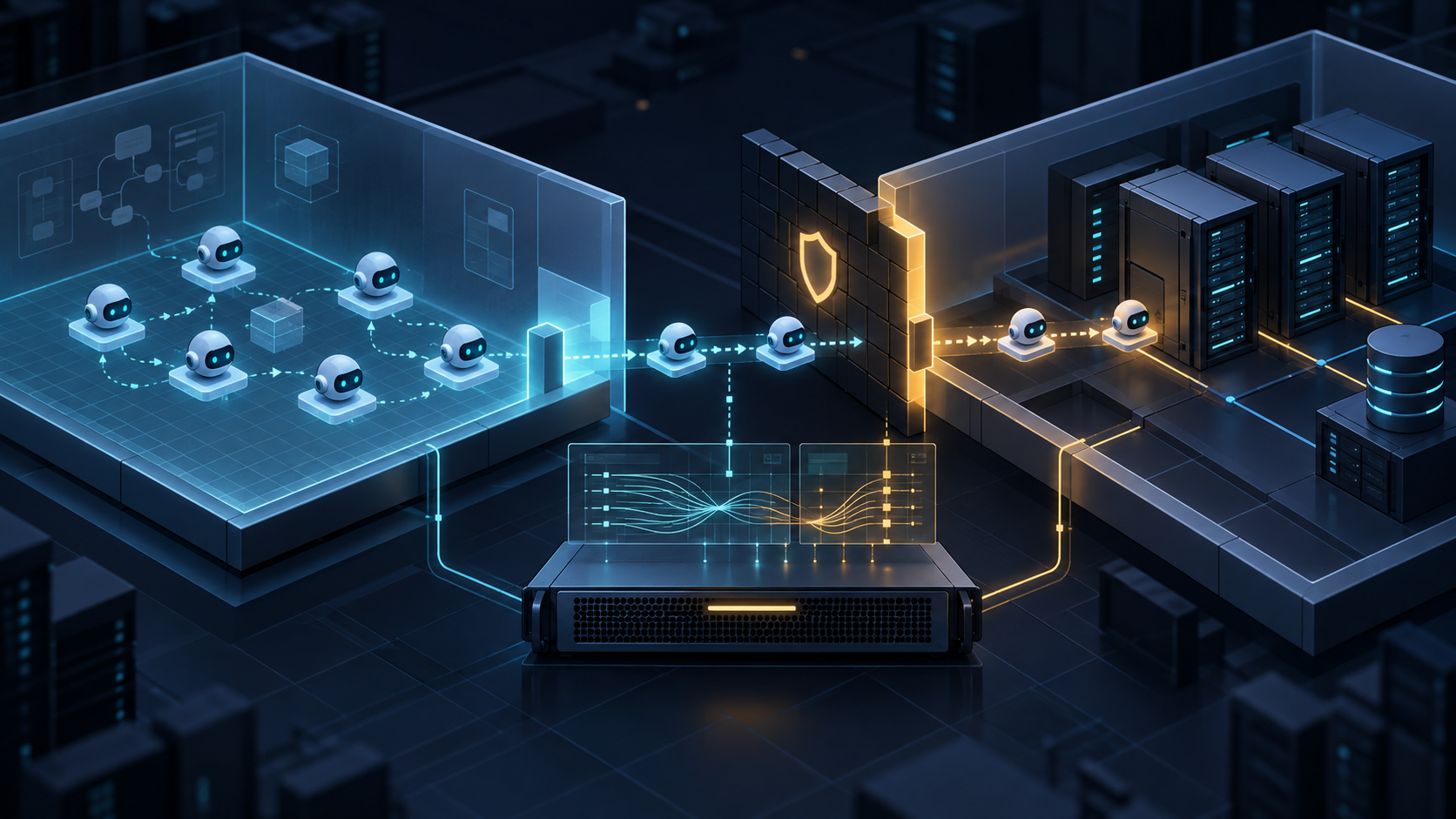
Elena's crisis highlights why production architectures have transitioned to hierarchical multi-agent networks. In this modern pattern, an expensive frontier orchestrator breaks down high-level business logic once, and immediately delegates the tactical, high-iteration execution loop to a dedicated subagent: Claude Haiku 5.5.
Modeling the infrastructure payback of an agent refactor? Use our SaaS ROI calculator to calculate your project's break-even horizon.
Inside Google's Countermove: The Universal Gemini Agent vs Claude Platform
While Anthropic positioned Claude Haiku 5.5 as the developer's favorite tactical model, Google executed its own massive evolution. When analyzing the Gemini Agent vs Claude ecosystem, Google did not merely build a better chatbot; it transformed Google Cloud into an autonomous operational backbone through the Gemini Enterprise Agent Platform and the Google Agent Development Kit (ADK).
flowchart TD
    subgraph Enterprise["Enterprise Grounding & Tooling"]
        W["Google Workspace (Docs, Gmail, Drive)"]
        B["BigQuery Enterprise Warehouse"]
        S["Google Search Grounding Engine"]
    end
    Enterprise flowchart TD
    subgraph Enterprise["Enterprise Grounding & Tooling"]
        W["Google Workspace (Docs, Gmail, Drive)"]
        B["BigQuery Enterprise Warehouse"]
        S["Google Search Grounding Engine"]
    end
    Enterprise --> Orchestrator["Orchestration Layer"]
    subgraph Models["Model Execution Tier"]
        Orchestrator  Orchestrator["Orchestration Layer"]
    subgraph Models["Model Execution Tier"]
        Orchestrator --> F["Gemini 2.0 Flash (2M Context & Native Multimodal)"]
        Orchestrator  F["Gemini 2.0 Flash (2M Context & Native Multimodal)"]
        Orchestrator --> H["Claude Haiku 5.5 (Subagent Loops & MCP Execution)"]
    end
From Standalone LLMs to the Enterprise Agent Development Kit (ADK)
Google's competitive advantage has never been pure model ergonomics; it is structural enterprise integration. The Gemini Agent platform is not just a raw API; it is an integrated runtime environment deeply connected to:
Google Workspace: Native OAuth-grounded access to Gmail, Google Docs, Sheets, and Drive.
BigQuery: Zero-ETL semantic querying across petabyte-scale structured enterprise data.
Google Search Grounding: Up-to-the-minute web verification backed by Google's core search index.
Through the Google Agent Development Kit (ADK), developers can declare high-level enterprise policies, define RBAC (Role-Based Access Control) boundaries, and deploy multi-agent systems directly into existing Google Cloud VPCs without writing custom glue code for credential rotation or audit logging.
Claude Haiku vs Gemini Flash Agent: Benchmarking the Low-Latency Layer
In the battle of Anthropic vs Google at the execution tier, how does Claude Haiku 5.5 compare to Google's workhorse, Gemini 2.0 Flash? When selecting a Claude Haiku vs Gemini Flash agent architecture, the technical trade-offs between these two high-speed engines reveal distinct engineering advantages:
Technical Dimension | Claude Haiku 5.5 | Google Gemini 2.0 Flash | Production Implications |
|---|---|---|---|
Input Pricing (< 100k) | $0.10 / MTok | $0.10 / MTok | Absolute price parity on high-frequency prompts. |
Output Pricing (< 100k) | $0.50 / MTok | $0.40 / MTok | Gemini Flash is ~20% cheaper on high-volume output generation. |
Extended Context Window | 1,000,000 Tokens | 2,000,000 Tokens | Gemini handles 2x larger payloads (hours of video, huge codebases). |
Extended Context Price | $0.50 In / $2.50 Out | $0.20 In / $0.80 Out | Gemini Flash is radically cheaper for sustained large-context calls. |
Multimodal Capabilities | Text, Code, Static Images | Native Audio, Video, Image, Text | Gemini processes real-time audio and video streams natively. |
Generation Latency | 110 - 140 tps | 120 - 150 tps | Both deliver ultra-responsive streaming. |
Computer-Use Benchmark | 72.4% (OSWorld 2.1) | 58.2% (OSWorld 2.1) | Haiku 5.5 significantly leads in deterministic browser/OS actions. |
Tool Calling Standard | Model Context Protocol (MCP) | Google ADK / OpenAPI | Haiku excels in multi-tool developer environments; Flash in GCP tooling. |
Gemini 2.0 Flash is an unmatched powerhouse for ingest-heavy multimodal workloads. If your application must process an 800-page scanned PDF or analyze a 45-minute recorded video meeting, Gemini Flash ingests that data with zero pre-processing friction at rock-bottom prices.
Conversely, when your workflow enters an execution state—navigating a software UI, writing regex filters, updating an SQL database, or verifying code changes against a test suite—Claude Haiku 5.5 exhibits superior instruction following and higher tool-calling fidelity.
Claude Haiku 5.5 Vertex AI Deployment: Why Google Hosts Its Competitor
If Gemini 2.0 Flash is so capable, why did Google Cloud roll out native Claude Haiku 5.5 Vertex AI support? As detailed in the Google Cloud Vertex AI documentation, Claude models are first-class offerings within Vertex AI Model Garden.
The answer lies in preventing platform defection. Enterprise software buyers do not want to be held hostage by a single model provider. When an engineering team concludes that Claude Haiku 5.5 performs better than Gemini for their specific code-execution subagents, Google has two choices:
Block Claude from GCP, forcing the engineering team to spin up an AWS Bedrock account or route traffic through Anthropic's direct API.
Provide Claude Haiku 5.5 natively inside Vertex AI with identical VPC service controls, Cloud Logging, IAM security, and unified billing.
By choosing the second option, Google ensures that even if Anthropic wins the model layer, Google retains the enterprise account, the data pipelines, and the cloud hosting margins.
Watch the technical walkthrough: Google Cloud Vertex AI and Anthropic Claude Integration.
Architectural Blueprints: Building the Dual-Stack Agent Pattern
Because Google Cloud hosts both model families within the same infrastructure perimeter, software architects are no longer forced to treat Anthropic vs Google as an either-or choice. Instead, the leading enterprise architecture in late 2026 is the Dual-Stack Agent Pattern.
flowchart TD
    Ingest["Enterprise Ingestion (Documents, Logs, 2M+ Context)"] flowchart TD
    Ingest["Enterprise Ingestion (Documents, Logs, 2M+ Context)"] --> Orchestrator["Strategic Orchestrator (Google Gemini Pro)"]
    Orchestrator -- "Synthesizes Plan & Task DAG"  Orchestrator["Strategic Orchestrator (Google Gemini Pro)"]
    Orchestrator -- "Synthesizes Plan & Task DAG" --> Dispatcher["Subagent Dispatcher (MCP Router)"]
    Dispatcher  Dispatcher["Subagent Dispatcher (MCP Router)"]
    Dispatcher --> Worker1["Tactical Subagent 1: Claude Haiku 5.5 (Terminal & Linting)"]
    Dispatcher  Worker1["Tactical Subagent 1: Claude Haiku 5.5 (Terminal & Linting)"]
    Dispatcher --> Worker2["Tactical Subagent 2: Claude Haiku 5.5 (Database & Schema)"]
    Worker1  Worker2["Tactical Subagent 2: Claude Haiku 5.5 (Database & Schema)"]
    Worker1 --> Sink["Google Cloud Storage & BigQuery Data Sink"]
    Worker2  Sink["Google Cloud Storage & BigQuery Data Sink"]
    Worker2 --> Sink
Division of Labor: Strategic Orchestration vs. Tactical Execution
In the Dual-Stack architecture, each model family handles what it does best:
Phase 1: Ingestion & Strategic Planning (Gemini Pro / Flash) The application receives multi-format customer data: 300 scanned PDFs, customer support calls recorded in raw audio, or extensive repository diffs. Gemini Pro or Flash consumes this massive payload using its 2,000,000-token context window. Gemini acts as the Architect, summarizing business context, identifying anomalies, and generating a structured execution plan represented as a directed acyclic graph (DAG) of discrete tasks.
Phase 2: Tactical Subagent Execution (Claude Haiku 5.5) The plan is partitioned into small, isolated subagent prompts. Each subagent task is handed to an independent Claude Haiku 5.5 instance via Vertex AI. Haiku 5.5 executes code, queries endpoints, parses responses, and retries failing steps. Because Haiku 5.5's input cost is only $0.10/MTok, these execution workers can run 30, 40, or 50 tool-calling iterations without driving up costs.
Phase 3: Synthesis & Verification (Gemini Flash or Haiku) Once all subagent loops complete their work, the generated artifacts are merged back into Google Cloud Storage or BigQuery, and a final verification check ensures all business constraints were met.
Model Context Protocol (MCP) vs. Google ADK: The Protocol Showdown
The operational glue connecting these agents is where the strategic battle between Anthropic vs Google intensifies.
Anthropic introduced the Model Context Protocol (MCP), an open standard that allows models to securely discover and communicate with local and remote data sources, tool servers, and IDE environments. MCP has achieved widespread developer adoption across tools like Claude Code, Cursor, and AGY.
Google, meanwhile, champions its Agent Development Kit (ADK), designed to bind enterprise agents to Google Cloud IAM, Pub/Sub event queues, and BigQuery schemas.
The emerging industry standard bridges the two: developers write MCP-compliant tool servers for operational tasks (running tests, parsing git trees, calling payment APIs), and register those servers inside the Vertex AI environment using the Vertex AI Anthropic SDK:
# Production Blueprint: Invoking Claude Haiku 5.5 via Vertex AI SDK
import os
from anthropic import AnthropicVertex

# Authenticate via native Google Cloud IAM credentials
client = AnthropicVertex(
 project_id=os.environ.get("GCP_PROJECT_ID"),
 region="us-central1"
)

# Dispatch high-frequency subagent tool loop
response = client.messages.create(
 model="claude-3-5-haiku@20241022",
 max_tokens=1024,
 temperature=0.0,
 system="You are a deterministic subagent. Execute tool calls and return strict JSON.",
 messages=[
 {"role": "user", "content": "Analyze terminal error log and propose verified fix."}
 ]
)

print(f"Subagent Execution Result: {response.content[0].text}")
By deploying this pattern on Vertex AI, you eliminate external API key exposure, maintain SOC 2 and HIPAA compliance within Google's cloud perimeter, and run Anthropic's fastest model directly against your GCP databases.
Before deploying 50-step autonomous loops to production, test how variable token expenses impact your unit margins with our profit margin calculator.
The Financial Reality: Modeling Agentic Unit Economics for SaaS Founders
In AI software development, engineering elegance is meaningless if your unit economics drive the business toward bankruptcy. The real reason the Anthropic vs Google co-opetition matters to founders is its direct impact on cost of goods sold (COGS).
The 40-Step Loop Problem: Where Margins Evaporate
When building autonomous agents, developers frequently fail to anticipate how quickly context accumulation compounds across multi-turn loops.
Consider an agent running 40 iterative steps to complete a workflow, such as automated accounts payable reconciliation or code bug remediation. At step 1, the model receives a system prompt, tool definitions, and the initial task (approx. 4,000 tokens). But at each subsequent step, the prompt includes all previous tool outputs, stack traces, and intermediate thoughts.
By step 40, the average prompt length across the run is not 4,000 tokens; it is closer to 18,000 tokens. Across all 40 turns, that single workflow consumes 520,000 cumulative input tokens and approximately 12,000 output tokens.
Model Configuration | Cumulative Tokens (In / Out) | Inference Cost / Run | Gross Margin ($1.00 Fee) | Production Viability |
|---|---|---|---|---|
Claude 3.5 Sonnet | 520k In / 12k Out | $1.740 | -74.0% | Deficit / Unsustainable |
Google Gemini 1.5 Pro | 520k In / 12k Out | $0.810 | +19.0% | Unhealthy / Marginal |
Gemini 2.0 Flash | 520k In / 12k Out | $0.057 | +94.3% | Strong / Scalable |
Claude Haiku 5.5 | 520k In / 12k Out | $0.058 | +94.2% | Strong / Scalable |
Dual-Stack (Gemini/Haiku) | Optimized Routing | $0.046 | +95.4% | Optimal / High-Margin |
On Claude 3.5 Sonnet, that single user action costs $1.74 in API charges. If your SaaS pricing charges the user $1.00 for that task, you lose $0.74 every time a customer clicks "Run."
On Claude Haiku 5.5, that exact same 40-turn execution costs $0.058. On Gemini 2.0 Flash, it costs $0.057. By shifting the tactical execution loop from flagship models to Haiku 5.5 or Gemini Flash, you transform a money-losing feature into a high-margin product delivering a 94%+ gross margin.
P&L Case Study: Scaling an AI Operations Startup
To see how the Anthropic vs Google infrastructure balance affects an enterprise P&L, let us examine a concrete operational case study.
Mini-Story: Marcus Chen's Architecture Refactor Marcus Chen served as VP of Engineering at a supply chain analytics platform supporting 25,000 monthly active users (MAUs). The product featured an autonomous "Exception Resolution Bot" that handled shipping discrepancies. In Q1, the system ran entirely on a single frontier model. Each month, users triggered approximately 120,000 automated resolution loops. At $1.55 per loop, the company spent a crushing $186,000 every month on raw LLM tokens against monthly recurring revenue (MRR) of $240,000. Marcus refactored the pipeline into the Dual-Stack pattern: Gemini Flash ingested shipping manifests and carrier PDFs, while Claude Haiku 5.5 on Vertex AI handled database queries and ERP updates. The monthly inference bill plummeted from $186,000 to just $6,240, an immediate 96.6% reduction in operational infrastructure costs that preserved runway and accelerated their path to profitability.
When founders fail to evaluate their architecture through unit economics, they often mistake a technology problem for a pricing problem. If you price your software based on simple fixed markups rather than tracking true token consumption, variable API expenses can quickly outpace revenue.
Furthermore, rapid customer acquisition without disciplined token budgeting can rapidly deplete cash reserves. Explore our framework on working capital planning for growth to maintain sufficient liquidity while scaling AI agent operations. For teams comparing long-term reserved compute clusters with on-demand API endpoints, review our analysis on capital budgeting for equipment to evaluate infrastructure commitments.
Frequently Asked Questions About Anthropic vs Google and Vertex AI
Is Claude Haiku 5.5 hosted directly on Google Cloud or only through Anthropic's API?
Claude Haiku 5.5 is available natively on Google Cloud Vertex AI via the Model Garden, in addition to Anthropic's first-party API and AWS Bedrock. When accessed through Vertex AI, API calls run within your existing Google Cloud Virtual Private Cloud (VPC), comply with Google IAM permissions, draw down against committed Google Cloud spend contracts, and bill directly to your standard GCP billing account.
Does Google own Anthropic?
Google does not own Anthropic. Google holds a significant non-voting minority equity stake following cumulative investments exceeding $2 billion. Anthropic remains an independent public-benefit corporation (PBC) guided by its Long-Term Benefit Trust. Anthropic maintains multi-cloud infrastructure agreements, counting Amazon as another primary investor and cloud distribution partner alongside Google.
Which model is better for coding subagents: Claude Haiku 5.5 or Gemini 2.0 Flash?
For deterministic code execution, local bash commands, terminal debugging, and structured JSON tool calling, Claude Haiku 5.5 consistently outperforms Gemini 2.0 Flash, achieving 72.4% on the OSWorld 2.1 benchmark compared to Flash's 58.2%. However, Gemini 2.0 Flash remains superior for ingesting massive code repositories or multi-thousand-line documentation files due to its 2,000,000-token context window and lower pricing over 100,000 tokens.
Can I use Anthropic's Model Context Protocol (MCP) with Google Cloud Vertex AI?
Yes. Model Context Protocol (MCP) clients can authenticate against Google Cloud Vertex AI using standard Google Cloud SDK application default credentials (anthropic[vertex]). This allows developers to build standardized MCP tool servers that interact with Anthropic models hosted directly inside Google's enterprise cloud infrastructure without exposing third-party API keys.
How does Claude Haiku 5.5 pricing compare to Gemini 2.0 Flash?
Under 100,000 tokens, both models share identical input pricing of $0.10 per million tokens. Gemini 2.0 Flash is slightly less expensive on output tokens ($0.40/MTok vs. Haiku's $0.50/MTok). For prompts exceeding 100,000 tokens, Gemini 2.0 Flash is significantly cheaper ($0.20 input / $0.80 output per million tokens) compared to Haiku 5.5's extended context tier ($0.50 input / $2.50 output per million tokens).
Will building on Claude via Vertex AI create vendor lock-in with Google?
No. Using Claude on Vertex AI actually mitigates vendor lock-in. Because the core inference engine is Anthropic's Claude, switching your backend from Google Cloud Vertex AI to AWS Bedrock or Anthropic's native API requires changing only the client initialization parameters and authentication headers. Your prompt templates, system instructions, and tool calling definitions remain cross-compatible.
Conclusion: Navigating the Co-opetition in Enterprise AI
The narrative of Anthropic vs Google is often framed as a zero-sum corporate conflict. In the real world of enterprise engineering, it is a symbiotic ecosystem.
Google provides the custom TPU silicon, global datacenter backbones, and enterprise cloud distribution. Anthropic provides the precision model weights, safety architecture, and developer-loved execution tools. By placing Claude Haiku 5.5 inside Vertex AI alongside the Gemini Agent framework, Google has turned its fiercest frontier competitor into one of its most profitable cloud offerings.
For technical leaders and software founders navigating Anthropic vs Google, the strategic path forward is clear:
Abandon Monolithic Architectures: Stop assigning expensive flagship models to run routine, repetitive 40-step autonomous loops.
Adopt the Dual-Stack Pattern: Leverage Google Gemini's 2M-token multimodal context for large-scale data ingestion and strategic planning, and deploy Claude Haiku 5.5 as the deterministic tactical worker for subagent execution.
Anchor Workloads to Unified Cloud Infrastructure: Run both model families within Google Cloud Vertex AI to maintain enterprise compliance, simplify security posture, and unify cloud infrastructure billing.
Pragmatic builders do not waste time arguing about which AI laboratory will win the frontier. They exploit the co-opetition between tech giants to build faster, cheaper, and more reliable applications.
Ready to build a defensible, margin-conscious AI product roadmap? Review our pricing options and workspace limits to model your scaling targets without unexpected infrastructure deficits.