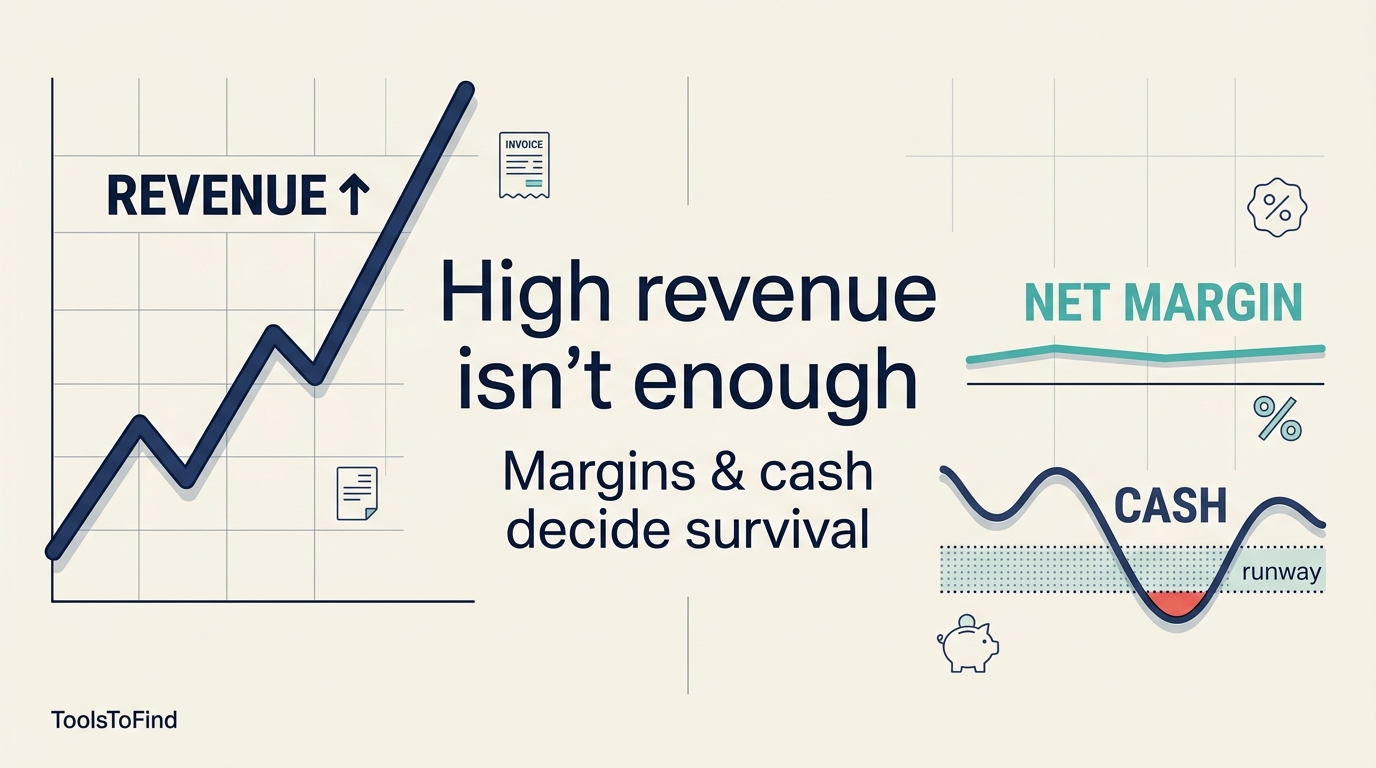
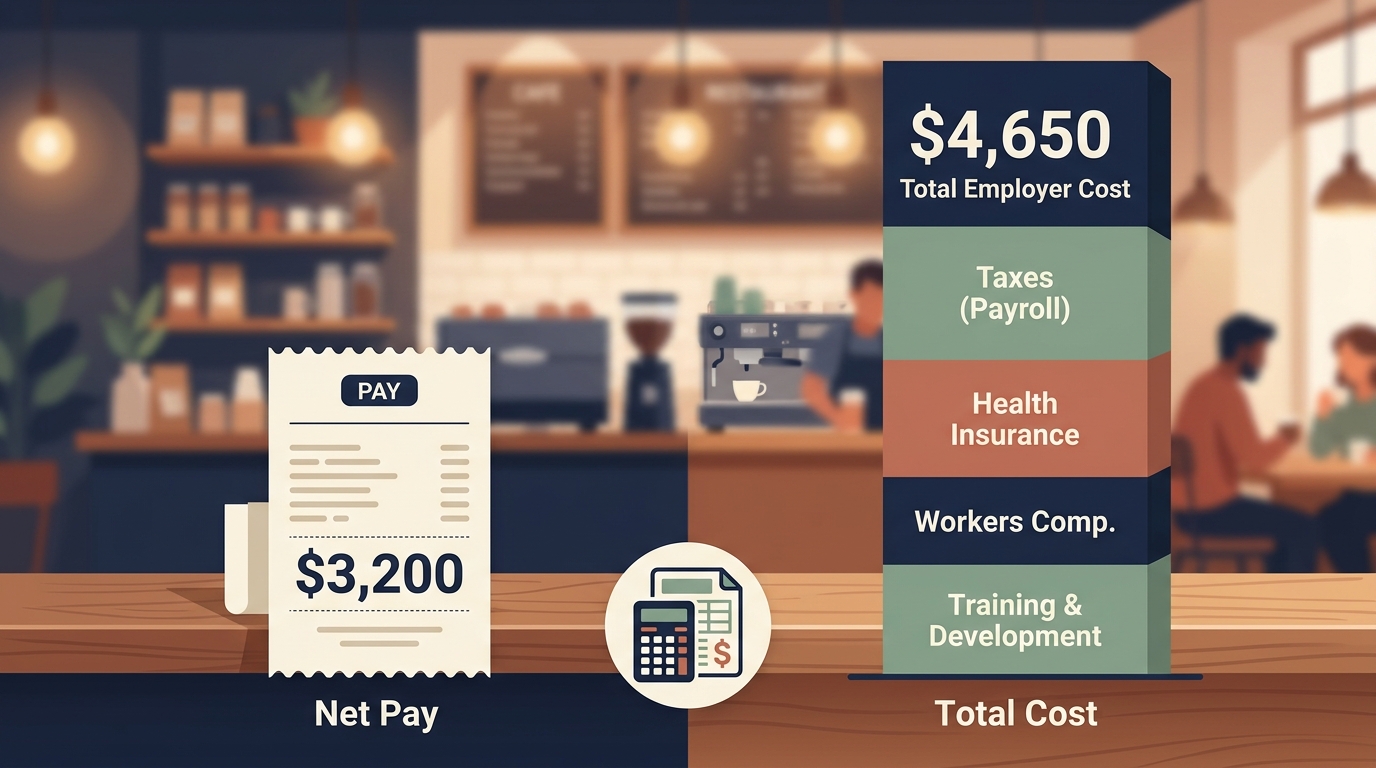
When large corporations announce workforce reductions alongside multi-billion-dollar technology budgets, business owners often question whether cutting payroll is a mechanism to finance capital investments. Hypothetical payroll savings from those 121 jobs, worked out below, come to well under an hour of Amazon's projected $220 billion capital expenditure plan for 2026. For business operators evaluating their own spending, this scale disparity demonstrates that headcount reductions do not provide the capital required for major investments, and that aggressive capital expenditures can severely depress cash flow even when operating profits are growing.
The Arithmetic of Scale: 121 Layoffs vs. $220 Billion in Capital Spending
According to a Worker Adjustment and Retraining Notification (WARN) filed with Washington state's Employment Security Department and reported by GeekWire, Amazon eliminated 121 jobs across Washington state. The filing says impacted employees were notified between July 1 and July 29 and terminations will be effective between October 1 and October 27. The reductions affected several locations and functions:
Bellevue (SEA106 building): 49 positions, including entry-level software development engineers, applied scientists, senior software managers, and a vice president of legal.
Seattle: Corporate roles across downtown office buildings, including a director of human resources, product managers, and technical writers.
Sumner (BFI1 facility): 32 positions at a fulfillment center, including warehouse associates, service technicians, and safety specialists.
The Motley Fool reports that Amazon expects to deploy roughly $220 billion in capital expenditures in 2026 (source). That expenditure is part of a broader industry trend where Amazon, Microsoft, Alphabet, and Meta Platforms are projected to spend a combined $760 billion on capital expenditures in 2026.
What the Arithmetic Shows

Because public WARN filings list job classifications rather than specific employee salaries, the exact payroll savings from these eliminations are not published. However, modeling the savings using realistic compensation boundaries clarifies the mathematical relationship between the job cuts and the capital budget.
Hypothetical calculation 1: Assume an average loaded cost of $120,000 per employee per year across all 121 eliminated roles, reflecting a blend of warehouse workers, technicians, and corporate staff. Under this assumption, 121 employees multiplied by $120,000 results in $14,520,000 in annual payroll savings. Dividing $14,520,000 by Amazon's $220,000,000,000 capital expenditure plan yields 0.000066, or 0.0066% of the annual capital budget. Spread evenly across the year (8,760 hours), Amazon's capital spending averages $25,114,155.25 per hour. The $14,520,000 annual savings covers approximately 0.58 hours (about 35 minutes) of capital spending.
Hypothetical calculation 2: Assume an average loaded cost of $200,000 per employee per year across the 121 roles to reflect higher-earning software managers, applied scientists, and legal executives. Under this assumption, 121 employees multiplied by $200,000 results in $24,200,000 in annual payroll savings. Dividing $24,200,000 by the $220,000,000,000 budget yields 0.00011, or 0.011% of the annual capital plan. Compared against the average hourly capital expenditure of $25,114,155.25, the $24,200,000 savings covers approximately 0.96 hours (about 58 minutes) of capital spending.
Model | Assumed Loaded Cost per Employee | Total Annual Payroll Savings (121 Roles) | Share of $220B Capital Budget | Capital Expenditure Hours Covered |
|---|---|---|---|---|
Hypothetical Model 1 | $120,000 | $14,520,000 | 0.0066% | 0.58 hours (~35 min) |
Hypothetical Model 2 | $200,000 | $24,200,000 | 0.0110% | 0.96 hours (~58 min) |
Hypothetical result: under either assumption above, the annual payroll savings from 121 roles covers less than one hour of Amazon's projected capital spending.
How Capital Expenditures Squeeze Free Cash Flow
A common misconception among business operators is that expanding revenue and strong operational profitability will naturally generate abundant surplus cash. Amazon's financial disclosures illustrate how heavy capital commitments alter cash positions regardless of operating performance.
The Free Cash Flow Squeeze

According to The Motley Fool, Amazon Web Services (AWS) grew revenue by 37% year over year in the second quarter of 2026, while operating income rose 63%. Despite this substantial growth in cloud profitability, Amazon's trailing-12-month free cash flow shifted from an $18.2 billion inflow down to an outflow of roughly $7.6 billion through June 2026. The reporting noted that this deterioration was primarily driven by the massive surge in capital expenditures.
When a company commits capital to long-term infrastructure, cash leaves the business upfront, well before the long-term returns on that capacity are known. As noted in the reporting, companies must commit capital years before knowing how project economics will evolve, creating the risk of building capacity that may not generate expected returns.
Organizational Restructuring vs. Capital Allocation

Amazon described the cuts as the result of routine team-level reviews of how teams are set up. Amazon employs roughly 50,000 corporate and tech workers in the Puget Sound region and more than 80,000 total workers across Washington state.
Regarding the role eliminations, Amazon spokesperson Brad Glasser told GeekWire via email: "Teams across the company regularly review their structures to ensure they’re best set up to deliver on their goals. As part of these reviews, teams sometimes determine that certain roles are no longer necessary. We don’t take these decisions lightly, and we’re always committed to supporting employees whose roles are impacted by them."
The affected workers were provided 90 days of advance notice to apply for open internal transfer positions before separations became final. Earlier cuts, including 2,198 Washington-based employees in February, were part of an effort to "reduce layers, increase ownership, and remove bureaucracy," according to a memo sent to employees.
Decision Rules for Business Owners Evaluating Payroll and Capital

For small business owners and operators, comparing payroll changes with capital expenditures offers concrete decision rules:
Do not cut payroll expecting to finance capital investments: As the arithmetic illustrates, eliminating recurring headcount yields incremental operational savings that are dwarfed by the upfront cash requirements of substantial capital investments. Operators evaluating staffing adjustments should model ongoing compensation obligations using payroll calculators rather than treating payroll reductions as a funding mechanism for equipment or software purchases.
Evaluate capital investments by cash flow impact and expected return: Rising revenue and operating margins do not prevent liquidity shortfalls if capital expenditures accelerate too quickly. Before undertaking major capital commitments, operators should model cash flow timing and project returns using ROI calculators, tracking whether investments will generate sufficient cash returns before liquid reserves are strained.
Separate team structure decisions from asset purchases: Staffing levels should reflect organizational design, operational ownership, and workflow requirements. Cutting positions to offset capital expenditures risks damaging core operational capabilities while doing little to fund the underlying investment.