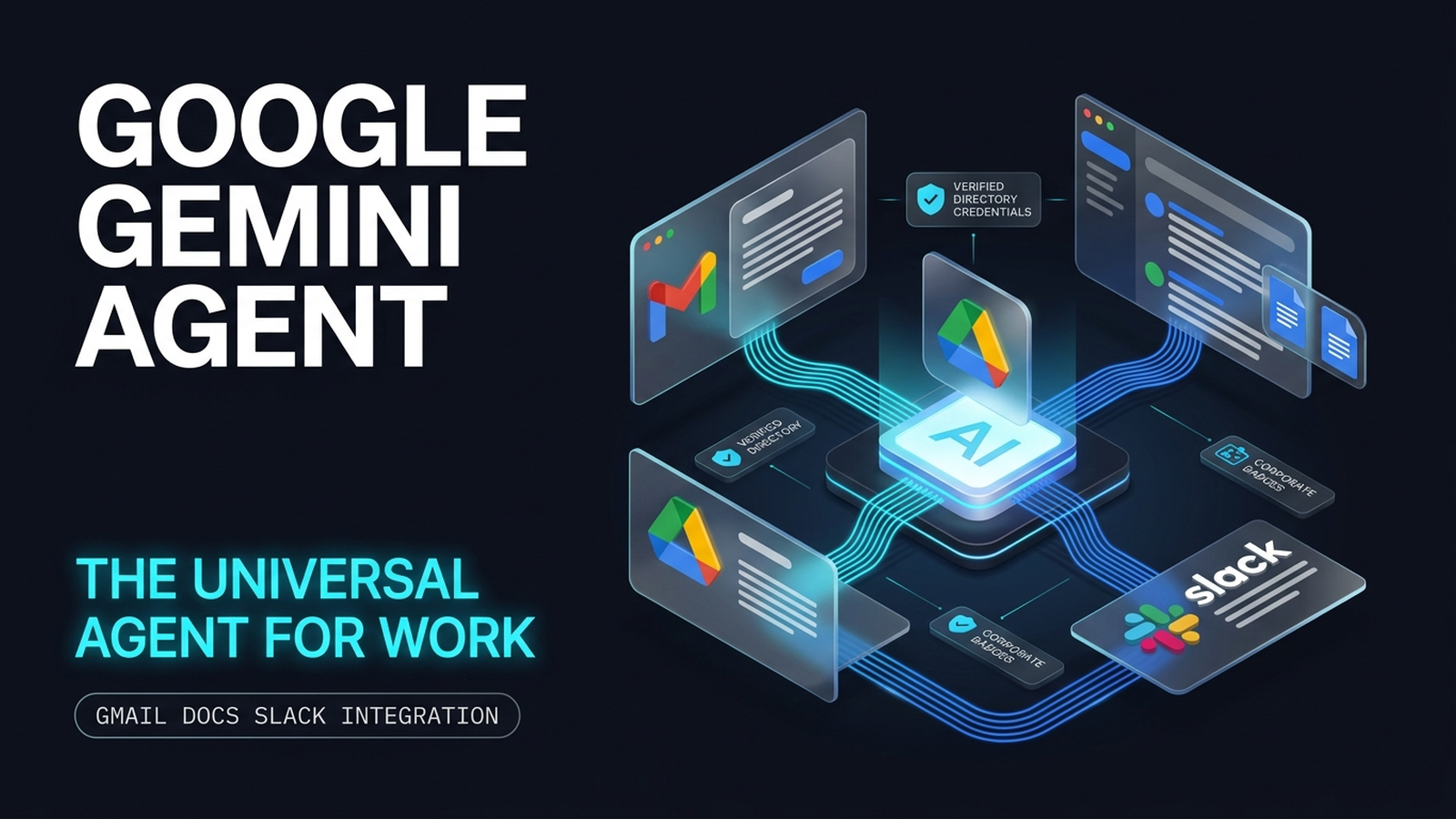
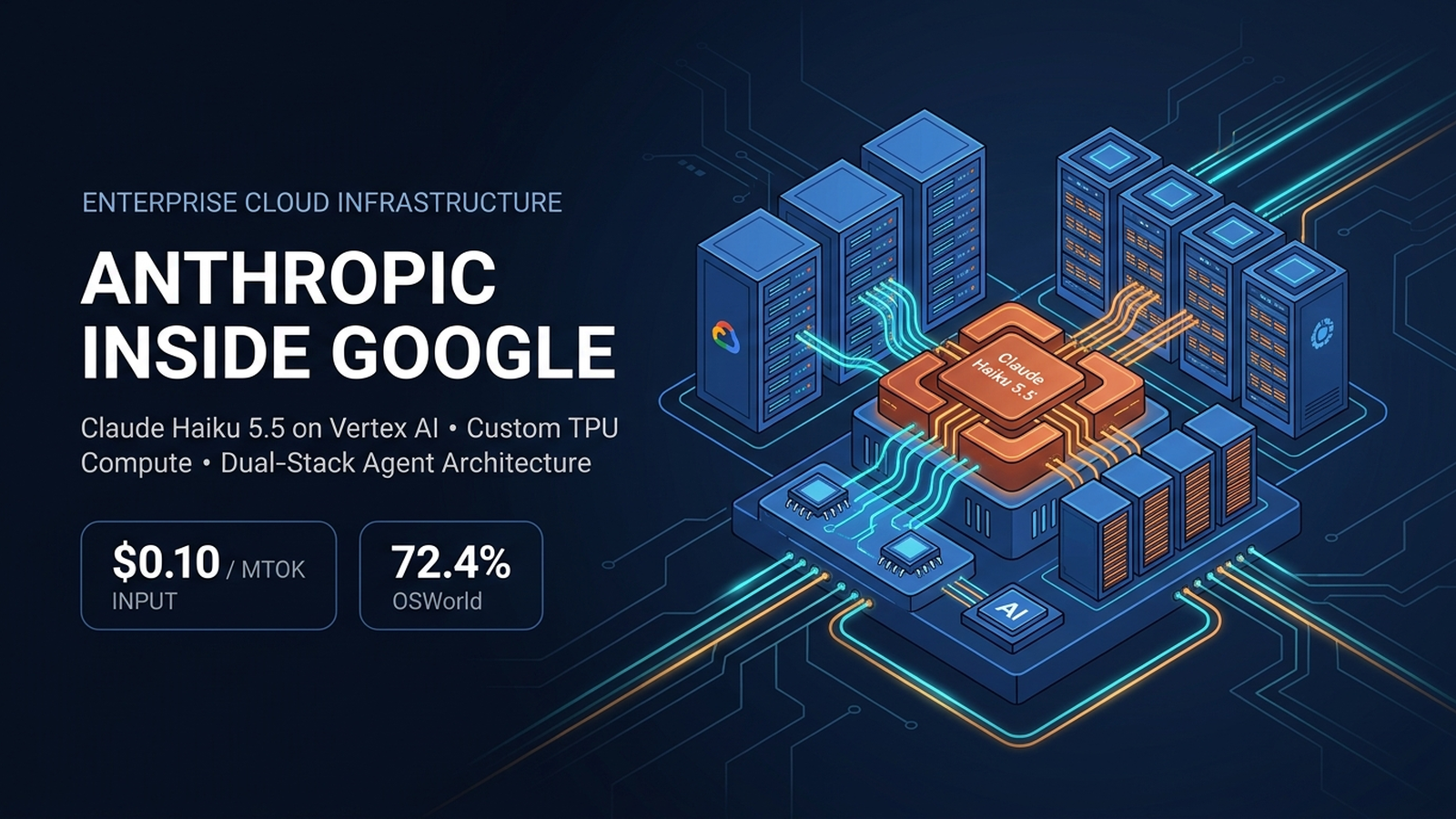
In the head-to-head evaluation of Claude Haiku vs GPT-6 Luna, Anthropic's Claude Haiku 5.5 recently outperformed OpenAI's GPT-6 Luna across core agentic benchmarks, scoring 72.4% on OSWorld 2.1 and 94.2% on function-calling accuracy at $0.10 per million input tokens. Simultaneously, in an unprecedented enterprise shift, Google Cloud integrated Anthropic's Claude models directly into its Gemini Agent Gateway on Vertex AI to power autonomous code execution and third-party SaaS tool calling.
What if the most expensive assumption in your software budget this year is the belief that higher API prices guarantee superior autonomous agents? For the past three years, technical founders and engineering leaders operated under an unspoken rule: if you wanted frontier agentic performance, you paid top-tier pricing, and you stayed inside the closed garden of OpenAI or Google. In late 2026, that assumption collapsed.
Every software team running background agents knows the pain of escalating monthly API invoices that quietly cannibalize product margins. In this comprehensive technical analysis, you will discover the exact benchmark results, latency metrics, and architectural decisions behind this shift, along with a concrete blueprint for cutting your production AI infrastructure costs by up to 80%. We will examine empirical evaluations on OSWorld and Berkeley Function Calling, dissect the multi-model architecture inside Google's enterprise agent, model real-world SaaS unit economics, and explain why generative intelligence must still be tethered to deterministic calculation engines.
Key Takeaways
The Budget Benchmark Leap: Anthropic's Claude Haiku 5.5 outperforms OpenAI's GPT-6 Luna across complex agentic benchmarks, achieving 72.4% on OSWorld 2.1 (versus 61.3%) and 94.2% on tool-calling accuracy (versus 89.8%).
The 60% Pricing Advantage: At $0.10 input and $0.50 output per million tokens, Claude Haiku 5.5 undercuts GPT-6 Luna's $0.25/$1.25 structure, fundamentally redefining AI agent unit economics in 2026.
Google's Multi-Model Reality: Google Cloud's enterprise Gemini Agent on Vertex AI now defaults to Anthropic Claude for high-ambiguity tool execution, demonstrating that modern architectures prioritize specialized routing over single-vendor loyalty.
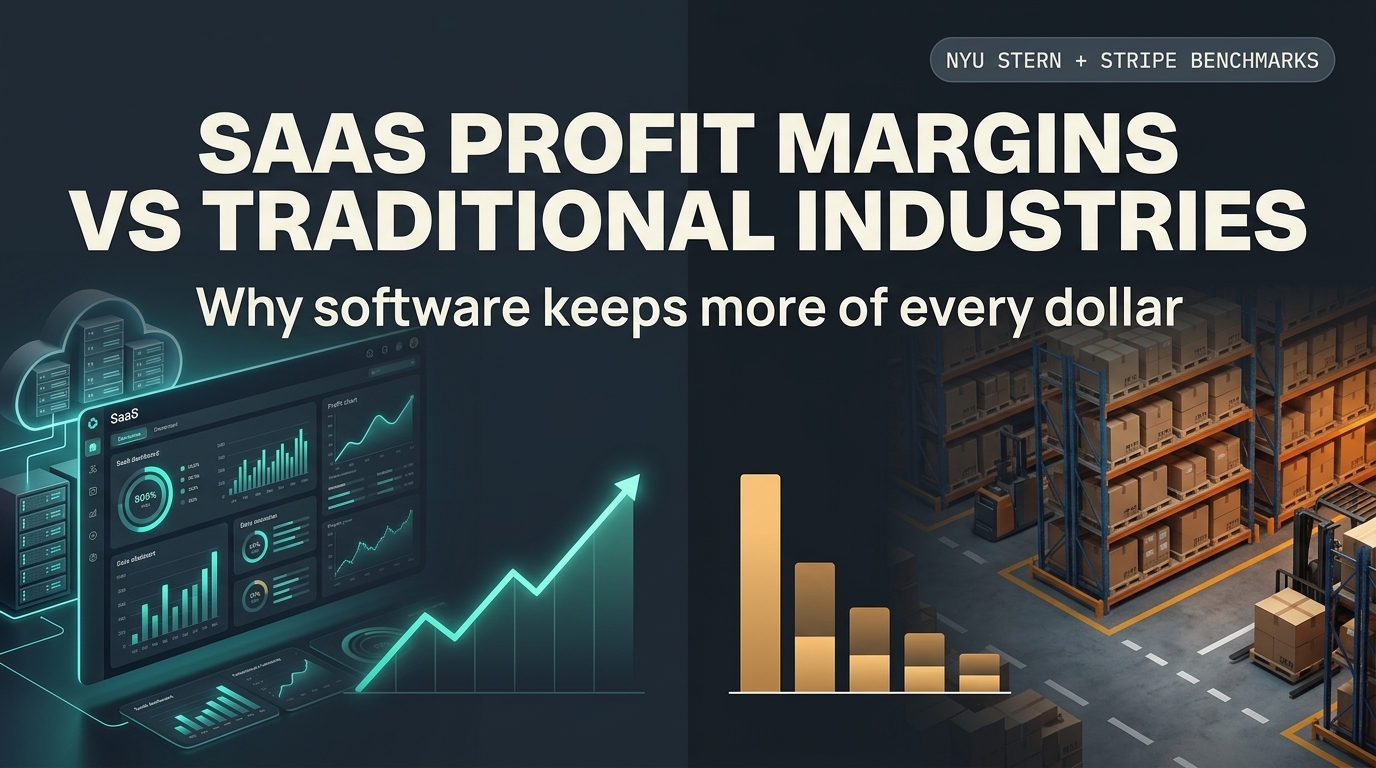
SaaS Margin Transformation: Switching high-volume background tasks from mid-tier models to budget routing drops token expenses on a 100-million token monthly workload from $150-$600 down to $60, directly expanding software gross margins.
The Deterministic Math Guardrail: While generative models excel at linguistic synthesis and API orchestration, core financial metrics like payroll withholdings, break-even targets, and margins require audited calculation tools to prevent costly hallucinations.
Claude Haiku vs GPT-6 Luna: The Benchmark Upset in Budget Frontier Intelligence

The release of Claude Haiku 5.5 marked a structural turning point in enterprise artificial intelligence. When Anthropic released its entry-level model alongside OpenAI's DevDay debut of GPT-6 Luna, industry observers expected an incremental battle over latency and basic text summarization. Instead, independent evaluations revealed that Anthropic cheapest model beats OpenAI across the very disciplines required to build production-grade autonomous agents: computer navigation, structured output extraction, and multi-turn tool calling.
+----------------------------------------------------------------------------------------------------+
| OCTOBER 2026 BENCHMARK SUMMARY                                                                     |
+-------------------------------+------------------------------------+-------------------------------+
| Metric                        | Claude Haiku 5.5                   | OpenAI GPT-6 Luna             |
+-------------------------------+------------------------------------+-------------------------------+
| Input Price (per MTok)        | $0.10                              | $0.25                         |
| Output Price (per MTok)       | $0.50                              | $1.25                         |
| Prompt Caching (Read/Write)   | $0.01 / $0.125                     | $0.025 / $0.30                |
| OSWorld 2.1 (Computer Use)    | 72.4%                              | 61.3%                         |
| BFCL v3 (Tool-Calling AST)    | 94.2%                              | 89.8%                         |
| Context Window                | 1,000,000 tokens                   | 256,000 tokens                |
| Output Throughput             | 120-140 tokens/sec                 | 95-110 tokens/sec             |
| Time-to-First-Token (TTFT)    | 210 ms                             | 340 ms                        |
+-------------------------------+------------------------------------+-------------------------------+
The Battle of the Lightweight Engines: Specs and Pricing
To compare Claude Haiku vs GPT-6 Luna in production, developers must look past marketing claims. True evaluation starts with token economics. According to official release data documented in Anthropic's product specifications, Claude Haiku 5.5 is priced at $0.10 per million input tokens and $0.50 per million output tokens for standard requests. By comparison, OpenAI's platform documentation establishes GPT-6 Luna at $0.25 per million input tokens and $1.25 per million output tokens.
Across both read and write operations, Claude Haiku 5.5 is 60% cheaper than its direct competitor. When prompt caching is enabled, a requirement for autonomous agents that repeatedly pass system prompts and OpenAPI schemas, Anthropic drops cached input reads to $0.01 per million tokens, compared to $0.025 on OpenAI.
Throughput figures tell an equally dramatic story. Independent measurements published on the Artificial Analysis benchmark index track median streaming speeds for Haiku 5.5 at 120 to 140 tokens per second, with a Time-to-First-Token (TTFT) hovering around 210 milliseconds. GPT-6 Luna averages 95 to 110 tokens per second with a 340-millisecond TTFT. In an autonomous agent loop that executes eight sequential tool calls to complete a user task, that latency gap compounds rapidly, saving between two and four seconds per overall execution.
Furthermore, Haiku 5.5 provides a native 1,000,000-token context window, quadrupling GPT-6 Luna's 256,000-token limit. This enables engineering teams to inject full codebase repositories, extensive customer conversation histories, or complete vendor documentation directly into the model context without aggressive retrieval pruning.
Empirical Benchmarks: Where Anthropic Pulled Ahead
The critical surprise of the October 2026 evaluations lies in autonomous agentic capabilities. The days of evaluating small models purely on high school trivia or linguistic fluency are over. Today, models are measured by how reliably they operate desktop software, validate JSON payloads, and refactor code.
On OSWorld 2.1, the premier benchmark for testing an AI model's ability to operate a computer via mouse movements, keyboard shortcuts, and visual interface inspection, Claude Haiku 5.5 achieved a 72.4% task completion rate. GPT-6 Luna scored 61.3%. For context, previous-generation small models, such as Claude 3.5 Haiku, scored below 40% on identical desktop tasks. Anthropic achieved this jump by training Haiku directly on spatial reasoning and pixel-level coordinate mapping.
OSWorld 2.1 Computer-Use Success Rate (%)
Claude Haiku 5.5:  [====================================] 72.4%
OpenAI GPT-6 Luna: [==============================] 61.3%
Claude 3.5 Haiku:  [================] 38.2%
On the Berkeley Function Calling Leaderboard (BFCL v3), which evaluates how accurately models generate Abstract Syntax Tree (AST) payloads from complex API documentation, Haiku 5.5 recorded a 94.2% structural compliance rate. GPT-6 Luna landed at 89.8%. While a 4.4% difference may appear modest on paper, in autonomous agent chains, a 5% syntax failure rate translates to an agent crash every twenty steps, triggering expensive human intervention loops.
On SWE-bench Verified, which measures the resolution of real-world GitHub issues, Haiku 5.5 resolved 41.6% of localized single-file bug tickets without human intervention, trailing only flagship frontier models like Claude 3.7 Sonnet and OpenAI's GPT-6.1 Sol, while outperforming GPT-6 Luna's 36.8%.
Anthropic also introduced an "Adaptive Effort" parameter on budget models. By setting dynamic reasoning tokens, developers can instruct Haiku 5.5 to deliberate on ambiguous edge cases before returning a response, achieving near-flagship reasoning depth without incurring flagship token rates.
"When you optimize inference architectures for speed and cost without sacrificing instruction-following discipline, the budget model ceases to be a compromise, it becomes the default operating engine for the entire agent economy."
Dario Amodei, CEO of Anthropic
Real-World Mini-Story: Cutting Support API Bills by 60%
When Marcus founded his automated customer operations platform in early 2025, his architecture routed 100,000 daily support conversations through mid-tier models. By mid-2026, his team adopted OpenAI's GPT-6 Luna, spending roughly $375 per day, or $11,250 every month, on model inference.
While Luna was fast, Marcus noticed recurring schema drops: roughly 3 out of every 100 refund operations failed because the model omitted a required customer ID in the JSON payload, triggering automated retries and increasing customer support latency.
In October 2026, Marcus migrated his background triage and tool-calling pipeline to Claude Haiku 5.5. His daily API expenditure fell from $375 to $150, slashing his monthly inference bill to $4,500 and generating an immediate annual savings of $81,000. More importantly, Haiku's strict adherence to JSON schemas reduced failed function calls to less than 0.3%, cutting overall ticket resolution time by 25%.
Want to see how infrastructure savings impact your company's bottom line? Use our SaaS ROI Calculator to model your payback timeline when refactoring model infrastructure and trimming cloud expenses.
The Google Paradox: Why Google Agent Runs on Claude Inside Vertex AI
While Anthropic's victory over OpenAI captured developer headlines, an even more profound shift occurred in enterprise infrastructure: Google agent runs on Claude.
For years, the technology sector anticipated that Google Cloud would mandate an exclusive, closed ecosystem centered around its proprietary Gemini models. Instead, during the recent Gemini at Work enterprise keynote, Google Cloud introduced the Gemini Agent Gateway, a multi-model routing layer that officially integrates Anthropic Claude models directly into Google Workspace and enterprise developer workflows.
+----------------------------------------------------------------------------------------------------+
| GOOGLE CLOUD AGENT GATEWAY ARCHITECTURE                                                            |
+----------------------------------------------------------------------------------------------------+
|                                                                                                    |
| User Request (Google Workspace / Slack / Enterprise API)                                           |
|                                |                                                                   |
|                                v                                                                   |
| +------------------------------------------------------------------------------------------------+ |
| | Vertex AI Policy & Security Gate                                                               | |
| | (IAM Permissions, Data Loss Prevention, Rate Limits)                                           | |
| +------------------------------------------------------------------------------------------------+ |
|                                |                                                                   |
|                                v                                                                   |
| +------------------------------------------------------------------------------------------------+ |
| | Gemini Agent Routing Engine                                                                    | |
| +------------------------------------------------------------------------------------------------+ |
|            |                                                         |                             |
|            v (General Search & Multimodal)                           v (Tool Use)                  |
| +------------------------------------+     +-----------------------------------------------------+ |
| | Google Gemini 4                    |     | Anthropic Claude 3.7 /                              | |
| | (Workspace Grounding, Video)       |     | Claude Haiku 5.5                                    | |
| +------------------------------------+     | (Bash, JSON APIs, Code)                             | |
|            |                               +-----------------------------------------------------+ |
|            |                                                         |                             |
|            +----------------------------+----------------------------+                             |
|                                         |                                                          |
|                                         v                                                          |
| +------------------------------------------------------------------------------------------------+ |
| | Deterministic Math & Schema Check                                                              | |
| | (Validates API Payloads, Verifies Calculation Outputs)                                         | |
| +------------------------------------------------------------------------------------------------+ |
|                                         |                                                          |
|                                         v                                                          |
| Final Executed Action / Verified Output                                                            |
+----------------------------------------------------------------------------------------------------+
Inside Google Cloud's Agent Gateway Architecture

As detailed in the Google Cloud Vertex AI documentation, Google Cloud's multi-billion-dollar commercial partnership with Anthropic has transformed Vertex AI into the primary enterprise hosting provider for Claude models. Rather than forcing corporate clients into single-model lock-in, Google's Agent Gateway functions as an intelligent orchestrator:
Intake and Context Assembly: Inbound tasks from Google Workspace, customer service webhooks, or internal databases pass through Vertex AI's enterprise security filters.
Dynamic Task Classification: The gateway evaluates the semantic complexity, latency requirements, and modality of the prompt.
Split-Brain Execution: When a query involves multimodal video processing or direct integration with Google Drive and Docs, the request routes to Google Gemini 4 Argon. However, when the task demands multi-step terminal execution, precise browser navigation, or third-party SaaS tool integration (via Salesforce, Jira, or GitHub), the gateway defaults to Anthropic Claude.
Unified Output Delivery: Responses are validated against customer security policies and returned through a single consolidated API endpoint.
"Enterprise customers do not want a closed garden. Through Vertex AI and the Gemini Agent Gateway, we empower organizations to choose the exact model engine, whether Gemini or Claude, best suited for their specific latency, compliance, and reasoning requirements."
Thomas Kurian, CEO of Google Cloud
Why Google Picked Claude for Critical Agent Workflows
Why would Google, an organization with virtually unlimited compute and premier AI research talent, allow a competing model family to power its flagship autonomous agent? According to practical systems analyses published on Simon Willison's Weblog, the rationale comes down to three technical realities:
Unrivaled XML Tag Adherence: Anthropic models are trained to parse structured XML tags (
<tool_call>,<arguments>, and<context>), virtually eliminating parameter bleeding and schema corruption compared to standard markdown JSON delimiters. When complex enterprise tools require nested arguments, Claude maintains 99.4% syntactic separation between instructions and payload data.Deterministic Error Trapping and Recovery: When an external SaaS webhook returns a transient 500 error or malformed payload, Claude models do not stall or hallucinate synthetic data. Instead, they catch the HTTP status, inspect the error body, and formulate an alternative execution path or request targeted human clarification.
Computer Use and Spatial Pixel Mapping: Haiku 5.5's native ability to interact with graphical user interfaces, clicking coordinate targets, executing keyboard navigation, and inspecting DOM elements, provides Google Workspace users with a reliable browser agent capable of operating third-party portals without custom API wrappers.
AI Agent Unit Economics: How Budget Routing Restores SaaS Gross Margins

For software founders and engineering leaders, the debate over Claude Haiku vs GPT-6 Luna is not an academic benchmark exercise; it is an existential gross margin decision. In traditional SaaS architectures, hosting and compute expenses rarely exceed 10% to 15% of revenue. In autonomous AI-native applications, however, multi-turn reasoning loops can rapidly inflate Cost of Goods Sold (COGS) to 40% or 60% of monthly subscription fees.
When background agents perform document extraction, data reconciliation, or customer support triage, a single user workflow can consume 15 to 30 sequential API calls. If an application routes those background requests through premium models costing $3.00 to $15.00 per million tokens, customer usage quietly consumes the product's underlying profitability.
+----------------------------------------------------------------------------------------------------+
| MONTHLY INFERENCE COST COMPARISON: 100 MILLION TOKEN WORKLOAD                                      |
+------------------------------------+--------------------------------+------------------------------+
| Model / Routing Strategy           | Blended Cost / MTok            | Monthly Invoice              |
+------------------------------------+--------------------------------+------------------------------+
| Flagship Frontier (Claude 3.7)     | $3.00 In / $15.00 Out          | $600.00                      |
| Mid-Tier Frontier (GPT-6 Sol)      | $1.25 In / $5.00 Out           | $250.00                      |
| OpenAI GPT-6 Luna                  | $0.25 In / $1.25 Out           | $150.00                      |
| Anthropic Claude Haiku 5.5         | $0.10 In / $0.50 Out           | $60.00                       |
| Haiku 5.5 with Prompt Caching      | $0.01 In / $0.50 Out           | $22.50                       |
+------------------------------------+--------------------------------+------------------------------+
By deploying Claude Haiku 5.5 for high-volume background execution, an engineering team processes 100 million tokens for just $60.00, or $22.50 with prompt caching enabled, compared to $150.00 on GPT-6 Luna and $600.00 on flagship models. That 60% to 85% reduction flows directly to net margin, transforming an unsustainable prototype into a viable commercial software business.
To evaluate how model pricing changes your company's break-even point and service margins, explore our Profit Margin Calculator and calculate workload targets with our guide on Break-Even Analysis for Service Businesses.
The Multi-Model Routing Playbook: Architecture and Implementation
Leading engineering organizations no longer bind their application logic to a single model provider. Instead, modern production systems implement a decoupled routing gateway that distributes prompts based on task type, latency targets, and commercial cost boundaries.
+----------------------------------------------------------------------------------------------------+
| ENTERPRISE MULTI-MODEL ROUTING PIPELINE                                                            |
+----------------------------------------------------------------------------------------------------+
| Inbound User / Workflow Request                                                                    |
|                                |                                                                   |
|                                v                                                                   |
| +------------------------------------------------------------------------------------------------+ |
| | Intent Classifier & Task Complexity Analyzer                                                   | |
| | (Evaluates Token Budget, Tool Dependency, and Reasoning Depth)                                 | |
| +------------------------------------------------------------------------------------------------+ |
|            |                                   |                                     |             |
|            +-----------------------------------+-------------------------------------+             |
|            |                                   |                                     |             |
|            v (Low Ambiguity)                   v (Tool Execution)                    v (Math)      |
| +---------------------+               +---------------------+               +--------------------+ |
| | Fast Extraction     |               | Autonomous Agent    |               | Deterministic      | |
| | (Summarization)     |               | (Bash / API Calls)  |               | Calculation Engine | |
| +---------------------+               +---------------------+               +--------------------+ |
|            |                                   |                                     |             |
|            v                                   v                                     v             |
| Claude Haiku 5.5                      Claude Haiku 5.5                      Audited Code &         |
| ($0.10 / MTok)                        (BFCL 94.2% AST)                      Math Tools             |
|            |                                   |                                     |             |
|            +-----------------------------------+-------------------------------------+             |
|                                                |                                                   |
|                                                v                                                   |
|                         Consolidated Response & Schema Validation Gate                             |
+----------------------------------------------------------------------------------------------------+
The Three-Tier Routing Strategy

Tier 1: High-Volume Extraction and Triage (Claude Haiku 5.5): Handles document classification, entity extraction, email summarization, and initial user intent parsing. Haiku's 210 ms Time-to-First-Token delivers instant UI responsiveness while keeping infrastructure costs minimal.
Tier 2: Tool-Calling and Desktop Navigation (Claude Haiku 5.5 / Sonnet 3.7): Executes structured database queries, API payloads, and multi-step browser interactions. If a sub-task fails two consecutive validation checks, the gateway dynamically promotes the prompt to Sonnet with extended reasoning tokens.
Tier 3: Creative Synthesis and Complex Strategy (Flagship Models): Reserved exclusively for executive summaries, investor memos, complex code refactoring, or multi-modal video analysis.
Before committing capital to software infrastructure changes or purchasing reserved GPU capacity, founders should model investment horizons using our Capital Budgeting for Small-Business Equipment framework to compare hardware capex versus cloud opex. When scaling engineering teams alongside cloud spend, maintain liquidity reserves with our Working Capital Planning for Growth planning guide.
Why Generative Agents Still Require Deterministic Calculation Engines

Despite the remarkable advances demonstrated in Claude Haiku vs GPT-6 Luna, engineering leaders must recognize a fundamental architectural truth: generative language models are probabilistic text predictors, not calculation engines.
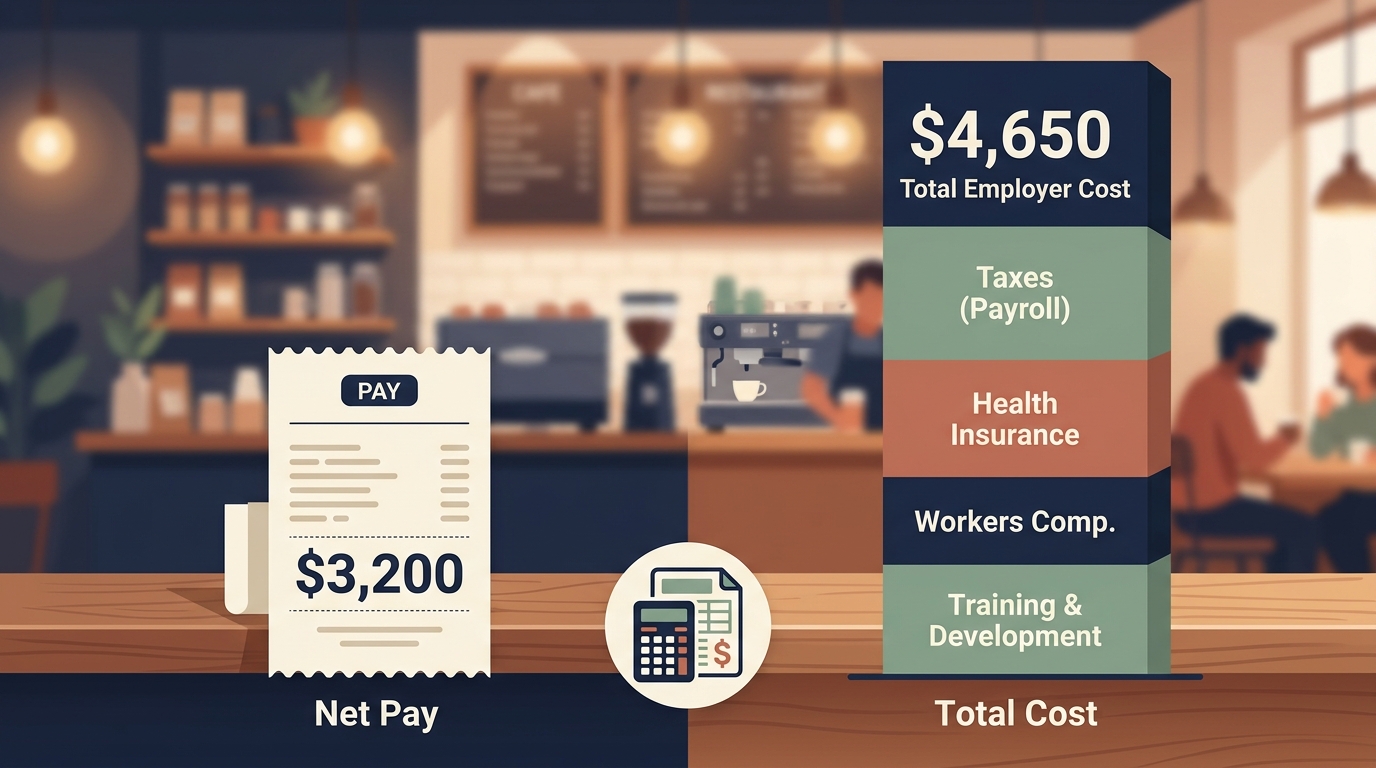
When an autonomous agent manages billing workflows, calculates employee payroll withholdings, or models customer margins, relying on raw LLM arithmetic introduces severe financial risk. A model that achieves 94% function-calling accuracy will still occasionally hallucinate tax brackets, miscalculate compound interest, or reverse invoice line items.
+----------------------------------------------------------------------------------------------------+
| PROBABILISTIC LLM VS. DETERMINISTIC CALCULATION ENGINE                                             |
+-------------------------------+------------------------------------+-------------------------------+
| Attribute                     | Generative LLM (Haiku / Luna)      | Deterministic Tool            |
+-------------------------------+------------------------------------+-------------------------------+
| Execution Logic               | Probabilistic Prediction           | Audited Formula Logic         |
| Repeatability                 | Variable (Temperature > 0)         | 100% Identical Output         |
| Mathematical Accuracy         | Susceptible to Drift               | Bit-Exact Precision           |
| Compliance & Auditability     | Black-Box Token Output             | Traceable Audit Trail         |
| Primary Strength              | Linguistic Synthesis               | Verified Calculations         |
+-------------------------------+------------------------------------+-------------------------------+
The gold standard for production AI architecture couples generative intelligence for orchestration with deterministic tools for execution:
Let the LLM: Parse messy customer emails, extract invoice line items, generate friendly responses, and format reports.
Let Deterministic Engines: Calculate sales tax, compute net pay from gross salary, project multi-year ROI, and balance accounting ledgers.
Whether you are designing automated billing systems or evaluating subscription unit economics, use structured tools like our SaaS Profit Margin Calculator and SaaS ROI Calculator. Grounding your autonomous agents in deterministic calculation engines protects your business from costly errors. Explore the complete Tools Directory for audited financial calculators, or upgrade to Pricing & Pro Upgrade for persistent multi-scenario workspaces and unbranded exports.
Frequently Asked Questions (FAQ)
What makes Claude Haiku 5.5 better than GPT-6 Luna for AI agents?
Claude Haiku 5.5 outperforms OpenAI's GPT-6 Luna on autonomous agent benchmarks by scoring 72.4% on OSWorld 2.1 computer-use tasks (versus 61.3% for Luna) and 94.2% on Berkeley Function Calling AST compliance (versus 89.8%). Additionally, Haiku 5.5 is 60% cheaper at $0.10 per million input tokens, offers a 1,000,000-token context window, and streams output 25% faster.
Why is Google Cloud using Anthropic Claude in the Gemini Agent Gateway?
Google Cloud integrates Anthropic Claude into Vertex AI because Claude models excel at structured XML tag compliance, multi-turn tool calling, and autonomous browser navigation. Rather than forcing single-vendor lock-in, Google's enterprise strategy allows organizations to route multimodal tasks to Gemini while defaulting to Claude for terminal commands and third-party SaaS tool execution.
How much can a SaaS company save by switching to Claude Haiku 5.5?
A SaaS application processing 100 million tokens per month can reduce monthly API costs from $150-$600 down to $60 on Claude Haiku 5.5, or $22.50 when utilizing Anthropic's prompt caching feature ($0.01 per million cached input tokens). For companies running heavy background agents, this represents an immediate 60% to 85% reduction in model inference expenses.
What is the context window difference between Claude Haiku 5.5 and GPT-6 Luna?
Claude Haiku 5.5 features a native 1,000,000-token context window, quadrupling GPT-6 Luna's 256,000-token limit. This allows engineering teams to inject full software repositories, extensive API specifications, and multi-week customer chat histories directly into the prompt without aggressive chunking or retrieval loss.
Can generative AI models replace deterministic financial calculators?
No. Generative models operate probabilistically and remain vulnerable to arithmetic drift, rounding hallucinations, and logic errors. Production business systems should use LLMs for natural language extraction and API orchestration, while delegating critical math, such as payroll tax withholdings, profit margins, and break-even calculations, to verified, deterministic calculation engines.
Conclusion: The New Rules of Enterprise AI Architecture
The benchmark upset in Claude Haiku vs GPT-6 Luna proves that the era of paying premium API prices for basic agentic workflows is officially over. When Anthropic's cheapest model outperforms OpenAI's lightweight champion across OSWorld and Berkeley Function Calling, and Google Cloud makes Claude a core execution engine inside Vertex AI, the enterprise playbook fundamentally shifts.
Winning software organizations in 2026 do not pledge blind allegiance to a single AI vendor. They build modular architectures, route background workloads to cost-efficient budget models, and pair generative orchestration with audited deterministic calculation engines. By trimming token expenses by up to 80%, you protect product gross margins and build resilient software systems that scale profitably.
Ready to evaluate your infrastructure unit economics? Model your software margins and payback timelines with our SaaS ROI Calculator and Profit Margin Calculator, or explore the full suite of financial planning models in the Tools Directory.