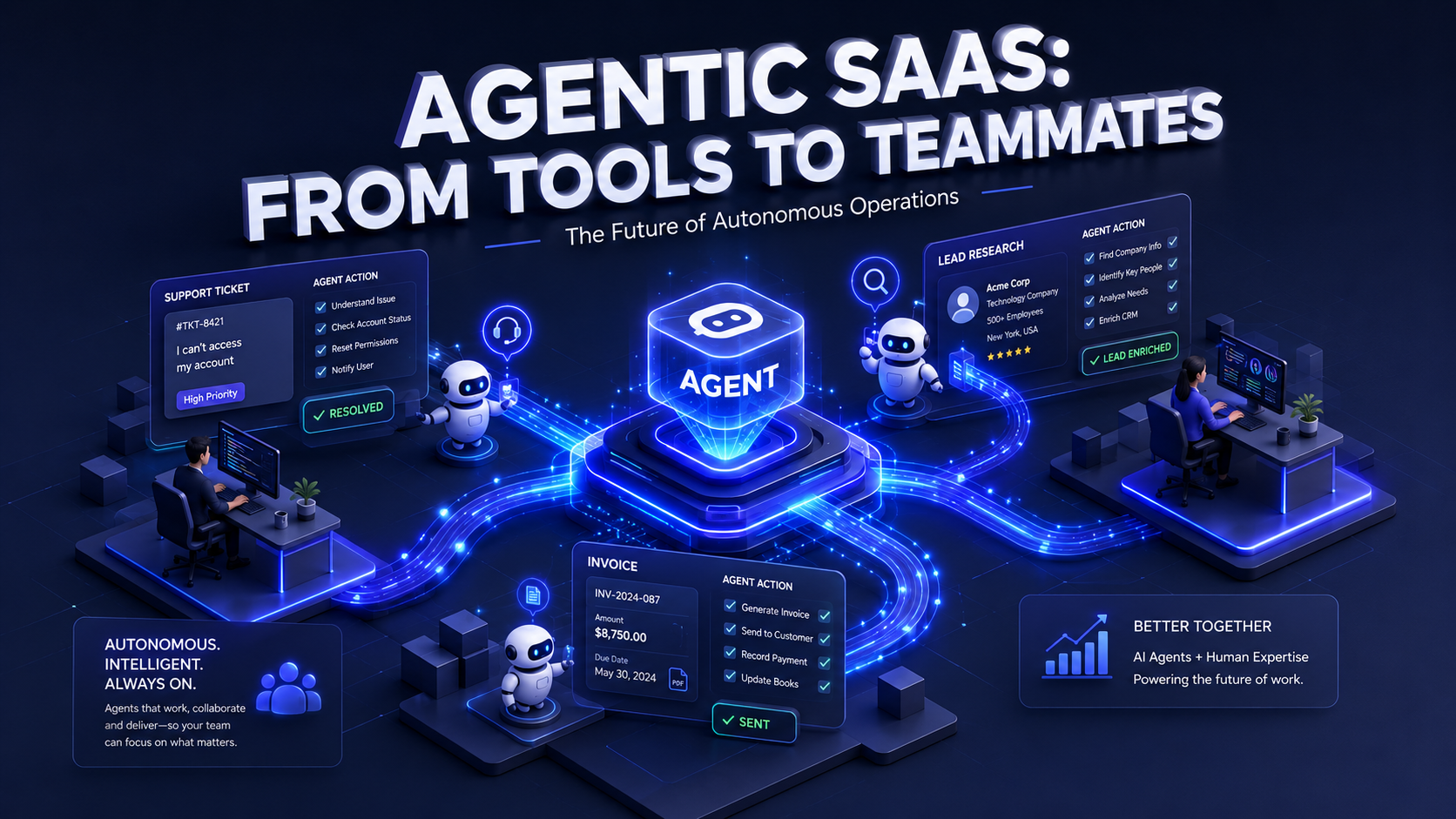
Agentic SaaS refers to software that doesn't just assist users through suggestions (like Copilots) but autonomously executes multi-step workflows to achieve specific business outcomes. While traditional SaaS provides tools for humans to work with, Agentic SaaS provides "digital workers" that perform the work themselves, from researching leads to resolving support tickets and managing accounts receivable.
What if the "free" plan on your favorite software is actually costing you $500 per month in lost opportunities because it requires you to manually click through every step? By 2026, Gartner predicts that 40% of enterprise applications will have embedded AI agents. We are moving from an era where software was a tool in your hand to an era where software is a member of your team.
You've likely already noticed your software getting faster and more helpful. You agree that "busy work"-the repetitive data entry and follow-up emails-is the primary bottleneck preventing your business from scaling. This guide will help you understand the shift from assistance to agency, audit your current tech stack for "cognitive bottlenecks," and model the ROI of autonomous software so you can scale revenue without a linear increase in labor costs. We'll cover the unit economics of agents, three key operational areas ready for automation, and how to pitch an "agent-first" business plan to lenders or investors.
Key Takeaways
Agentic SaaS differs from "Copilots" by executing multi-step workflows autonomously rather than just assisting.
Founder Economics are shifting from "Seat-Based" pricing to "Outcome-Based" pricing, allowing for revenue growth without adding headcount.
High-ROI use cases include Financial Ops (autonomous collections), Customer Growth (L1 support), and Strategic Planning.
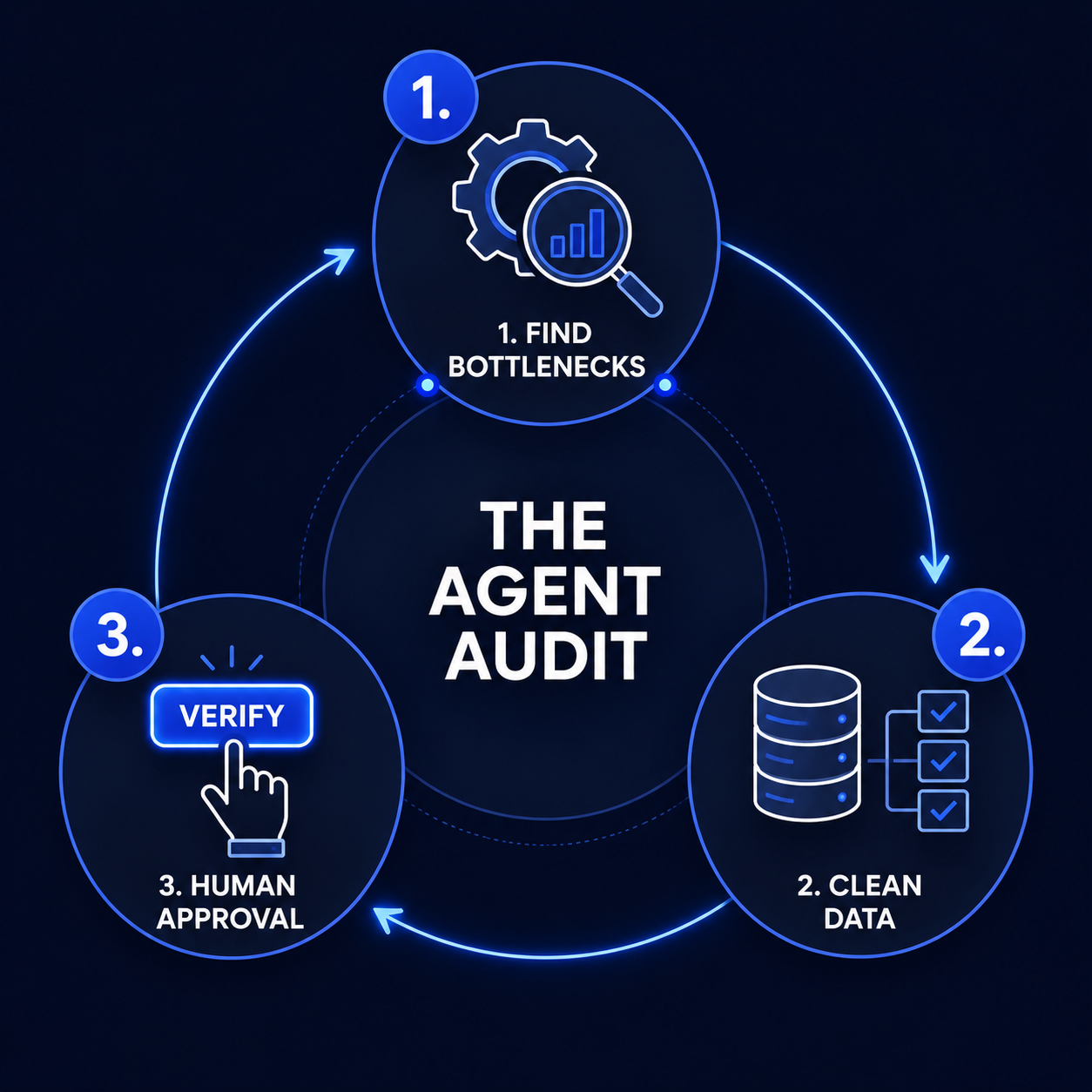
The "Agent Audit" helps identify cognitive bottlenecks where human intervention is currently slowing down business processes.
A "Human-in-the-loop" remains critical for high-stakes compliance tasks like US Payroll, tax filings, and legal reviews.
Beyond the Copilot: What Makes SaaS "Agentic"?
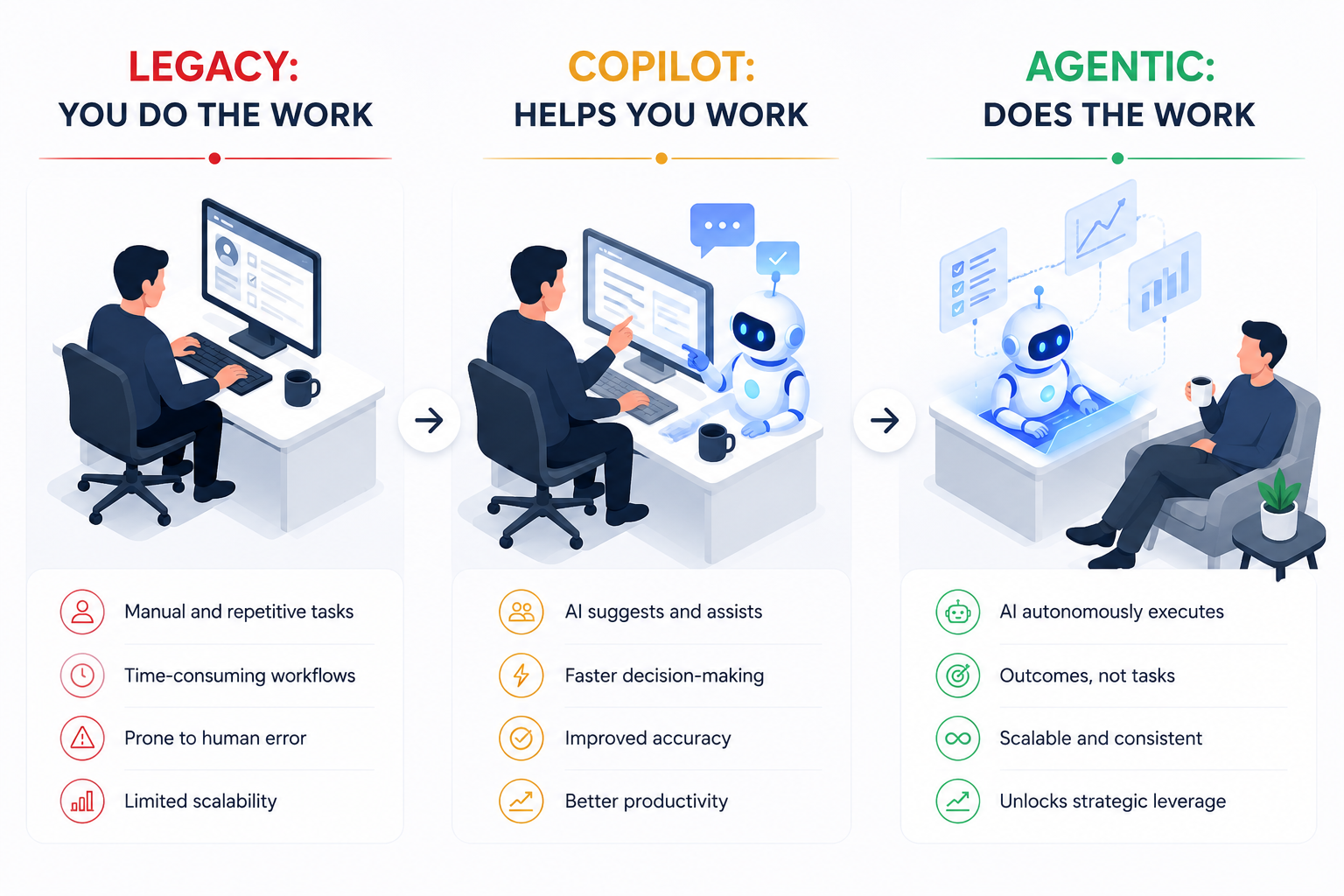
To understand the rise of Agentic SaaS, we first have to distinguish it from the "Copilot" era we've lived in for the last few years. A Copilot is an assistant. If you are writing a marketing email, a Copilot might suggest a better subject line or draft a few paragraphs based on your notes. You still have to prompt it, review it, click "send," and remember to follow up three days later.
Agentic SaaS, by contrast, possesses agency. It understands the goal-"identify and reach out to 50 potential leads this week"-and it executes the sub-tasks required to get there. It researches the leads, verifies their email addresses, drafts the messages, hits send, and monitors for replies. It only alerts you when a human needs to step in to close the deal.
The shift is from "UI-first" design to "Workflow-first" design. In legacy SaaS, the user interface (UI) was the product. You paid for a dashboard where you could do work. In Agentic SaaS, the dashboard is often secondary; the autonomous workflow happening in the background is the product. You aren't just buying a tool; you're buying the completion of a task.
Consider Marcus, who runs a small but growing SaaS startup. In early 2024, Marcus spent four hours every Monday morning manually qualifying leads that came through his website. He used a CRM (Legacy SaaS) and an AI writing assistant (Copilot) to help draft messages. In 2025, he switched to an agentic lead-gen platform. Now, he spends that same Monday morning on product strategy. The agent handles the research and the initial reach-out autonomously. Marcus's "cost per lead" dropped because his own expensive founder-time was removed from the equation.
The Unit Economics of Agentic SaaS
For founders, the most exciting part of this shift isn't the technology-it's the math. Traditional SaaS pricing has long been dominated by the "Per-User/Per-Month" seat model. While this was better than the old on-premise licensing, it created a perverse incentive: as your team grew, your software costs grew.
Agentic SaaS is ushering in Outcome-Based Pricing. Instead of paying $50 per seat for a customer support tool, you might pay $2 per "resolved ticket." This aligns the software's cost directly with the value it provides. If the agent doesn't solve the problem, you don't pay.
Scaling Revenue without Labor
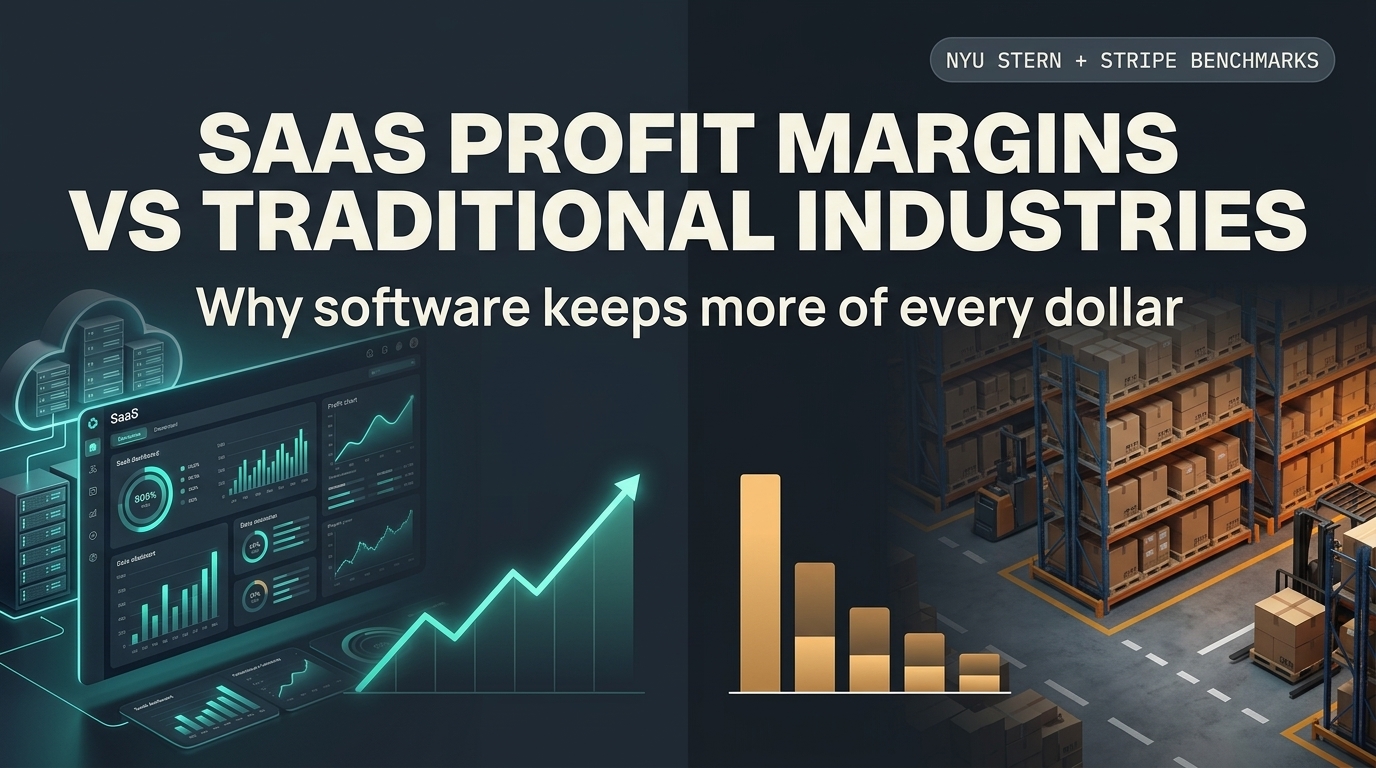
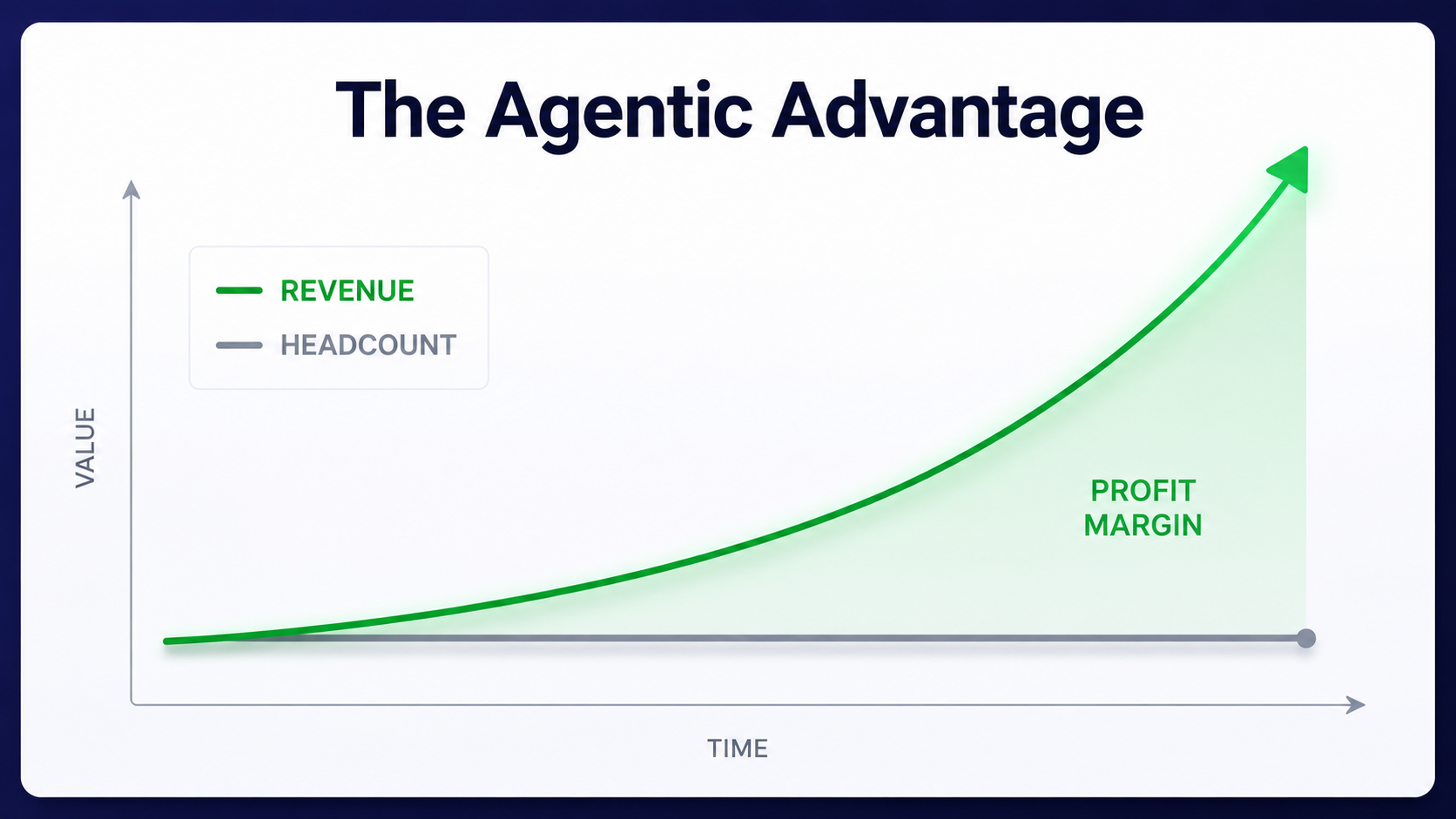
The biggest impact of Agentic SaaS is on your gross margins. In a traditional service or software business, scaling revenue usually requires a linear increase in Cost of Goods Sold (COGS), specifically labor. To handle more support tickets, you hire more people. To manage more invoices, you hire a bookkeeper.
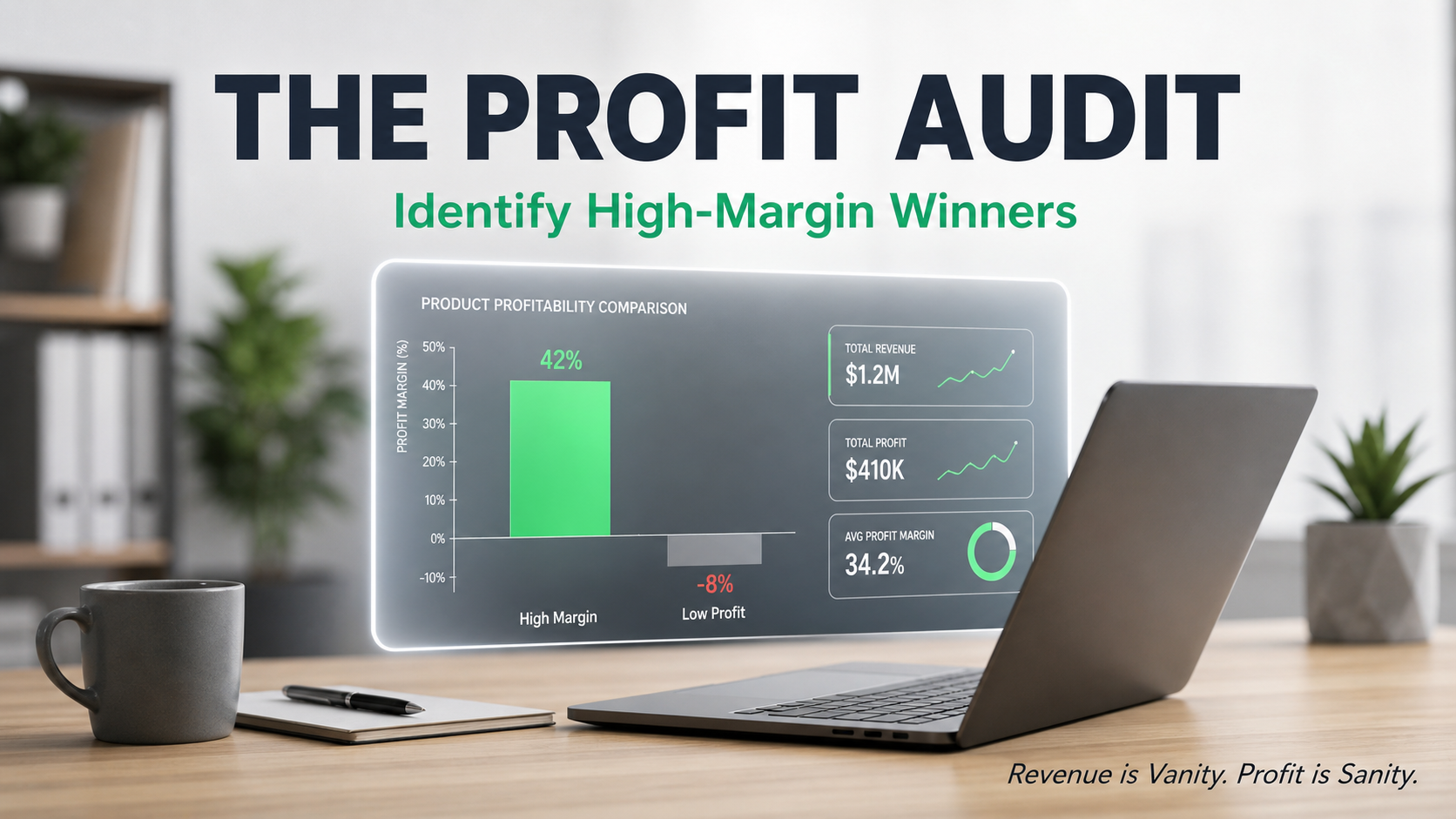
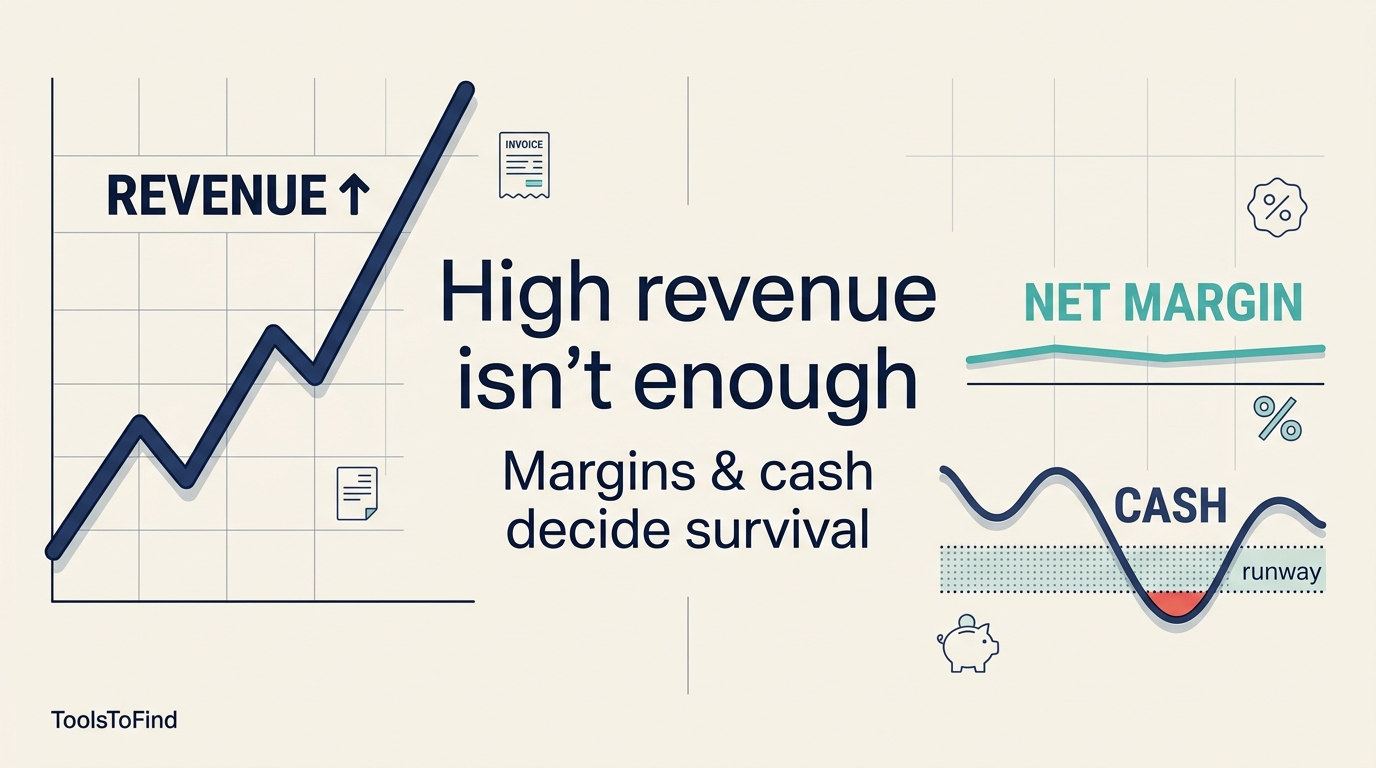
Agents decouple revenue from headcount. An AI agent can handle 1,000 support tickets as easily as 10, for a fraction of the cost of a human hire. This allows small businesses to achieve "economies of scale" that were previously reserved for giant corporations. You can use profit margin calculators to model how your net margin improves when your labor burden stays flat while your customer base grows.
The ROI of the "Digital Hire"
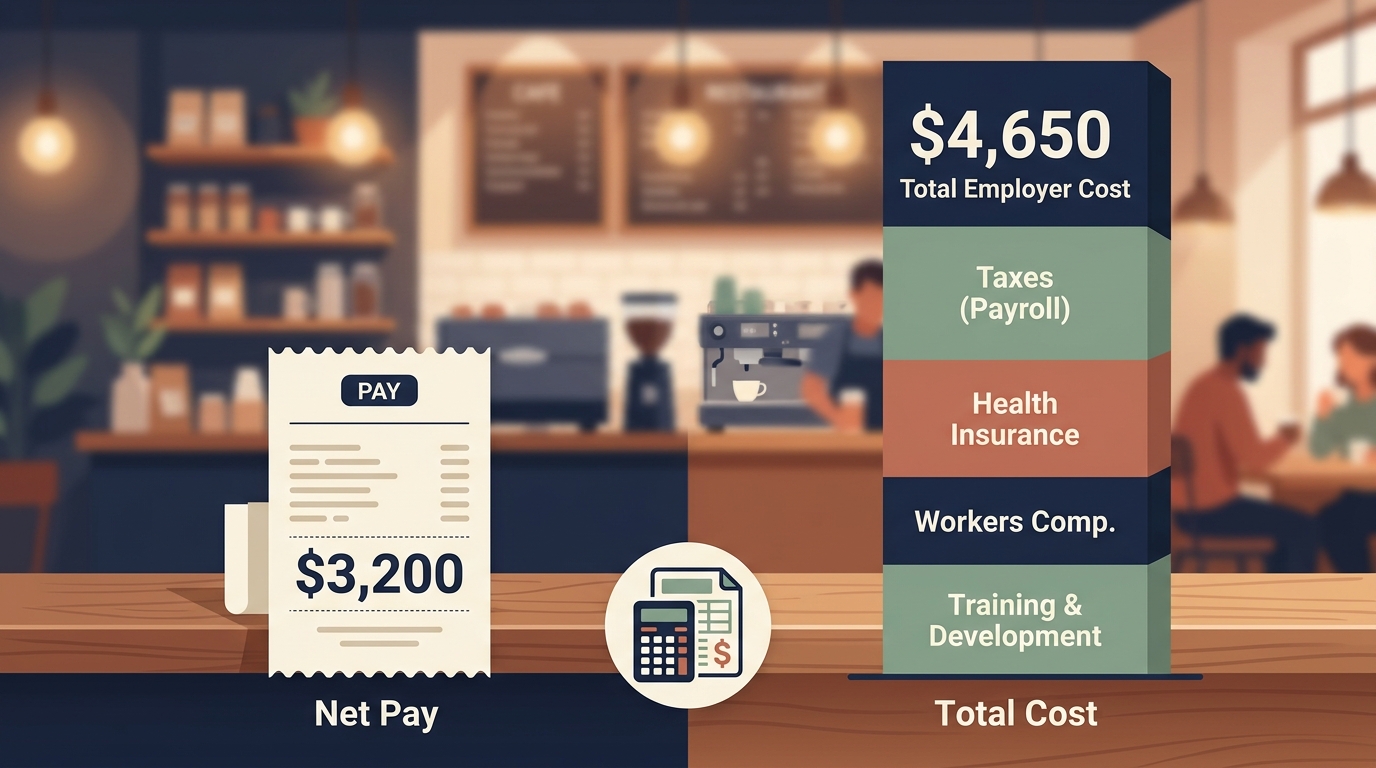
When evaluating an agentic tool, don't look at the monthly subscription fee in isolation. Compare it to the "loaded labor cost" of the person who would otherwise perform that task. If an agentic accounting tool costs $300 a month but saves 20 hours of founder or administrative time, the ROI is massive.
Want to see how this works in practice? Explore our ROI Calculators to model your savings
3 Operational Areas Ready for Agency in 2026
You don't need to automate your entire business overnight. The most successful founders are starting with specific, high-friction operational areas where agents can prove their ROI immediately.
1. Financial Operations (FinOps)
Small businesses often struggle with "leakage"-money lost because invoices weren't followed up on or expenses weren't categorized. Agentic tools now exist that act as autonomous collections officers. They monitor your bank feed, identify overdue invoices, and send escalating reminders that sound like a professional human peer, not a bot. They can even handle basic disputes or "where do I pay?" questions without your involvement.
2. Customer Growth and Support
The "Fin" agent from Intercom is a prime example of this. It can resolve up to 50% of customer support tickets autonomously by reading your documentation and help articles. In the growth phase, agents can handle lead qualification. Instead of a lead sitting in an inbox for 24 hours, an agent can engage them via chat, ask qualifying questions, and book a meeting on your calendar instantly.
3. Strategic Planning and Documentation
Even the process of starting a business is becoming agentic. Tools like business plan generators use AI to do the heavy lifting of market research and financial structuring. Instead of starting with a blank page, you start with a structured draft that has already synthesized industry benchmarks and local market data.
Elena, the owner of a boutique marketing agency, used to spend her weekends drafting proposals and project plans for new clients. It was her biggest "cognitive bottleneck." She implemented an agentic project management tool that takes her initial meeting notes and automatically generates a project timeline, assigns tasks to her team, and drafts the initial client proposal. This didn't replace Elena's expertise-she still reviews every word-but it removed the "blank page paralysis" that was capping her agency's growth.
The "Agent Audit": How to Evaluate Your Current Stack
Before you go out and buy every new AI tool on the market, you need a plan. Not every task should be handled by an agent. High-stakes decisions, deep creative work, and complex relationship building still require a human touch.
Step 1: Identify Cognitive Bottlenecks
Look for tasks that are repetitive, require multiple steps across different software, and follow a clear "if-this-then-that" logic. These are your bottlenecks. If a process requires 30 minutes of a human's time but zero "original thought," it's an agent candidate.
Step 2: Assess Data Readiness
Agents are only as good as the data they can access. If your lead lists are messy, your documentation is out of date, or your financial records are incomplete, an AI agent will fail. Before implementing agency, ensure your data is structured and accessible via API.
Step 3: Define the "Human-in-the-Loop"
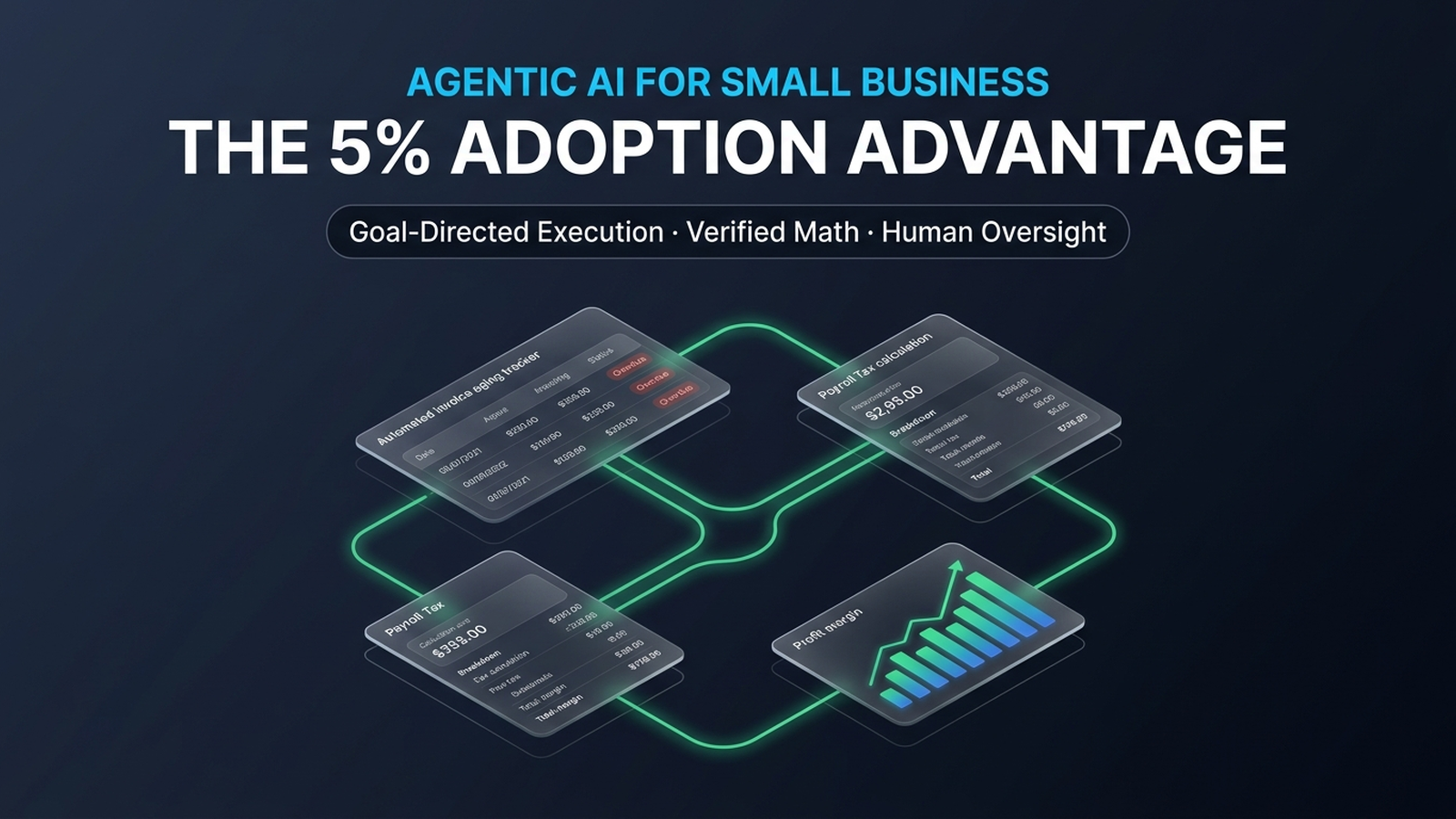
For high-stakes tasks like US Payroll or legal compliance, you must maintain a "human-in-the-loop" system. The agent can do the math and the drafting, but a human must click the final "approve" button. This protects you from the "hallucinations" or logic errors that can still occur in autonomous systems.
Ready to test the difference? Start a free account to save your audit results
Implementing Agency in Your Business Plan
If you are currently seeking a bank loan or investor funding, including an "agent-first" operational strategy can give you a competitive edge. Lenders want to see high margins and low burn rates. By showing that you can scale to $1M in revenue with a team of three humans and ten AI agents, you demonstrate a much lower risk profile than a competitor who needs to hire ten humans to reach the same goal.
Pitching the "Efficiency Ratio"
In your business plan, emphasize your "efficiency ratio"-the revenue generated per full-time employee. In the Agentic SaaS era, this number should be significantly higher than industry averages from five years ago. Explain which specific agentic tools you are using to handle L1 support, lead qualifying, and billing.
Documenting Workflows
Don't just say you "use AI." Map out the autonomous workflows. For example: "Our customer acquisition workflow is 80% autonomous; an AI agent identifies targets, initiates contact, and only hand-offs to a sales rep once a meeting is confirmed." This level of detail shows you aren't just chasing a trend-you're building a modern operating model.
For more on how to frame these costs, see our guide on working capital planning for growth. It explains how to manage the cash flow gap that occurs even when you have high-efficiency automated systems.
Case Study: The Service Business "Agent"
David runs a regional HVAC service business. His biggest headache was scheduling and dispatching. Customers would call, leave voicemails, and by the time David's office manager called back, the customer had often booked with a competitor.
David implemented an agentic voice and chat system. Now, when a customer calls at 2:00 AM, the agent answers, asks about the problem, checks the team's real-time schedule, and books the appointment. It even sends the customer a confirmation and a link to pay the diagnostic fee. This isn't just "automation"; it's a digital employee that works 24/7 without a lunch break or a payroll tax burden. You can compare the cost of this system against a human hire using our first-hire payroll planning guide.
Conclusion: Buying Outcomes, Not Features
The rise of Agentic SaaS represents a fundamental shift in how small businesses operate. We are moving away from spending our days inside software interfaces and toward a world where we manage "fleets" of agents that perform the work for us.
For the founder, this is a moment of immense use. You no longer need a massive venture capital round to hire a support team of 50. You can achieve that same "output" with the right agentic stack and a focus on clean data and clear workflows.
Next Steps for Founders:
Recap: Agentic SaaS executes work, Copilots suggest work, and Legacy SaaS just hosts work.
Action: Audit one recurring 30-minute task this week. Is there an agentic solution that could handle it?
Model: Use our ROI Calculators to see if the subscription cost of an agentic tool beats the labor hours you (or your team) are currently spending.
[Start Your Free Trial with ToolsToFind ] Stop building spreadsheets. Start building your business with industry-specific calculators, AI plan generators, and a dashboard that keeps your numbers organized.