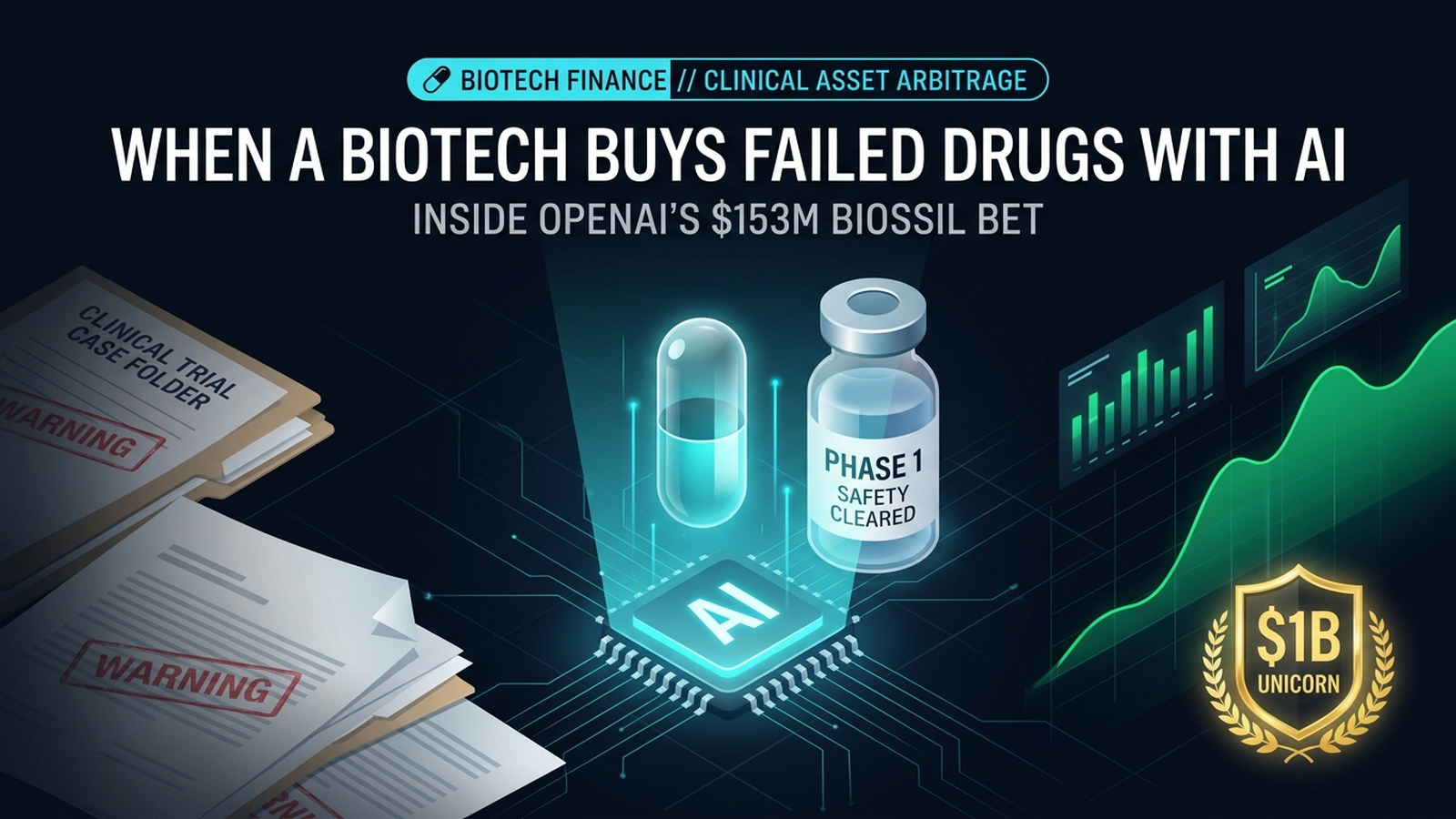
When an innovative biotech buys failed drugs with AI, it turns pharmaceutical write-downs into high-yield clinical assets. By acquiring shelved compounds that already cleared Phase 1 safety trials, modern AI biotechs deploy multimodal machine learning to uncover responsive patient sub-populations and re-enter clinical development under formal FDA enrichment protocols. In September 2026, the OpenAI Startup Fund validated this model by leading a $153 million Series A financing round in Toronto-based Biossil at a $1 billion valuation.
Every year, global pharmaceutical giants write off tens of billions of dollars in sunk research and development. Promising molecular compounds are regularly abandoned after inconclusive Phase 2 or Phase 3 trials, not because the molecules are biologically defective or unsafe, but because they failed to demonstrate statistical superiority across an overly broad, heterogeneous patient population. As an operator or investor managing capital, you understand the agony of sunk costs and stalled product rollouts.
This guide breaks down the emerging operational model where an AI biotech buys failed drugs to rescue and commercialize them, turning pharmaceutical write-downs into high-margin commercial opportunities. We will examine the mechanics of the $153 million Biossil transaction, contrast the unit economics of asset resuscitation against traditional de novo drug discovery, explore the algorithmic and regulatory frameworks behind patient stratification, and extract practical capital allocation frameworks you can apply to your own balance sheet.
Key Takeaways
The $153M Valuation Milestone: Toronto-based Biossil achieved a $1 billion unicorn valuation after securing $153 million in a round led by the OpenAI Startup Fund, alongside Founders Fund, Quiet Capital, and the Abu Dhabi Investment Council.
The Capital Arbitrage: Reviving an abandoned clinical asset with established Phase 1 safety clearance cuts development costs from over $1.3 billion down to under $250 million, while compressing time-to-market by up to 70%.
Precision Segmentation Over Averages: Most late-stage clinical failures stem from statistical cohort dilution rather than flawed biology; transformer architectures identify the hidden biomarkers of real responders.
The Regulatory Pathway: The FDA's formal guidance on clinical trial enrichment provides a clear, compliant blueprint for testing rescued compounds on targeted genetic and phenotypic cohorts.
Balance Sheet Lesson for Operators: Acquiring distressed, proven utility at liquidation value and re-segmenting the target market delivers vastly superior risk-adjusted returns compared to building speculative products from scratch.
The Biossil Deal: Why OpenAI Backs Biotech Rescuing Failed Drugs
The venture capital world took notice in September 2026 when BetaKit reported that OpenAI backed a biotech rescuing failed drugs, leading a $153 million financing round in Toronto-based pioneer Biossil. With participation from Founders Fund, Quiet Capital, and the Abu Dhabi Investment Council, the deal vaulted Biossil into unicorn status with a post-money valuation of $1.0 billion. Founded by Anthony Mouchantaf and Dr. Alexander Mosa, the Canadian company represents a deliberate shift away from the first wave of artificial intelligence in life sciences.
Between 2020 and 2024, venture capital poured billions into generative chemistry platforms designed to hallucinate entirely new molecular structures in silico. While scientifically impressive, those de novo discovery platforms merely shifted capital upstream, creating thousands of novel chemical entities that still had to grind through five to seven years of risky preclinical toxicology and Phase 1 human safety trials.
Dimension | Generative Chemistry (2020-2024) | Distressed Asset Rescue (2026+) |
|---|---|---|
Primary Approach | Designs novel molecules in silico | Acquires distressed clinical assets |
Safety Profile | Unproven human toxicity & safety | Proven Phase 1 human safety cleared |
Commercial Horizon | 10-15 year commercial horizon | 3-5 year commercial horizon |
Biological Risk | High biological failure risk | Known pharmacology, cohort focus |
Capital Intensity | Massive upfront burn rate | Capital-efficient rescue arbitrage |
The investment syndicate behind Biossil recognized that the greatest economic bottleneck in biopharma is not inventing new molecules; it is navigating the clinical trial graveyard. Through its proprietary "Excavate" platform, Biossil acquires licensed rights to discarded clinical-stage programs across oncology, glioblastoma, Alzheimer's disease, and rare autoimmune disorders. The company focuses exclusively on molecules that successfully demonstrated safety in humans but fell short of secondary efficacy endpoints in broad trials.
By purchasing these distressed assets at pennies on the dollar, Biossil bypasses years of early-stage laboratory risk. The partnership between Biossil and the OpenAI Startup Fund reflects a pragmatic recognition: the fastest path to commercialization is not inventing new chemistry, but applying machine learning to historical patient data to locate the specific cohorts for whom the medicine already works.
Mini-Story: The Shelved Oncology Candidate
In October 2024, Dr. Marcus Vance, a business development lead at a clinical asset fund, evaluated a discarded kinase inhibitor developed by a mid-sized European pharmaceutical group. The original sponsor spent $84 million taking the molecule through preclinical testing and Phase 1 safety trials, but shelved it after an unstratified Phase 2 trial in metastatic breast cancer yielded an objective response rate of only 14%, missing the 25% hurdle rate required for broad development.
Marcus and his computational biology team acquired exclusive commercial licensing rights for $3.5 million upfront plus nominal regulatory milestone commitments. Using algorithmic data extraction across 420 historical patient case report forms and tumor genomic panels, they discovered that patients exhibiting a specific co-mutation in the PI3K-AKT pathway demonstrated an 81% response rate with exceptional progression-free survival.
By avoiding early synthesis and animal toxicology, the team resuscitated an $84 million asset for less than 5% of its original cost. Within eighteen months, they structured an enriched Phase 2b trial targeting that exact genetic cohort, positioning the company for a lucrative corporate partnership.
If you are an operator evaluating high-stakes capital allocation decisions in healthcare, medical technology, or clinical services, model your project returns using our specialized healthcare business tools and verify your expected hurdle rates with our ROI calculator.
The Anatomy of a "Failed" Drug: Why Good Molecules Die in Late-Stage Trials
To understand how an AI platform can salvage discarded compounds, you must first understand why clinical trials fail in the first place. Industry data compiled across major clinical registries indicates that approximately 90% of drug candidates entering clinical trials fail before reaching regulatory approval. However, the nature of that failure changes dramatically as a molecule moves through the development pipeline.
Phase 1 (Safety & Dosage): ~70% Success Rate (Biological safety confirmed)
Phase 2 (Efficacy & Cohorts): ~30% Success Rate (The "Valley of Death")
Phase 3 (Large-Scale Trials): ~55% Success Rate (Statistical power failures across aggregate cohorts)
FDA Regulatory Review: ~90% Success Rate (Final review hurdle)
Phase 1 trials evaluate safety, metabolic tolerance, and pharmacokinetic dosage across small cohorts of healthy volunteers. When a molecule clears Phase 1, scientists know it is generally safe for human consumption. The catastrophic failure rate occurs in Phase 2 and Phase 3, where compounds must demonstrate statistical superiority or non-inferiority against standard-of-care treatments in hundreds or thousands of patients.
The Aggregate Cohort Trap
Historically, clinical trials were designed around anatomical categories: "lung cancer," "major depressive disorder," or "type 2 diabetes." These clinical definitions treat patients as a homogenous population. In reality, a disease like non-small cell lung cancer encompasses dozens of distinct genetic, epigenetic, and metabolic sub-conditions.
When a sponsor runs a 1,000-patient Phase 3 trial on an unselected population, a molecule that is lifesaving for 15% of patients with a specific genetic profile can easily fail to produce a statistically significant benefit across the entire 1,000-patient group. The 85% non-responders dilute the signal of the 15% super-responders, dragging the p-value across the statistical failure line.
Strategic Orphanhood and Corporate Divestment
Molecules are also abandoned for reasons that have nothing to do with efficacy or safety:
Patent Expiration Timelines: If a drug candidate spends too long in early clinical delays, the remaining patent exclusivity window may be too short for a corporate sponsor to recoup a $1 billion commercial launch.
Executive Leadership Turnover: New Chief Scientific Officers frequently cancel inherited pipeline programs to redirect capital into their own pet initiatives.
Corporate Mergers & Acquisitions: Following large pharmaceutical consolidations, corporate integration teams routinely eliminate redundant pipeline assets to streamline balance sheets.
Narrow Commercial Market Perceptions: A therapy that addresses a niche sub-population of 15,000 patients may not move the needle for a $100 billion pharmaceutical firm requiring multi-billion-dollar blockbusters.
A notable example occurred with Summit Therapeutics' antibiotic candidate, ridinilazole. While demonstrating superior sustained clinical response and gut microbiome preservation compared to vancomycin for C. difficile infections, it narrowly missed its primary non-inferiority composite endpoint in a broad Phase 3 trial. The broader market viewed the trial as a failure, yet the underlying clinical data revealed exceptional clinical efficacy for specific patient subsets.
Recognizing these statistical mismatches is precisely how a savvy biotech buys failed drugs with AI, exploiting a massive valuation discrepancy created by rigid institutional trials.
Failed Drug Rescue Unit Economics: De Novo R&D vs. Distressed Asset Resurrection
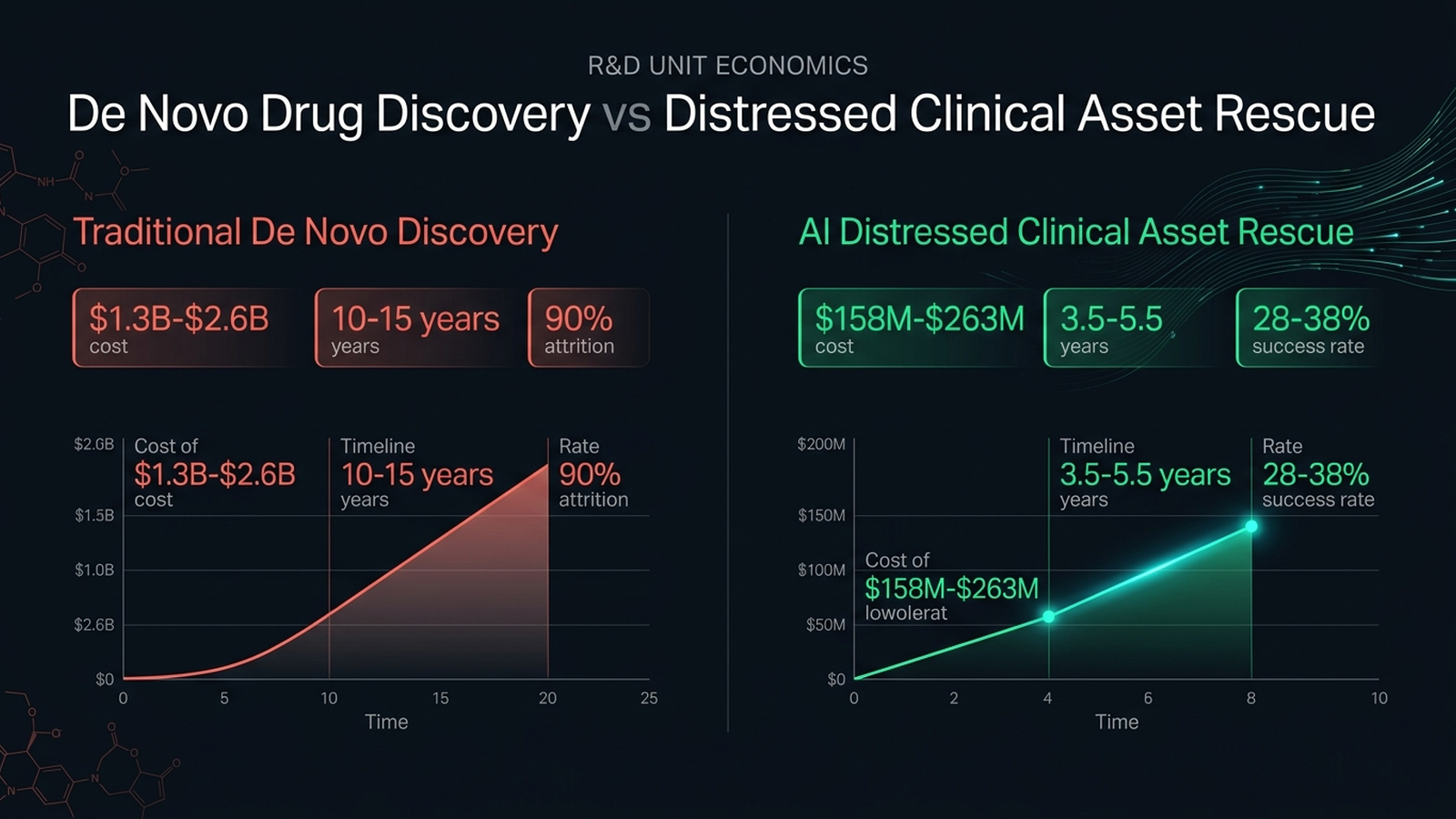
The financial logic of how an AI biotech buys failed drugs becomes evident when comparing the capital requirements of de novo drug discovery against targeted asset repositioning. Traditional pharmaceutical R&D operates under an unsustainable economic burden often referred to as "Eroom's Law"—the observation that drug discovery costs have steadily increased over the past half-century despite exponential improvements in computing power.
According to benchmark research published in Nature Reviews Drug Discovery, the capitalized cost to bring a single novel chemical entity from initial synthesis through FDA approval averages between $1.3 billion and $2.6 billion. The vast majority of this capital is not consumed by the approved drug itself, but by funding the 90% of pipeline failures that preceded it.
Financial Metric | De Novo Discovery | Rescued Asset Model |
|---|---|---|
Target Discovery & Preclinical | $150M - $350M | $0 (Bypassed) |
Phase 1 Safety & Dosage | $30M - $50M | $0 (Pre-existing) |
Distressed Asset In-Licensing | $0 | $5M - $25M |
Algorithmic Patient Stratification | $0 | $3M - $8M |
Targeted Phase 2b/3 Clinical Trial | $450M - $800M | $120M - $180M |
Regulatory & Chemistry Validation | $100M - $150M | $30M - $50M |
Total Direct Capital Outlay | $730M - $1.35B+ | $158M - $263M |
Fully Capitalized Cost (w/ Cost of Capital) | $1.8B - $2.6B | $220M - $380M |
Development Timeline | 10 - 15 Years | 3.5 - 5.5 Years |
Probability of Clinical Success | 7.9% - 10.4% | 28% - 38% |
The difference in failed drug rescue unit economics is staggering. By eliminating preclinical synthesis, animal assays, and Phase 1 human safety validation, an asset resurrection model cuts total cash outlay by more than 70%.
The Time Value of Capital and Net Present Value (NPV)
In corporate finance, duration is the enemy of returns. When a pharmaceutical company deploys $1 billion across a twelve-year development cycle, high discount rates (typically 10% to 12% in biotechnology) erode the Net Present Value (NPV) of future cash flows. Every year shaved off the development timeline creates disproportionate enterprise value.
Consider a commercial drug expected to generate $400 million in annual operating cash flow over a ten-year exclusivity window:
Under the De Novo Route (12-Year Horizon): The company incurs negative cash flows for over a decade. By the time commercial revenue arrives, those cash flows are discounted heavily. The risk-adjusted NPV often hovers near breakeven until Phase 3 data is confirmed.
Under the Distressed Rescue Route (4-Year Horizon): The team licenses a proven molecule, runs focused AI cohort stratification in six months, and executes a targeted Phase 2b/3 trial in three years. Commercial revenues begin generating cash flow in Year 5.
THE TIME-VALUE EXPANSION CURVE
De Novo Horizon: [--Yr 1-4 Preclinical--][--Yr 5-7 Phase 1--][--Yr 8-10 Phase 2--][--Yr 11-13 Phase 3--] === Commercial Year 14
Rescue Horizon:  [--Yr 1 AI Mining--][--Yr 2-4 Enriched Phase 2b/3--] =================================== Commercial Year 5
Because the capital is tied up for a fraction of the time, the project's internal rate of return (IRR) increases dramatically. Furthermore, because the Phase 2b/3 trial enrolls only pre-identified, biomarker-positive responders, the trial requires far fewer patients to achieve statistical significance. Enrolling 300 highly targeted patients costs significantly less than recruiting 2,500 undifferentiated patients across global clinical trial sites.
Before committing capital to complex expansion initiatives or expensive technological platforms, evaluate your internal rate of return and capital outlays with our guide to capital budgeting for small-business equipment and model your bottom line using our profit margin calculator.
How AI Resuscitates the Data: The Algorithmic Excavation Process
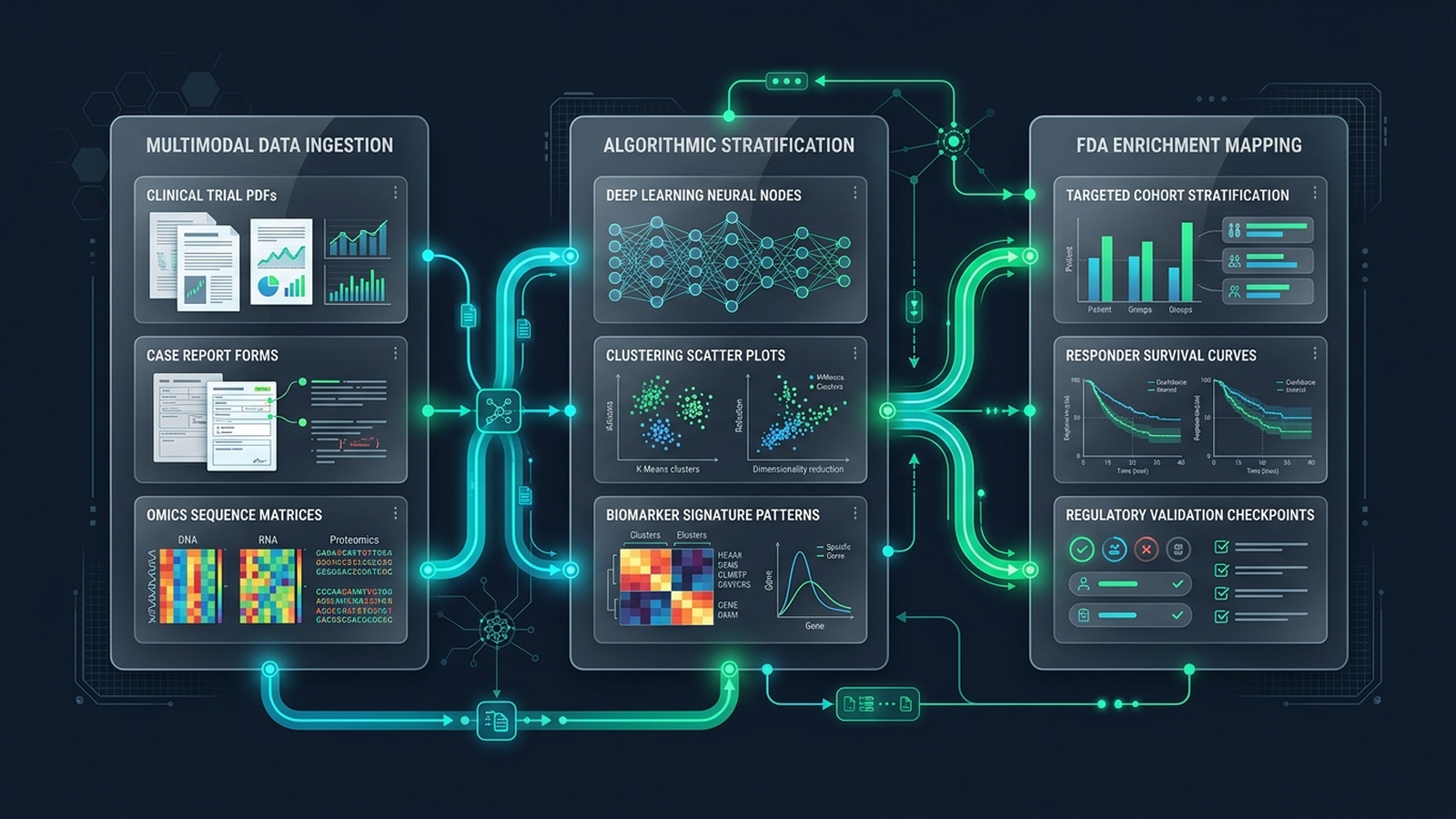
The technical catalyst enabling modern asset resuscitation is multimodal machine learning. When legacy pharmaceutical companies ran clinical trials a decade ago, their statistical teams relied on traditional biostatistical packages and linear regression models. These tools were capable of identifying obvious, single-variable correlations (such as "patients with high blood pressure responded worse"), but struggled to detect complex, non-linear relationships across disparate biological datasets.
How do AI biotechs revive failed clinical trial drugs?
AI biotechs revive failed clinical trial drugs by acquiring abandoned compounds that passed safety trials, analyzing historical trial records and multi-omic data with machine learning, discovering responder biomarker signatures, and re-testing the asset in biomarker-selected patient cohorts under FDA enrichment protocols.
Sourcing & Distressed Acquisition: License shelved Phase 1-cleared compounds at liquidation costs.
Multimodal Data Ingestion: Ingest trial PDFs, patient case report forms, and longitudinal records.
Algorithmic Stratification: Machine learning identifies hidden responder biomarkers and genetic phenotypes.
Enriched Clinical Re-Entry: Re-launch Phase 2b/3 trials restricted strictly to predicted responders.
The computational pipeline functions across three core stages:
Data Unification & Extraction: Unstructured clinical PDFs and handwritten patient case report forms pass through multimodal vision-language models and OCR entity tagging, transforming messy archives into standardized relational knowledge graphs alongside genomic and proteomic arrays.
Non-Linear Sub-Population Stratification: Unsupervised clustering algorithms isolate the 12% to 18% super-responder sub-populations. Multi-omic feature attribution identifies the subtle combinations of immune cell ratios, cytokine concentrations, and metabolic enzyme variants that govern response.
Regulatory Compliance Mapping: The system aligns the identified cohort with formal regulatory criteria, producing the statistical justification and assay protocols required for a companion diagnostic.
The Regulatory Route: FDA Clinical Trial Enrichment
Finding a responsive sub-population in historical data is worthless if regulatory authorities will not permit a targeted re-trial. Fortunately, the regulatory pathway for this approach is clearly codified.
Under the FDA Guidance on Enrichment Strategies for Clinical Trials, sponsors are explicitly permitted to use targeted trial designs to demonstrate effectiveness:
Prognostic Enrichment: Selecting patients who are more likely to experience the disease-related event, ensuring the trial has enough clinical endpoints to measure differences.
Predictive Enrichment: Selecting patients who are more likely to respond to the drug's specific physiological mechanism, determined via genomic markers, proteomic profiles, or phenotypic characteristics.
By integrating a Companion Diagnostic (CDx) into the resurrected clinical protocol, the sponsor transforms an undifferentiated failure into a targeted precision medicine. The FDA encourages this approach because it prevents patients from receiving ineffective therapies while delivering therapies to those who will genuinely benefit.
For an overview of how machine learning models detect responder profiles across complex biological datasets, watch AI in Drug Discovery and Repurposing: Computational Biology Platforms, which explores target identification and clinical repositioning pipelines.
From Roivant to AI-Native Biotech: The Evolution of Asset Scouting
The concept of scouring pharmaceutical balance sheets for abandoned gems is not entirely novel. The pioneer of this business model in the modern biotechnology era was Vivek Ramaswamy, who founded Roivant Sciences in 2014.
Roivant built a multi-billion-dollar enterprise on a simple arbitrage thesis: big pharma regularly shelves blockbuster molecules due to internal corporate politics and pipeline pruning. Roivant created decentralized subsidiaries (known as "Vants", such as Myovant, Dermavant, and Immunovant), licensed abandoned late-stage molecules, and ran focused clinical trials to push them over the regulatory finish line. In 2023, Roche acquired Roivant's subsidiary Telavant and its inflammatory bowel disease asset RVT-3101 for $7.1 billion, a compound Roivant had in-licensed from Pfizer just months earlier.
THE CORPORATE SCOUTING EVOLUTION
Roivant Sciences (2014-2024):
Dozens of Investment Associates -> Manual Data Room Review -> High Commercial Intuition -> Scalability Capped

AI-Native Biotechs (2026+):
Multimodal LLMs & ML Pipelines -> Millions of Ingested Records -> High-Dimensional Phenotyping -> Scalable Arbitrage
While Roivant proved the commercial viability of asset scavenging, its execution was constrained by human labor. Teams of investment analysts, physicians, and biostatisticians had to spend months manually reviewing data rooms, reading clinical summaries, and debating mechanisms of action.
Companies like Biossil, Ignota Labs, and Lantern Pharma represent the algorithmic evolution of the Roivant playbook. Instead of relying on human hunches, these AI-native operators deploy autonomous data ingestion pipelines that scan hundreds of thousands of trial registries, patent databases, academic publications, and bankruptcy filings. They evaluate thousands of discarded assets simultaneously, identifying statistical anomalies and market mispricings that human analysts would take decades to spot.
Mini-Story: The In-Licensing Due Diligence
Elena Chen, Chief Financial Officer of a life-sciences investment fund in Boston, was tasked in early 2025 with evaluating an abandoned Phase 2 autoimmune candidate owned by an embattled European biotech. The asset had been written down to zero on the seller's books following an inconclusive Phase 2a trial.
The seller sought $12 million for the outright transfer of the IP. Rather than hiring a clinical consulting firm for $400,000 to perform a 12-week manual audit, Elena engaged a specialized computational informatics group that ran the seller's clinical trial records through an algorithmic extraction model. Within four business days, the analysis revealed that the drug's apparent efficacy failure was caused by inconsistent medication adherence monitoring at three out of twenty-two trial sites. When those contaminated sites were statistically isolated, the remaining patient cohorts exhibited remarkable clinical improvement.
Armed with this information, Elena negotiated the acquisition price down to $6.5 million upfront plus performance milestones. The team cleaned up the protocol, instituted electronic adherence monitoring, and initiated an enriched multi-center trial that successfully restored the asset's commercial value.
When structuring licensing contracts, service engagements, or multi-stage project milestones, ensure your billing agreements and milestone terms remain crystal clear using our dedicated invoice generator.
Capital Allocation Lessons for Business Operators and Founders
While the science of clinical trial enrichment involves complex pharmacology and genomic sequencing, the core financial strategy behind this wave of ai drug repurposing clinical trials offers invaluable strategic lessons for operators across any commercial industry.
Whether you run a regional service enterprise, a software startup, or a specialty manufacturing facility, the structural dynamics of the Biossil transaction can reshape how you evaluate risk, capital expenditure, and asset acquisition.
Acquire De-Risked Utility at Salvage Value: Stop building everything from scratch. Acquire proven assets that have already absorbed early-stage development and compliance costs.
Micro-Segmentation Beats the "Average Customer" Trap: Products rarely fail because nobody wants them. They fail because broad marketing dilutes the value proposition for super-users.
Regulatory and Contractual Enrichment: Establish precise, defensible boundaries for who you serve and under what explicit operational parameters you deliver outcomes.
Ruthlessly Overcome the Sunk Cost Fallacy: Big pharma wrote off billions because corporate pride was tied to original assumptions. Winners isolate salvageable core utility.
1. Acquire Proven Utility at Salvage Value
Entrepreneurs and executives frequently suffer from "builder's bias"—the belief that creating a proprietary product from zero is inherently superior to acquiring existing assets.
In every industry, there are distressed assets sitting on corporate balance sheets:
Software companies that built excellent core codebases but failed due to incompetent sales execution.
Manufacturing businesses with state-of-the-art machinery that closed due to poor supplier logistics.
Service agencies with deep, loyal client rosters that suffered from founder burnout or working capital mismanagement.
Rather than spending years building infrastructure, proven operators acquire distressed assets at liquidation prices, eliminate the operational dysfunction that caused the original failure, and deploy the remaining core engine into a profitable niche.
2. Micro-Segmentation Beats Broad Averages
Just as unstratified clinical trials kill effective drugs, broad, one-size-fits-all product marketing kills promising commercial businesses. When you try to sell your product or service to "small businesses" or "homeowners," your messaging becomes vague, your customer acquisition cost (CAC) skyrockets, and your churn rate climbs.
Identify your 15% super-responders:
Which specific client cohort delivers 80% of your gross margin with the lowest revision rate?
What distinct characteristics or operational profiles define your best customers?
How can you deliberately exclude low-margin, high-friction prospects to concentrate team capacity on high-value buyers?
Restricting your market focus to a defined, high-affinity niche does not reduce your revenue potential; it expands your pricing power and strengthens your unit economics. This operational principle mirrors our strategic guidance on break-even analysis for service businesses.
3. Mitigate Downside by Buying Pre-Cleared Risk
Notice that Biossil does not buy molecules that failed Phase 1 safety trials. They do not touch compounds that exhibited unacceptable human toxicity or dangerous organ accumulation. They let the original pharmaceutical sponsor absorb 100% of the preclinical toxicology risk.
In your business, identify where the highest risk of catastrophic failure resides, and structure your operations so someone else pays to absorb that uncertainty. In real estate, this means letting someone else navigate zoning approvals before acquiring the parcel. In software, it means licensing established APIs rather than writing complex infrastructure from scratch. In physical commerce, it means testing demand through pre-orders before signing commercial warehouse leases, as detailed in our guide to working-capital planning for growth.
Frequently Asked Questions: How a Biotech Buys Failed Drugs with AI
Can an AI truly turn a failed clinical drug into an approved therapy?
Yes. Machine learning does not alter the underlying chemical structure of a compound, but it fundamentally transforms how clinical trials are designed and executed. By identifying specific genetic, transcriptomic, and phenotypic biomarkers in historical patient data, AI enables sponsors to design enriched clinical trials that enroll only the sub-populations predisposed to respond. This turns what was a statistically inconclusive broad trial into a highly effective targeted precision medicine.
Why do major pharmaceutical companies sell failed drug rights so cheaply?
Pharmaceutical conglomerates face massive organizational overhead and must prioritize clinical pipeline candidates capable of generating multi-billion-dollar annual revenues. When a drug candidate misses an initial primary endpoint, maintaining its patent filings, continuing clinical development, and dedicating regulatory teams to a rescue program consumes scarce capital. Selling or licensing the compound to an agile startup allows the original sponsor to clear distressed assets off its balance sheet, record a tax write-off, and retain royalty upside through back-end milestone agreements.
What is the difference between de novo AI drug discovery and AI drug rescue?
De novo AI drug discovery uses generative models to design entirely new chemical structures from computational models. While promising, these novel molecules still require 6 to 9 years of unproven laboratory testing, animal assays, and Phase 1 human safety trials. In contrast, AI drug rescue focuses on existing clinical compounds that have already cleared Phase 1 human safety testing, bypassing early-stage biological risk and cutting development timelines by more than half.
How does the FDA regulate clinical trials for revived secondary assets?
The FDA regulates revived clinical compounds through established clinical trial enrichment frameworks. Under formal FDA guidance, sponsors can employ predictive and prognostic enrichment strategies, provided the patient selection criteria are verified through defensible analytical methods and paired with validated Companion Diagnostics (CDx). The regulatory standards for safety and efficacy remain rigorous, but the agency actively supports precision medicine protocols that prevent non-responders from receiving ineffective therapies.
What are the primary commercial risks in distressed clinical asset investing?
The primary risk is biological misattribution—concluding that a patient sub-population responded to the drug when their improved clinical outcome was actually caused by confounding variables, unrecorded concomitant medications, or statistical anomalies in historical data. Furthermore, sponsors must carefully navigate remaining patent exclusivity windows, ensuring that the rescued compound has sufficient regulatory exclusivity or secondary method-of-use patent protection to generate an adequate return on investment.
Disciplined Capital Allocation Over Speculative R&D
The headline announcement that the OpenAI Startup Fund deployed $153 million into Biossil is more than a story about venture capital funding or modern biomedical engineering. It represents a fundamental maturation of the artificial intelligence narrative.
The initial era of enterprise AI was characterized by wild speculation: companies attempting to generate everything from scratch, promising to automate every role, and burning immense capital on unproven theoretical systems. As that speculative bubble recedes, the enduring value of machine learning is emerging where it always does in mature industries: in precision arbitrage, balance-sheet efficiency, and distressed asset optimization.
Mini-Story: The Capital Allocation Pivot
Dr. David Miller ran a boutique healthcare diagnostics consultancy outside Philadelphia. In early 2024, his firm attempted to develop a proprietary, custom-built electronic health record ingestion software from the ground up, budgeting $350,000 for external software engineers. By December, the project was four months behind schedule, $180,000 over budget, and constantly crashing during security audits.
Recognizing the classic sunk cost trap, David halted all software development. Instead of pouring more cash into the custom build, he negotiated an enterprise licensing agreement with an existing, HIPAA-compliant patient management platform whose parent company had filed for Chapter 11 restructuring. He acquired the codebase license for $45,000, hired a single systems integrator to connect their proprietary analytical algorithms, and launched the commercial service three months later.
By treating his software infrastructure as an acquired distressed asset rather than a vanity build, David saved over $200,000 in operational cash flow and returned his consulting firm to immediate profitability.
Great business execution does not require inventing the wheel from nothing. Just as an innovative biotech buys failed drugs with AI by targeting proven Phase 1 safety rather than speculative de novo chemistry, true operational excellence lies in finding existing, proven assets that were discarded because of flawed distribution, misaligned customer targeting, or bloated overhead, and applying modern tools to run them with disciplined efficiency.
Before committing capital to your next expansion, run your numbers with cold, objective rigor. Explore our full suite of business calculators, model your investment payback periods using our profit margin calculator, verify your assumptions against our methodology, and review our transparent pricing and plan limits to build a resilient, profitable commercial enterprise.